

Sign Protocol keeps coming up in conversations, and not for the reasons people usually expect. It’s not some breakthrough in cryptography. It’s not redefining consensus. If anything, it highlights a gap we’ve been pretending doesn’t exist
I’ve spent enough time around systems that claim to “prove things” to be cautious here. Proof is the easy part. Storage is solved. Integrity checks are solved. We can hash, sign, timestamp, replicate—all of it works. And yet, I’ve seen perfectly valid systems get ignored because nobody trusted the source behind the data. Happens more often than people admit
Blockchain didn’t change that dynamic. It just removed the excuses
Now we can prove that something happened with high confidence. Great. But that still leaves a more practical question hanging in the air: does this piece of data carry any weight for anyone using the system? Most of the time, the answer depends on context, not correctness
That’s where Sign Protocol gets interesting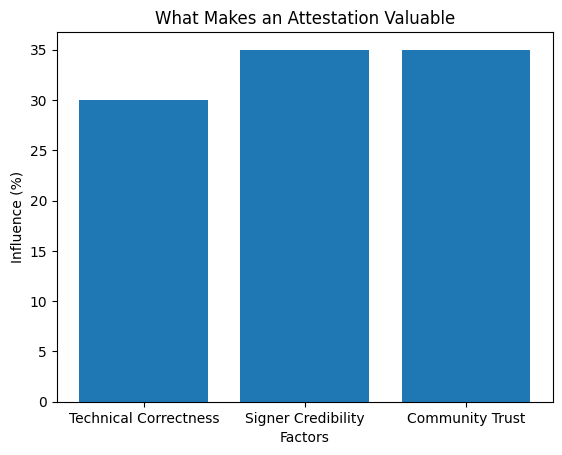
It introduces attestations as a first-class primitive. Signed claims, structured, portable, and anchored in a way that other systems can consume. On paper, that’s clean. You define a schema, issue a claim, and anyone can verify it. I’ve built similar patterns internally—badges, certifications, event logs with signatures
They all run into the same wall
The data is valid. The interpretation is not
Because the moment you allow open issuance of claims, you’re no longer dealing with a data problem. You’re dealing with a credibility problem. And credibility doesn’t come from schemas or signatures. It comes from history, behavior, and how other participants treat that signal over time
I’ve seen teams try to standardize their way out of this. They define strict formats, validation rules, even scoring systems. It helps a bit. Then the system scales, more actors join, and everything starts to blur. Conflicting claims. Redundant attestations. Actors gaming whatever weighting mechanism you introduced. It’s a mess. It always ends up there
Sign Protocol doesn’t attempt to over-engineer that layer. It just exposes it
Every attestation carries an origin. That’s it. No baked-in authority model pretending to solve trust globally. If an issuer gains credibility, it’s because other participants treat their attestations as meaningful. If they lose it, nothing in the protocol steps in to protect them
That’s closer to how real systems behave anyway
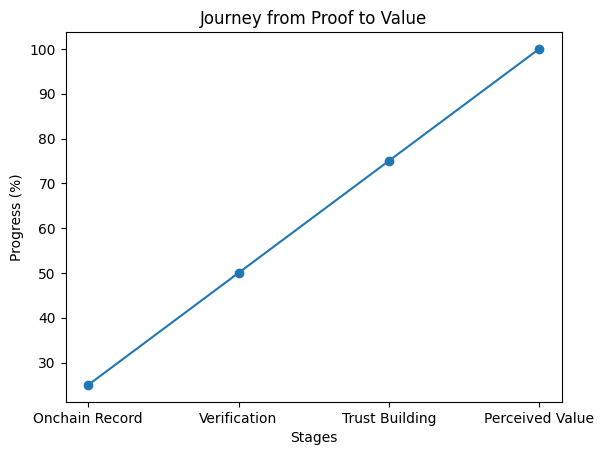
What you end up with is a graph, not a hierarchy. Relationships between issuers, consumers, and claims. Some nodes become influential. Others remain isolated. Over time, signal emerges—but not evenly, and not cleanly
The reality is messier than most architecture diagrams suggest
There’s also the identity problem sitting underneath all of this. In most onchain environments, identity is weak. Wallets are cheap. Histories are fragmented. You don’t start with reputation—you accumulate fragments of it. Attestations help stitch those fragments together, but they don’t guarantee coherence
I’ve seen identity systems collapse under far less ambiguity
And then there’s the noise issue. Open systems attract low-quality input. Always. Self-attestations, coordinated groups reinforcing each other, meaningless claims issued just to appear active. If participation is cheap, noise scales fast. Faster than signal in most cases
Sign Protocol doesn’t prevent that. It can’t
So responsibility shifts to the edges. Applications consuming these attestations have to decide what matters. Filtering, weighting, contextual interpretation—none of that is optional. And none of it is purely objective, no matter how much people want it to be
That tends to frustrate teams looking for clean, deterministic solutions
I don’t see it as a downside. I see it as accurate
Because the idea that we can eliminate subjectivity from systems like this has never held up in practice. We just moved it around. In traditional systems, it lives inside institutions. Here, it sits on top of open data, where you can actually inspect it
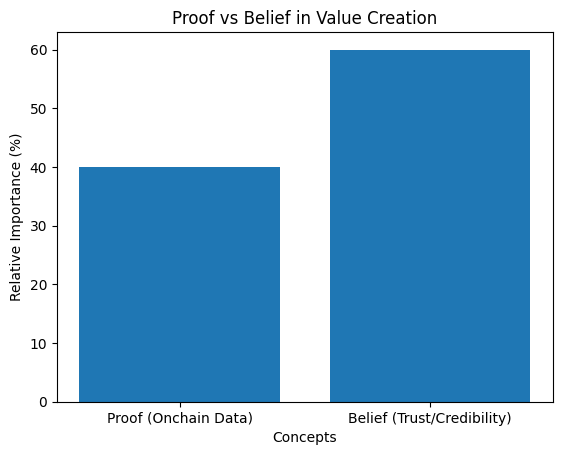
That’s an improvement
At least now you can trace why something is trusted. You can look at the issuer, their past behavior, how widely their attestations are referenced. You can disagree with it. You can ignore it. That level of transparency is useful, even if it makes the system harder to reason about
Short version: proof is table stakes. It doesn’t solve the problem people think it does.
What matters is how proof gets interpreted, who stands behind it, and how that reputation evolves over time. Sign Protocol doesn’t try to shortcut that process. It gives you the raw material and leaves the hard part exposed
I’ve seen systems fail by pretending that layer doesn’t exist
This one doesn’t pretend. That alone makes it worth paying attention to
@SignOfficial #SignDigitalSovereignInfra $SIGN
