

Honestly? I been sitting with $SIGN Protocol’s role in public infrastructure, and it feels like it’s trying to fix something most people don’t even question 😂. Public service delivery today is messy fragmented databases, repeated verification, slow processes. What Sign is doing is reframing this entire flow around verifiable credentials.
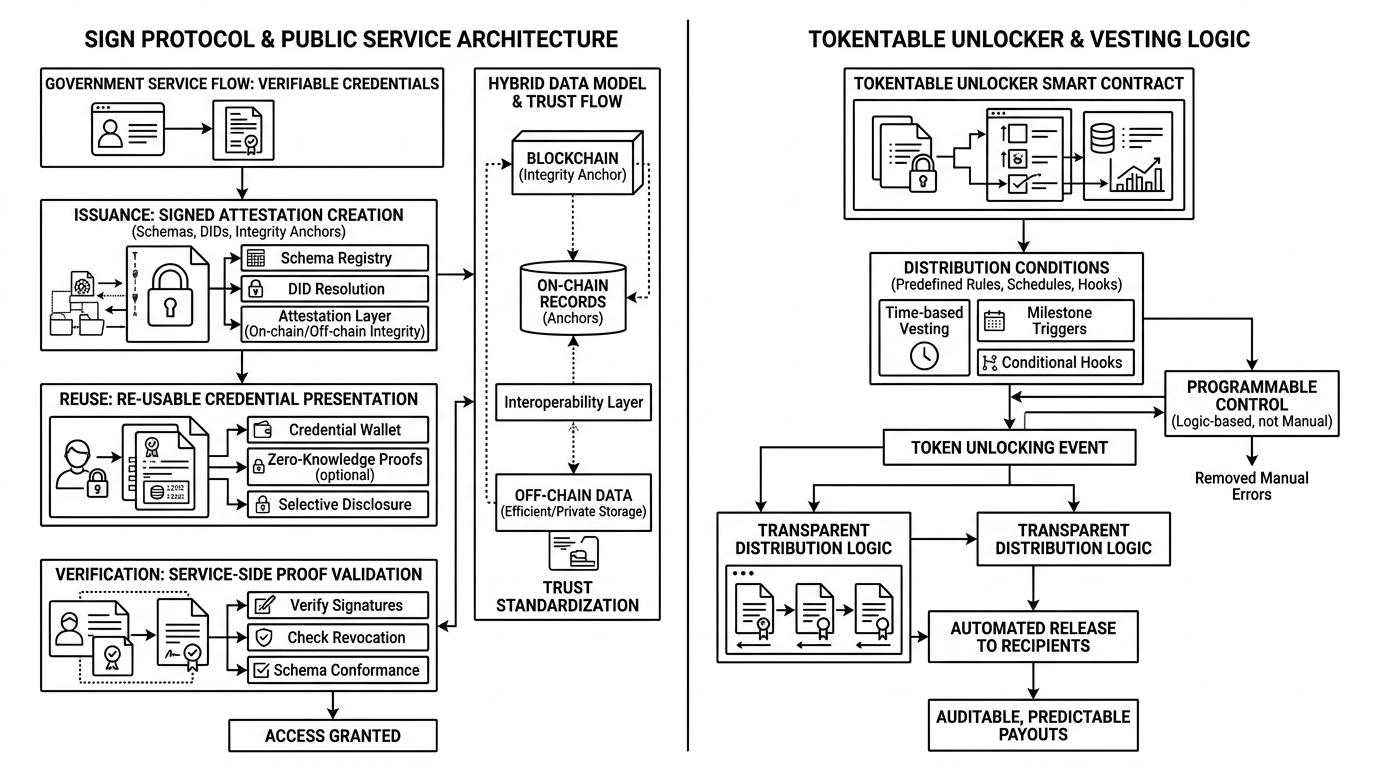
I Instead of a government re checking your identity every time, Sign Protocol allows credentials to be issued once as attestations and then reused across services. That’s where verifiable credentials come in. They’re not just data they’re signed proofs tied to schemas, meaning every piece of information has structure and validation baked into it. What stands out here is that services don’t need to trust each other anymore they just verify the proof.
I Now the architecture gets interesting when you look at how Sign combines on-chain and off-chain systems. Not everything lives on a blockchain. Some data is stored off-chain for efficiency or privacy, while on-chain records act as integrity anchors. This hybrid model makes the system scalable and practical. But the tension here is dependency once you rely on multiple layers, consistency becomes harder to guarantee.
I Then there’s TokenTable’s unlocker system. At a basic level, it’s a smart contract that controls how tokens are released over time. But ran through it more carefully, and it’s actually programmable distribution logic. Tokens unlock based on predefined conditions time schedules, rules, or hooks. That removes manual control and makes distribution predictable and transparent.
I kept coming back to is this: Sign isn’t just improving systems. it’s trying to standardize how trust flows through them. Public services become faster, credentials become portable, and distribution becomes automated.
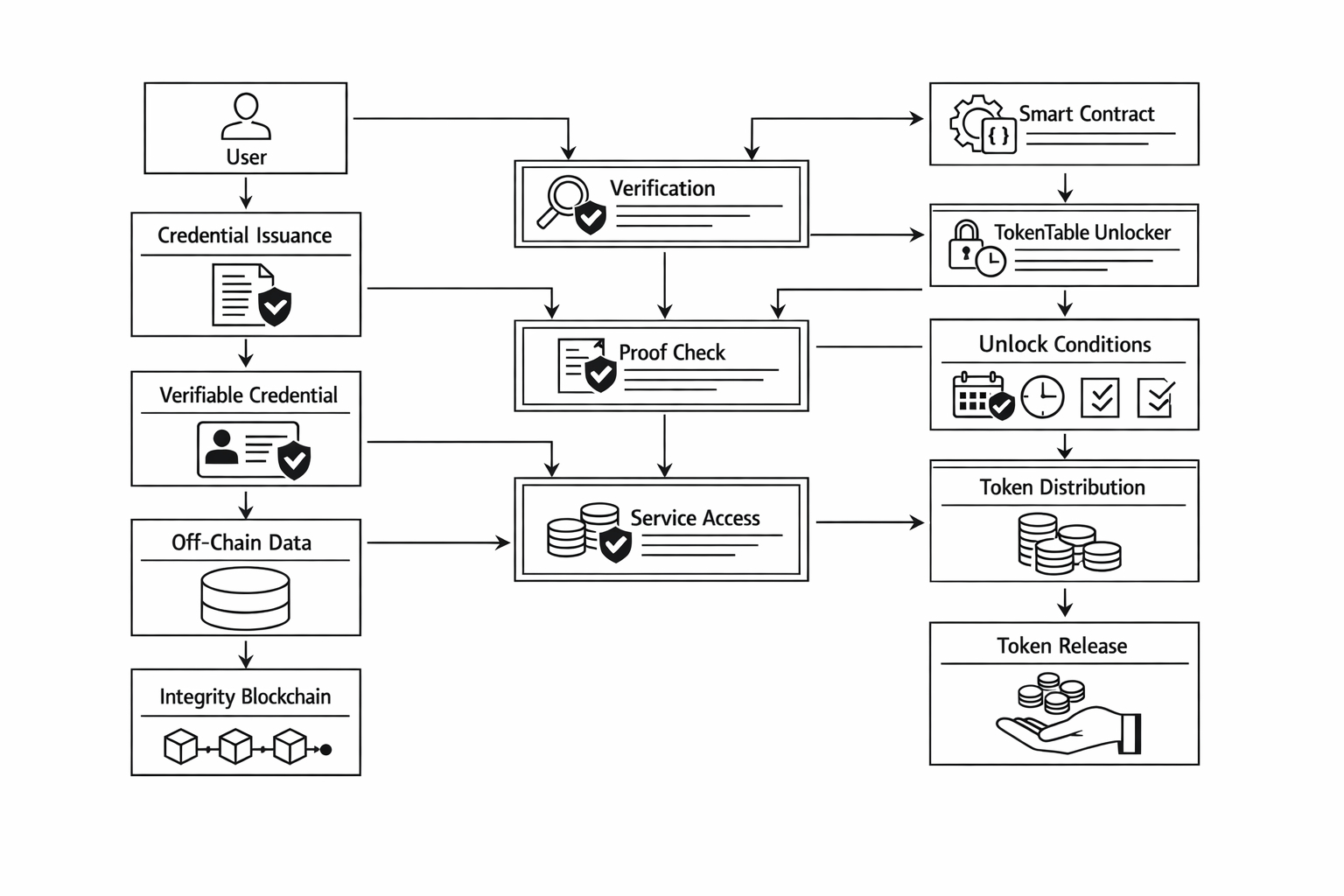
I But here’s the bigger question if governments start relying on programmable verification layers like this, are we improving efficiency… or quietly redesigning control in ways we don’t fully understand yet?
@SignOfficial $SIGN #SignDigitalSovereignInfra
