
my father bought a small piece of BITCOIN and land when i was young and honestly the paperwork for land took longer than the actual purchase 😂
title searches. registry checks. encumbrance certificates. weeks of back and forth between offices just to confirm that the person selling had the right to sell. and even after all that the dEed sat in a drawer for years because that is how land ownership works. paper.drawers. government offices that open three days a week.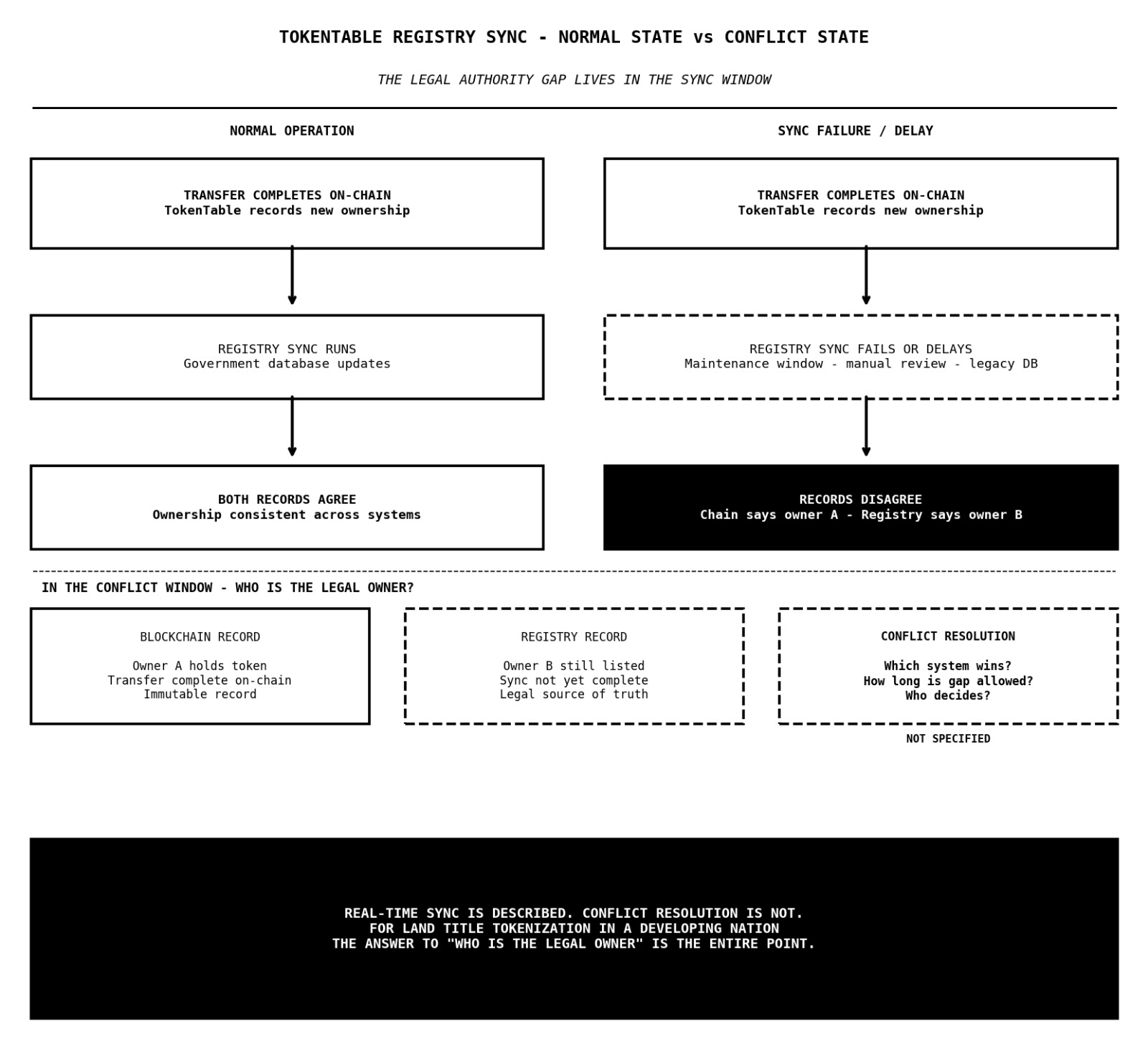
i thought about that drawer this week going through TokenTable's RWA tokenization architecture. because the promise is real. put land titles on-chain. make ownership transparent
make transfers instant. make provenance verifiable
and i actually believe those outcomes are achievable.
the part i cant stop thinking about is what happens between the chain and the drawer
What the architecture sets out to do:
TokenTable connects directly to existing government land registries and property databases. not replacing them. integrating with them. real-time synchronization of property ownership records. cadastral systems, tax records, municipal property information all feeding into the blockchain record. when ownership transfers on-chain the registry is supposed to reflect it. when the registry updates the on-chain record is supposed to follow
the compliance layer sits on top of this
transfer restrictions enforced by smart contract. whitelisting so only verified eligible parties can acquire specific asset classes. automated regulatory reporting to tax authorities and land registries. KYC and AML checks built into the transfer logic.and the provenance chain is the genuinely powerful part. every ownership transfer recorded. every transaction in the history of an asset visible and verifiable. nobody can quietly rewrite who owned what and when. immutable audit trail for dispute resolution and legal proceedings.
for a government managing millIons of land parcels, hundreds of thousands of transfers a year, and chronic disputes over who owns what - this is the right direction. the inefficiency in current land registry systems is real and the cost of that inefficiency falls heaviest on people with the least resources to fight disputes.
The part that caught me off guard: two systems
one asset
two records.
the on-chain record and the government registry record are not the same thing. they are connected by a sync process. and a sync process has latency. and latency means there is always a window where the chain says one thing and the registry says something else.in normal operation that window is probably short. a transfer happens on-chain. the registry sync runs. the registry updates
a few seconds or minutes
fine
but registries are goverment systems. they have maintenance windows. they have manual review queues for high-value transfers. they have legal challenge periods in some jurisdictions where a transfer can be disputed before it is recorded. they have legacy database infrAstructure that does not always respond on demand.so the window can stretch. and while it is stretched the chain and the registry disagree.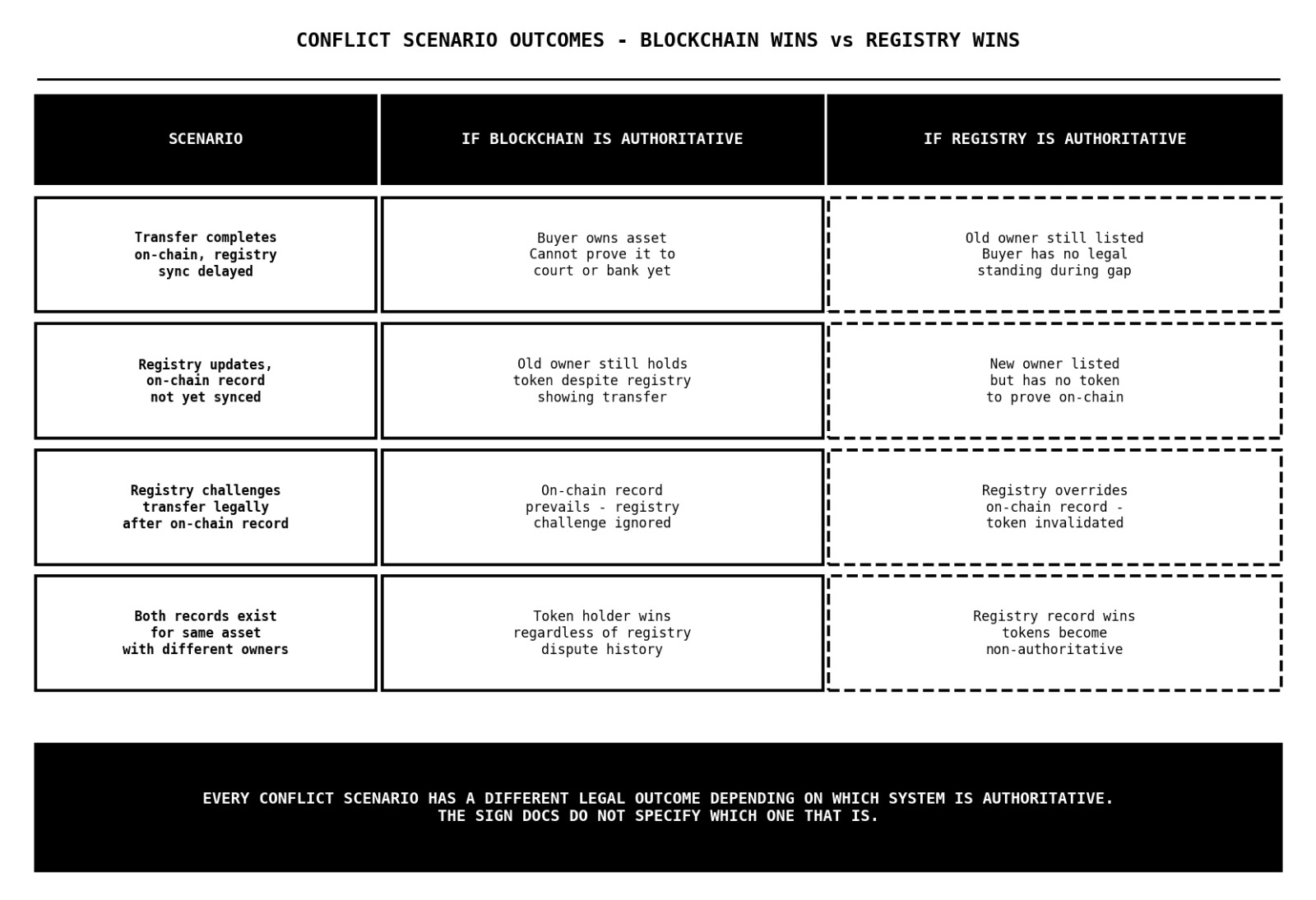
Where i keep getting stuck:in that window - which record is legally authoritative.
if a buyer completes a transfer on-chain and the registry sync fails or delays, the buyer holds an on-chain record of ownership and no registry entry. they cannot prove ownership to a bank, a court, or a government office that looks at the registry as the legal source of truth. the blockchain record is technically correct and legally invisible at the same time.
if the registry updates first and the on-chain record lags - someone could sell a property based on a registry record that the blockchain hasnt caught up with yet. dual records, dual claims, neither system aware the other has a problem.
the whitepaper describes registry integration as real-time synchronization. and the technical architecture for that sync is described at a high level. what isnt described is the conflict resolution protocol. what happens when sync fails. which system wins if they disagree. .how long the legal gap window is allowed to be before the transfer is considered incomplete.
for a land title in a developing nation where this infrastructure is meant to replace a corrupt or dysfunctional paper registry - the answer to that question is not a technical detail
it is the entire point
honestly dont know if blockchain-based land title tokenization actually resolves the legal authority question that makes land disputes so hard or just adds a second record that creates new disputes when it disagrees with the first one?? 🤔#SignDigitalSovereignInfra @SignOfficial $SIGN
