
In my view, SIGN gets misread too easily. At first, I also saw it as one of those crypto projects that takes a messy workflow, adds a token, and presents itself as infrastructure. But the more I looked at it, the less I agreed with that first impression. I think the more interesting part of SIGN is not the branding around verification or distribution. It is the attempt to reduce the quiet maintenance burden that builds up when too many systems are forced to trust each other without sharing a clean proof layer.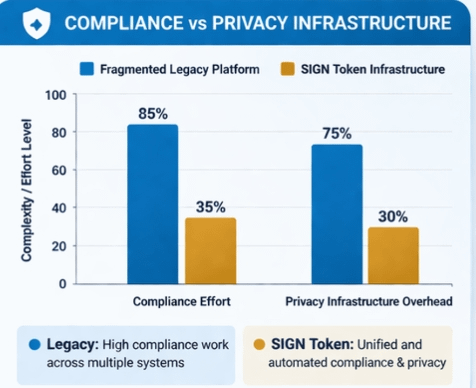 What I keep coming back to is this: most legacy platforms do not collapse because they have no data. They become difficult because the same data has to be checked again and again. One system holds the credential, another handles approvals, another tracks access, and then people in the middle spend their time reconciling everything manually. To me, that is where the real complexity sits. Not in the interface, and not even mainly in speed. It sits in repetition. The same truth keeps needing to be re-validated in slightly different places.
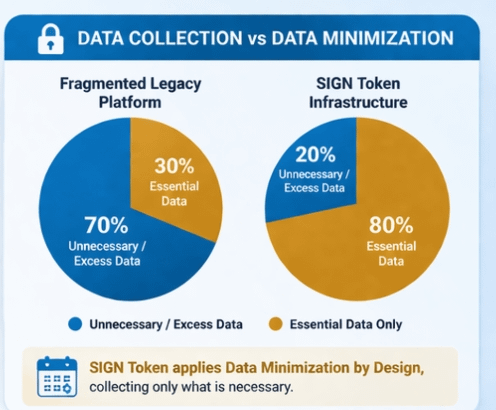 That is why I think SIGN is more relevant as coordination infrastructure than as a simple token project. On the surface, it looks like it is about credential verification and token distribution. In plain language, that means proving something is valid and making sure the right user gets the right allocation, access, or reward. But in my opinion, the deeper idea is that proof should not die where it was created. It should be reusable. It should move across workflows without forcing every new system to start from zero.
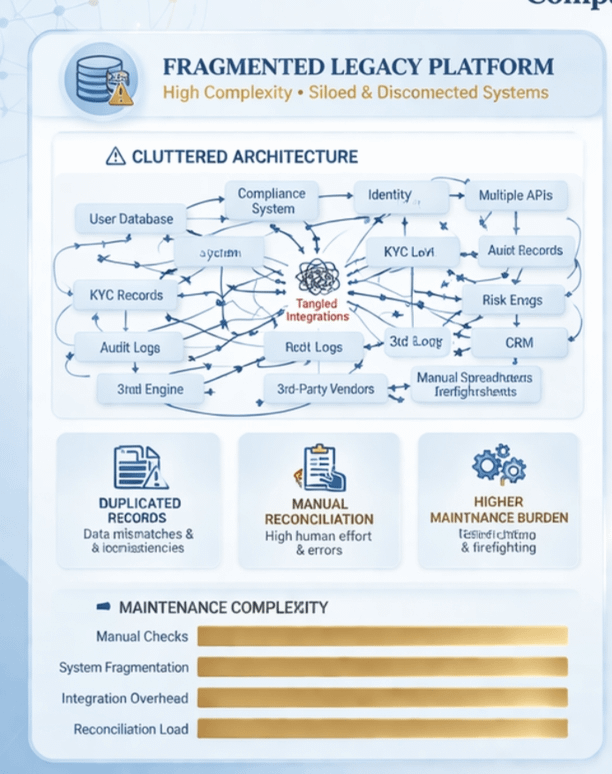
That is the part that feels important to me. A fragmented legacy platform often appears stable from the outside, but underneath it is full of operational patchwork. Someone is manually checking records. Someone is exporting lists. Someone is matching identities, permissions, or entitlements across tools that were never designed to speak clearly to each other. I think SIGN is interesting because it seems to treat that invisible labor as a structural problem rather than just an inconvenience.
 I also think this is why products like EthSign and TokenTable matter more than they first appear to. My reading of EthSign is not that it is just a place to sign documents. The stronger point is that an agreement becomes something verifiable and reusable, not just a file that sits in storage. TokenTable, to me, matters for a similar reason. It is not simply about sending tokens. It is about turning distribution logic into something more transparent and less dependent on manual correction. That may sound boring, but honestly, a lot of meaningful infrastructure is boring. The boring part is often where systems either hold up or quietly become expensive to maintain.
 As for the token itself, I do not find it compelling just because it exists. In my opinion, the token only matters if it helps coordinate real participation around the network. That means incentives, access, ecosystem alignment, and actual usage. If it is only there to attract market attention, then it does not add much. But if it helps connect users, workflows, and participation inside a broader verification system, then it has a more serious role than speculation.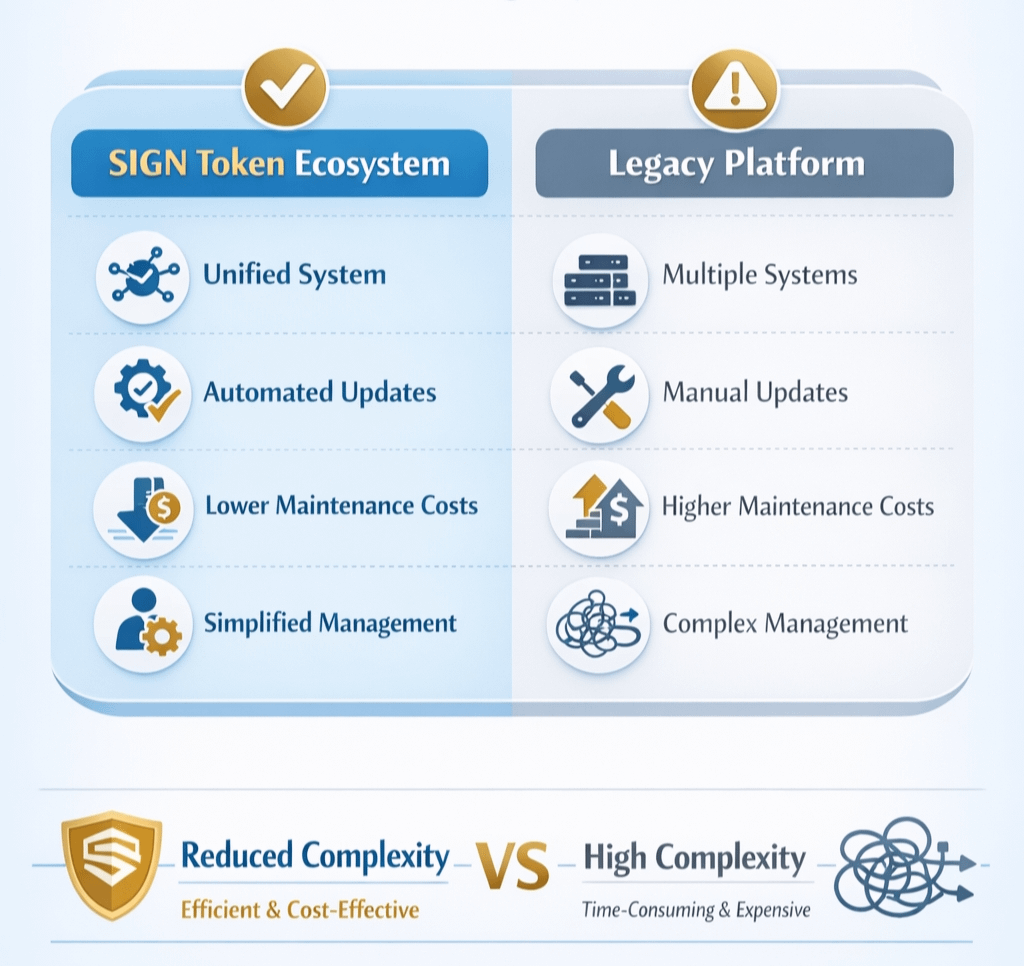
I would still be careful, though. I do not think a cleaner verification layer automatically solves fragmentation. Institutions are slow, habits are sticky, and crypto markets usually reward visible incentives faster than subtle operational improvements. So for me, the open question around SIGN is not whether the idea sounds good. It is whether the project can actually reduce coordination drag in real workflows, not just describe that problem in a sharper way.
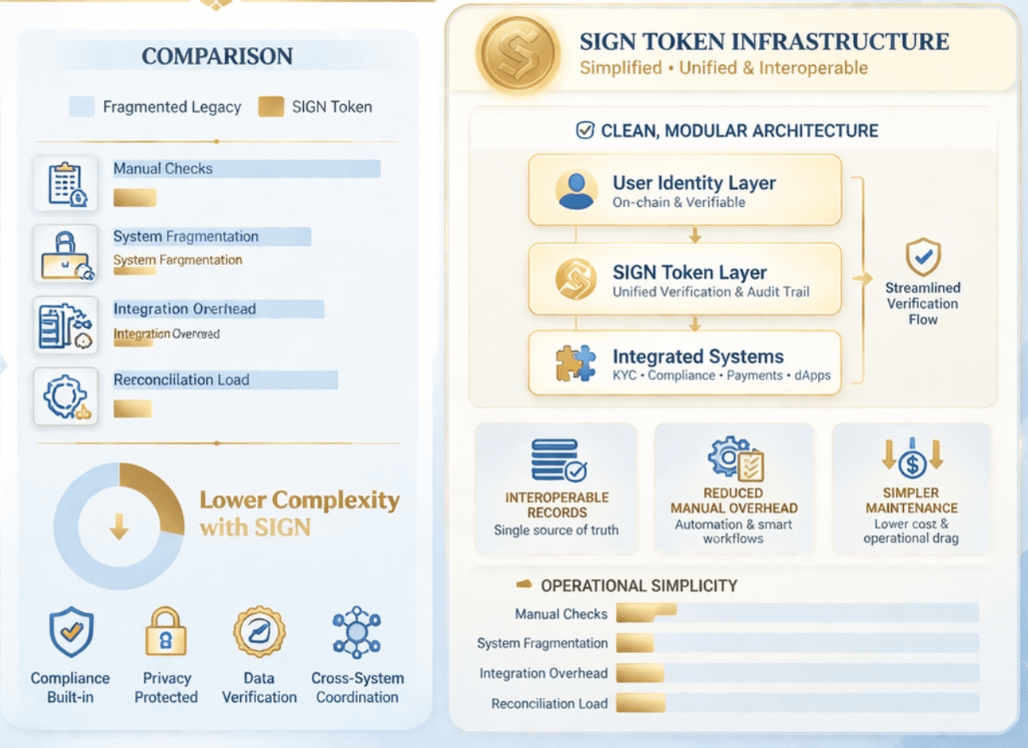
Still, my personal view is that SIGN is focused on a more durable problem than many projects are. Systems usually do not fail because information is missing. They fail because information does not travel with enough trust. If SIGN can improve that, even a little, then its value is not just in token distribution or credential verification as isolated features. It is in lowering the hidden maintenance load that fragmented platforms keep pushing onto users and operators. To me, that is a quieter thesis, but a more believable one.
@SignOfficial $SIGN #SignDigitalSovereignInfra