


INTRODUCTION
In crypto most people focus on ideas first
They get excited about vision and stories
They believe if something can be built then users will automatically come
But real world does not work like that
Ideas are easy
Infrastructure is hard
Infrastructure means something that keeps working every day without breaking
This is the gap that most crypto projects face today
IDEA VS REALITY
At the start many builders think the same way
If we can create a verifiable signature or decentralized identity or permanent record then everything else will follow
It feels logical
Build first then adoption comes later
But when systems go live the reality is very different
Users face confusion
Developers face friction
Costs appear where simplicity was expected
Nothing moves as smooth as the idea
This is where ideology starts to fail
SIGNOFFICIAL STYLE VISION
A good example of this gap is systems like SignOfficial type vision in crypto
The idea is a super app for decentralized world
One place for payments identity communication compliance and distribution
It sounds powerful
It feels like the missing layer of crypto
It also introduces things like automated verification
Reusable credentials
On chain signatures
AI driven compliance support
Unified digital operations
On paper it looks like the future of digital systems
But the real question is not what it can do
The real question is what happens after it is used
BUILDING BLOCKS AND ARCHITECTURE
Most systems in this space use hybrid design
Small proofs go on chain
Large data stays off chain
Then hashes are anchored on chain for verification
This structure is common in crypto infrastructure
But even if it works in theory it becomes complex in real use
Every action has multiple steps
Store off chain
Pin data somewhere else
Pay gas for anchoring
Generate proof
Record verification
What looks simple becomes a chain of processes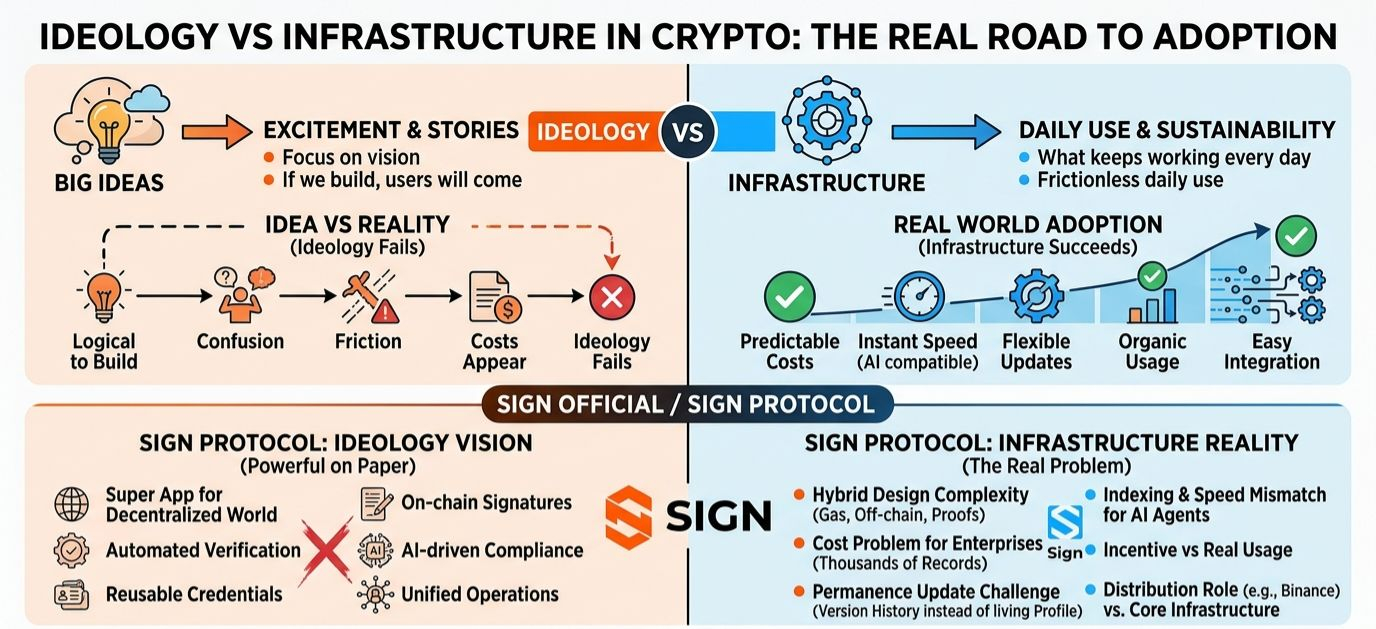
COST PROBLEM IN REAL USAGE
A single credential might look cheap in demo mode
But in real usage cost becomes important
Storing even small data can cost close to one dollar after gas and storage steps
For one user this is fine
For one company this is fine
But for enterprises this becomes heavy
Because enterprises do not create one record
They create thousands every day
Across departments
Across compliance cycles
Across identity updates
Across audits
So cost becomes not just fee
It becomes structural friction
PERMANENCE BECOMES A PROBLEM
Blockchain systems are permanent by design
Every record stays forever
This sounds strong but in business it creates issues
Because real organizations change all the time
Roles change
Certificates expire
Rules update
Identity evolves
But permanent systems do not easily update
Instead every change creates a new record
So instead of one living profile
You get many versions of history
It becomes like printing a new document every time something small changes
Technically correct but operationally heavy
AI AND SPEED PROBLEM
Modern systems are starting to work with AI agents
This changes everything
AI does not wait like humans
It does not refresh pages
It does not tolerate delay
It constantly queries data
It checks verification
It triggers actions automatically
So speed becomes critical
But decentralized indexing systems often struggle here
Data retrieval can take time
Queries can be inconsistent
Response speed can vary
This creates a major mismatch
It is like building a fast airport but connecting it with a slow road
The system is strong but access is weak
If response is slow then adoption fails in real workflows
NETWORK EFFECT PROBLEM
Many crypto systems rely on network effects
More users means more data
More data means more value
More value means more builders
More builders bring more users
But this only works when reuse is easy
If using the system again is slow or expensive then users do not return
They use it once and stop
So data exists but does not circulate
And if nothing circulates then nothing compounds
This is the key difference between storage and real network growth
INCENTIVES AND REAL USAGE
A lot of crypto growth today comes from incentives
Users join because they get rewards
They participate in campaigns
They interact during token events
They follow distribution programs
This creates fast activity
But it is not always real demand
When incentives stop activity slows down
So usage is borrowed not earned
It is temporary attention not permanent adoption
BINANCE AND DISTRIBUTION ROLE
Platforms like Binance play a major role in this ecosystem
They help projects reach large audiences
They support token launches and campaigns
They create liquidity and attention
But this is distribution layer not infrastructure layer
It can start momentum
It cannot guarantee daily usage inside real business workflows
So even strong platforms do not solve the core problem of sustainability
EVENT DRIVEN VS CONTINUOUS USAGE
There is a big difference between event usage and continuous usage
Event usage happens during launches and campaigns
It creates spikes
It looks active
Continuous usage happens in background systems
It runs every day
It is stable and predictable
Most crypto systems today are still event driven
They look strong during hype
But struggle in daily life
Real infrastructure behaves like continuous systems
Like roads or electricity or public transport
Always running without attention
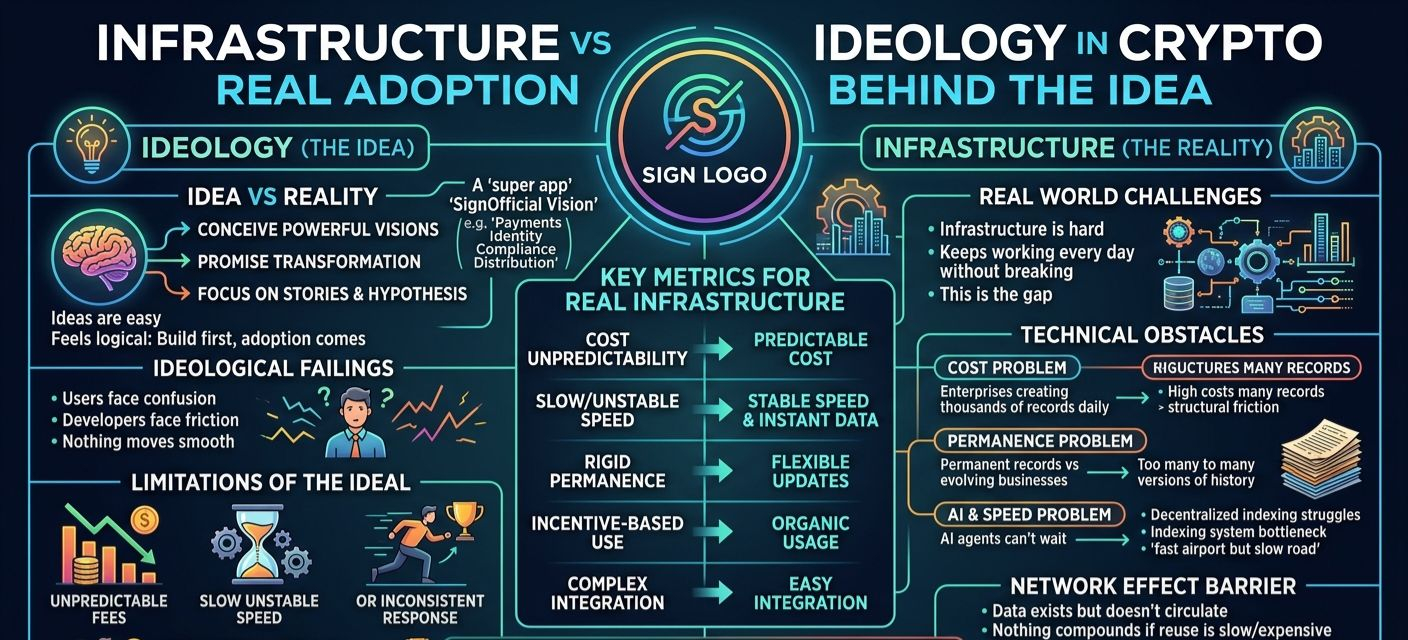
INFRASTRUCTURE REQUIREMENTS
For any crypto system to become real infrastructure it needs several things
First cost must be predictable
Users should not worry about changing fees
Second speed must be stable
Data must be available instantly especially for AI systems
Third updates must be flexible
Real world data changes constantly
Fourth usage must be organic
People should use it without rewards
Fifth integration must be easy
Developers and institutions must connect without friction
Without these systems remain experimental
SIGNALS TO WATCH
To judge if a system is becoming real infrastructure there are clear signals
If indexing becomes fast and stable across networks confidence increases
If storage and update costs become low enough for daily use confidence increases
If institutions start using it for real compliance work confidence increases
If developers build without incentives confidence increases
If activity becomes steady instead of spike based confidence increases
But there are also warning signs
If usage depends on rewards then caution is needed
If activity only happens during campaigns then caution is needed
If participation stays inside small groups then caution is needed
If indexing is slow or unstable then caution is needed
If AI integration remains only a story then caution is needed
CONCLUSION
The difference between ideology and infrastructure is simple
Ideology is what sounds powerful
Infrastructure is what keeps working every day
In crypto many systems start as big ideas
Identity systems
Credential systems
Super apps
Verification layers
They all promise transformation
But only a few can survive real world pressure
Real adoption is not about creation
It is about continuation
Does the system keep moving
Does it stay useful without incentives
Does it integrate into daily workflows
Does it survive scale
If yes then it becomes infrastructure
If not then it remains ideology
And this is the lens that changes everything in crypto today.