

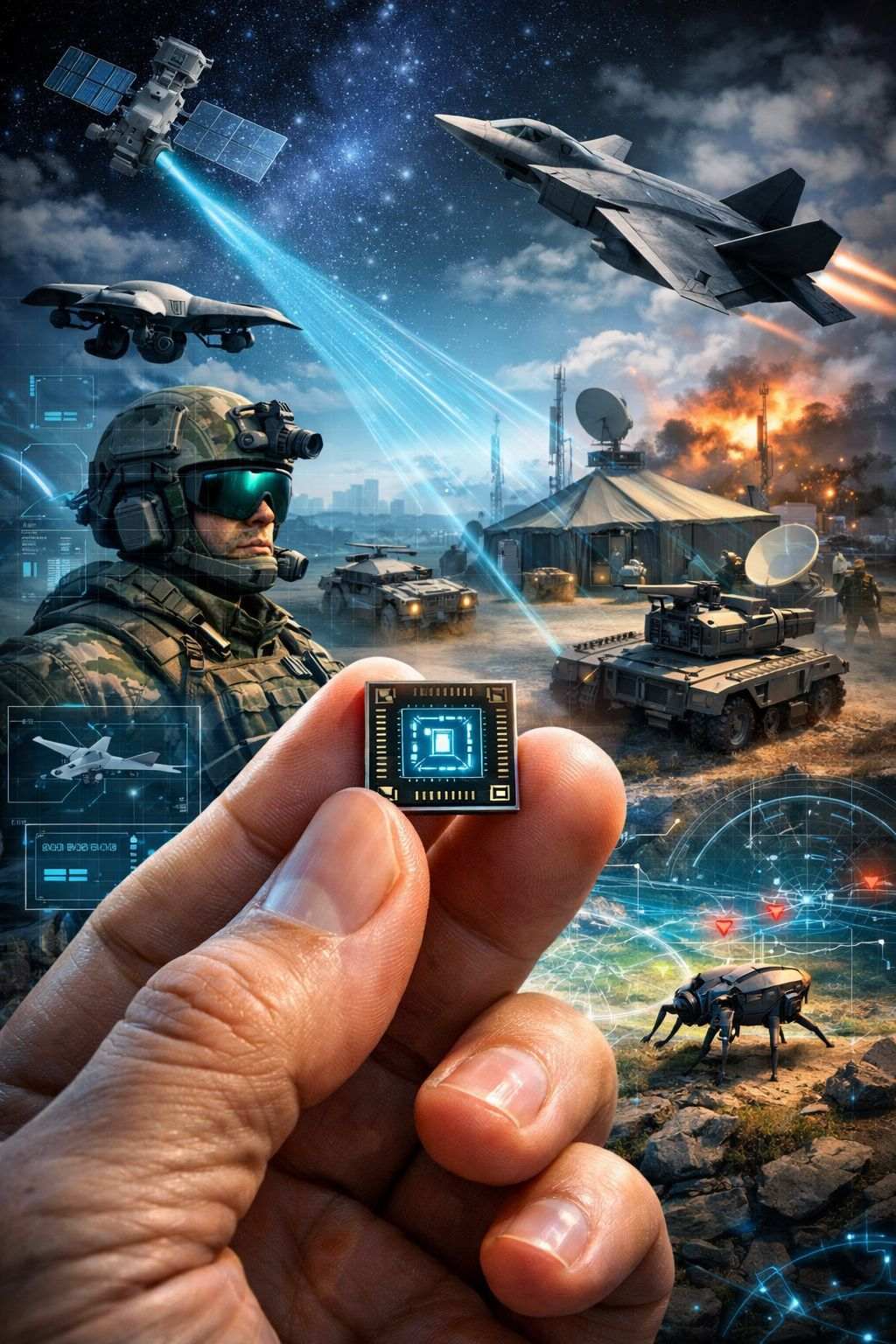
A group of Chinese scientists caught the world's attention by developing a microscopic device, smaller than a fingernail, with the potential to completely change the way military technologies are used in the field. Despite its small size, the impact can be enormous.
This type of technology bets on extreme miniaturization, something that has been evolving for years, but now reaches a new level. In simple terms, the smaller the equipment, the harder it is to detect — and this makes all the difference in military operations. We are talking about sensors, communication systems, or even intelligence components that can be easily deployed in strategic environments without raising suspicion.
The most impressive thing is that such devices can operate with low energy consumption and, in some cases, even autonomously. This opens up space for entire networks of almost invisible monitoring, capable of collecting real-time data, tracking movements, and improving decision-making on the battlefield.
Moreover, this innovation can reduce logistical costs. Smaller equipment is lighter, easier to transport, and can be produced at scale. This means that, in the future, armies may rely less on large structures and more on intelligent and distributed solutions.
But not everything is simple. Technologies of this kind also raise important concerns, especially regarding privacy, surveillance, and the risk of uncontrolled use. The more invisible and accessible the technology is, the greater the challenge of regulating its use.
In the end, what the Chinese scientists are showing is that the military power of the future is not just in large weapons or vehicles, but in small, intelligent, and almost imperceptible solutions. It is a silent change, but one that could completely redefine the balance of power in the world.$XRP $BTC $USDC