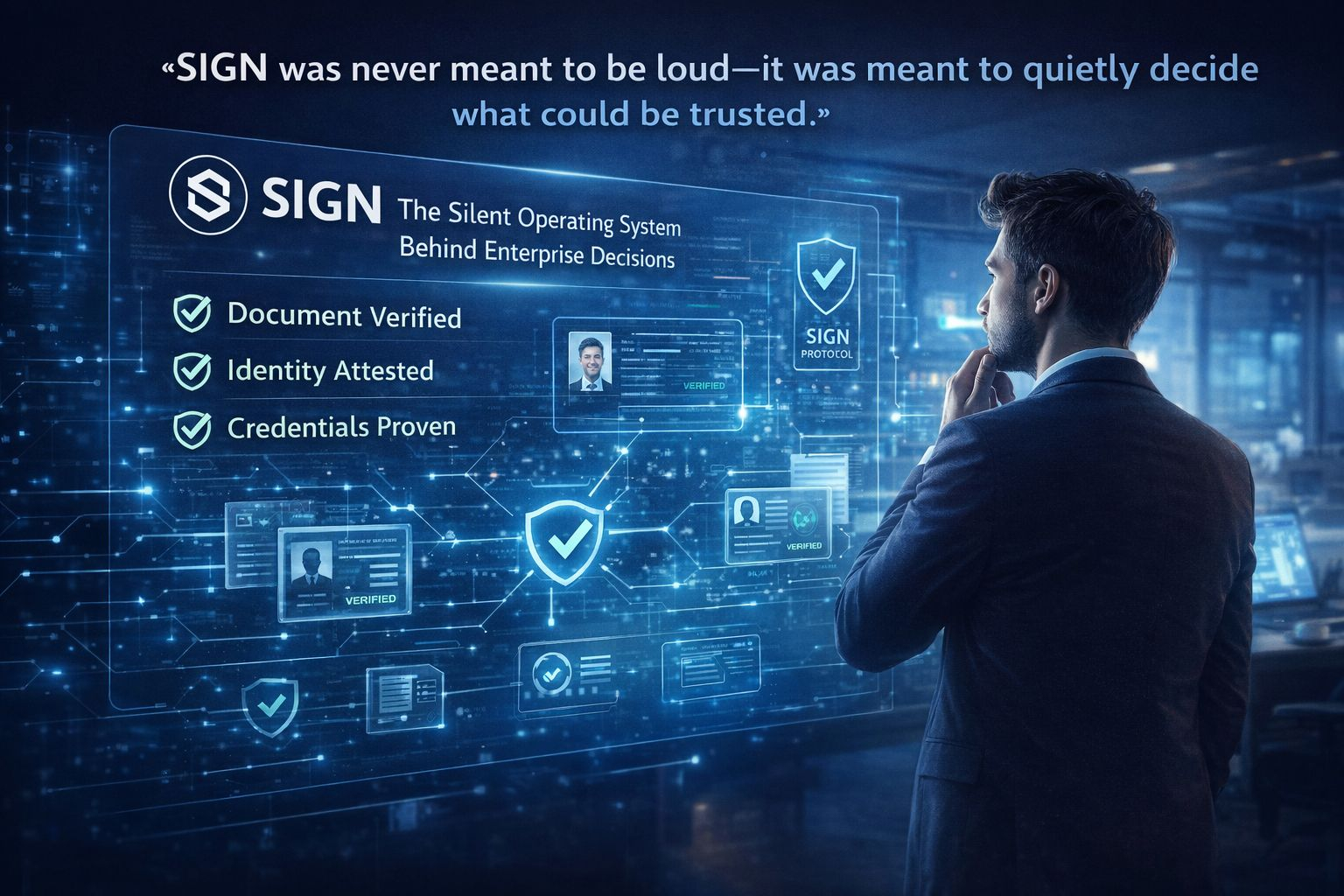
SIGN was never meant to be loud—it was meant to quietly decide what could be trusted.
I still remember a conversation I had with a friend who works in a mid-sized logistics company. He was frustrated—not because their systems were slow, but because every decision felt like a gamble. Every vendor onboarding required endless verification. Every document had to be checked, rechecked, and sometimes even physically validated. “We don’t lack data,” he told me, “we lack certainty.” That line stayed with me. Because it made me realize something simple but powerful—most enterprise decisions are not about information, they are about trust. And trust, in today’s systems, is still largely manual, fragmented, and surprisingly fragile.
As I started observing more closely, I noticed this pattern everywhere. Banks verifying income statements. Governments validating identity documents. Companies cross-checking supplier credentials. Behind every decision, there was an invisible layer of doubt. I think that’s where SIGN starts to make sense—not as another tool, but as something deeper. Almost like a silent operating system running underneath everything. Instead of people asking, “Is this document real?” the system itself answers it instantly. Not through assumptions, but through verifiable proof. I have seen how powerful that shift can be—when decisions stop depending on trust and start depending on evidence.
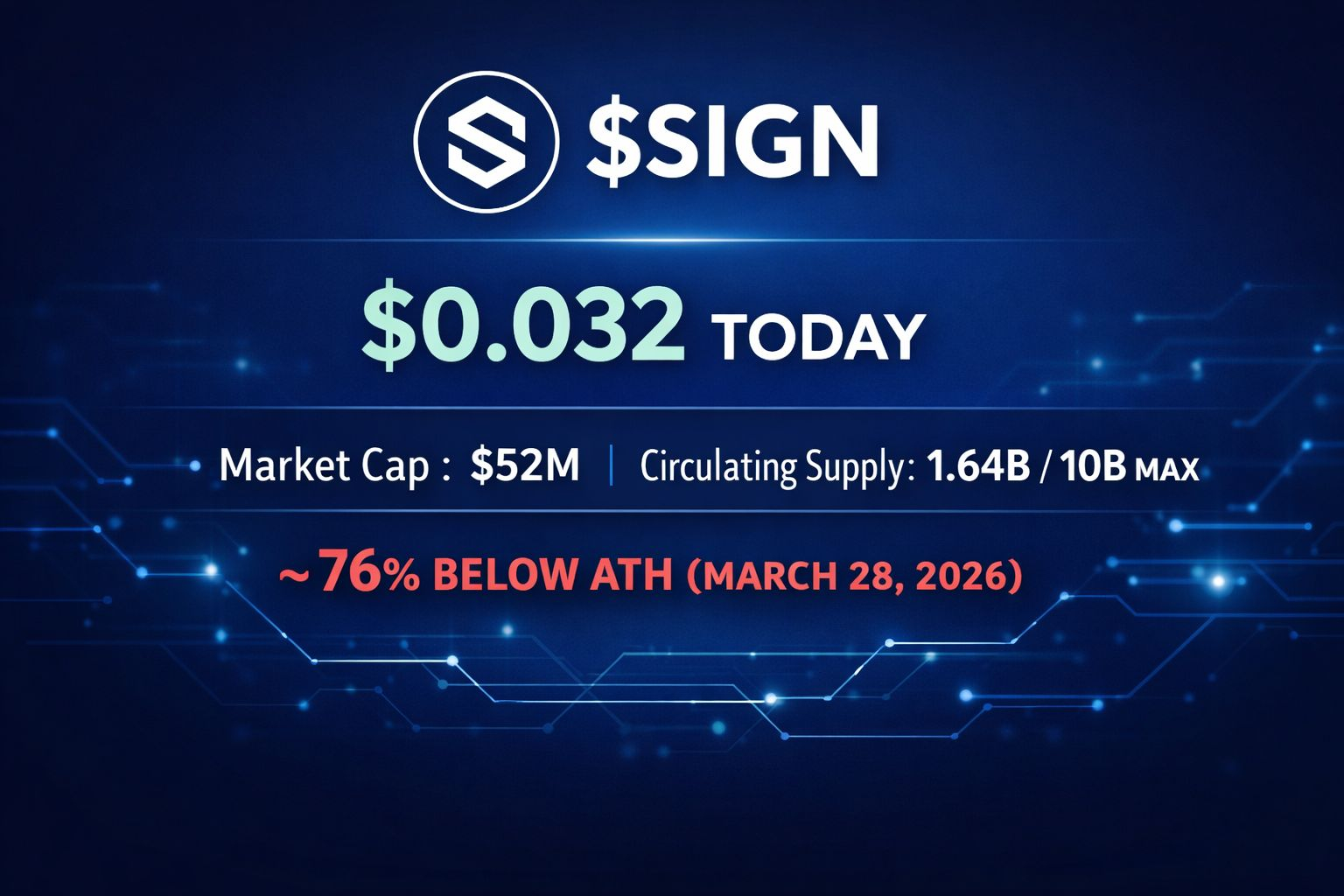
$SIGN is priced at $0.032 today.
Market Cap: $52M | Circulating Supply: 1.64B / 10B max
Currently trading ~76% below ATH (March 28, 2026) @SignOfficial #SignDigitalSovereignInfra $SIGN
What fascinates me is how invisible this layer becomes once it’s in place. Just like we don’t think about the operating system on our phones while using apps, enterprises won’t constantly think about SIGN while making decisions. It will just… work. A loan gets approved—not because someone manually verified documents, but because credentials were already proven. A supplier gets onboarded—not after weeks of checks, but because their compliance history is already attested. I think this is where things change fundamentally. Decision-making becomes faster, but more importantly, it becomes more confident. And confidence, in business, is everything.
I have also noticed something else—this kind of system doesn’t remove humans, it actually frees them. Instead of spending hours verifying data, teams can focus on strategy, relationships, and growth. Imagine compliance officers no longer buried in paperwork, but actually analyzing risks. Imagine HR teams hiring based on verified skills instead of unverifiable resumes. It sounds simple, but it’s a massive shift. Because for the first time, proof becomes native to the system, not something added later. And that changes how organizations operate at their core.
The more I think about it, the more I realize that SIGN is not just about identity or verification—it’s about redefining how decisions are made. Quietly, without hype, it sits in the background, ensuring that every input into a decision is real, verifiable, and trustworthy. We may not see it directly. We may not even talk about it every day. But just like an operating system, once it’s there, everything starts working differently. And maybe that’s the real shift—not louder technology, but smarter, quieter infrastructure that makes the entire system more reliable without us even noticing.