$SIGN @SignOfficial #SignDigitalSovereignInfra
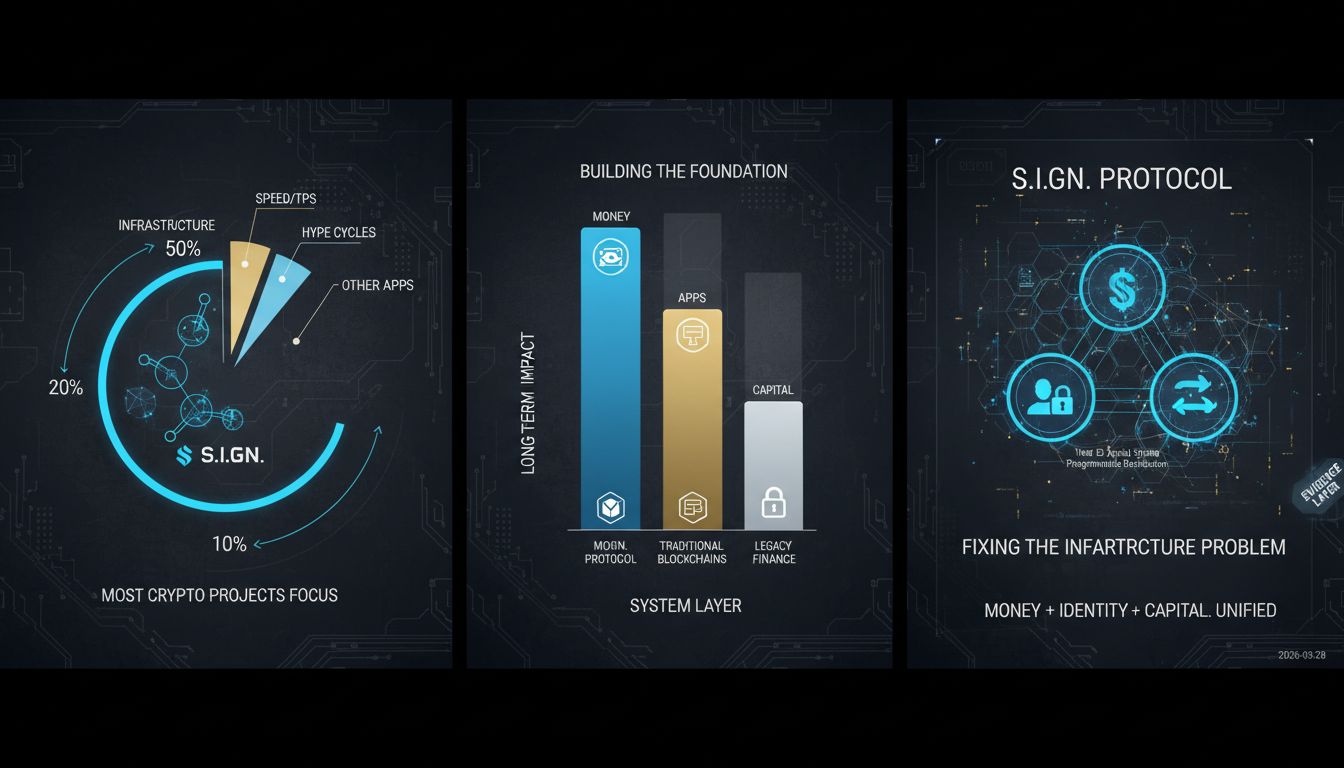
Most crypto projects focus on speed, TPS, or hype cycles. But after spending time digging into SIGN, I realized something different — it’s not trying to compete as “just another chain.” It’s trying to fix the infrastructure problem.
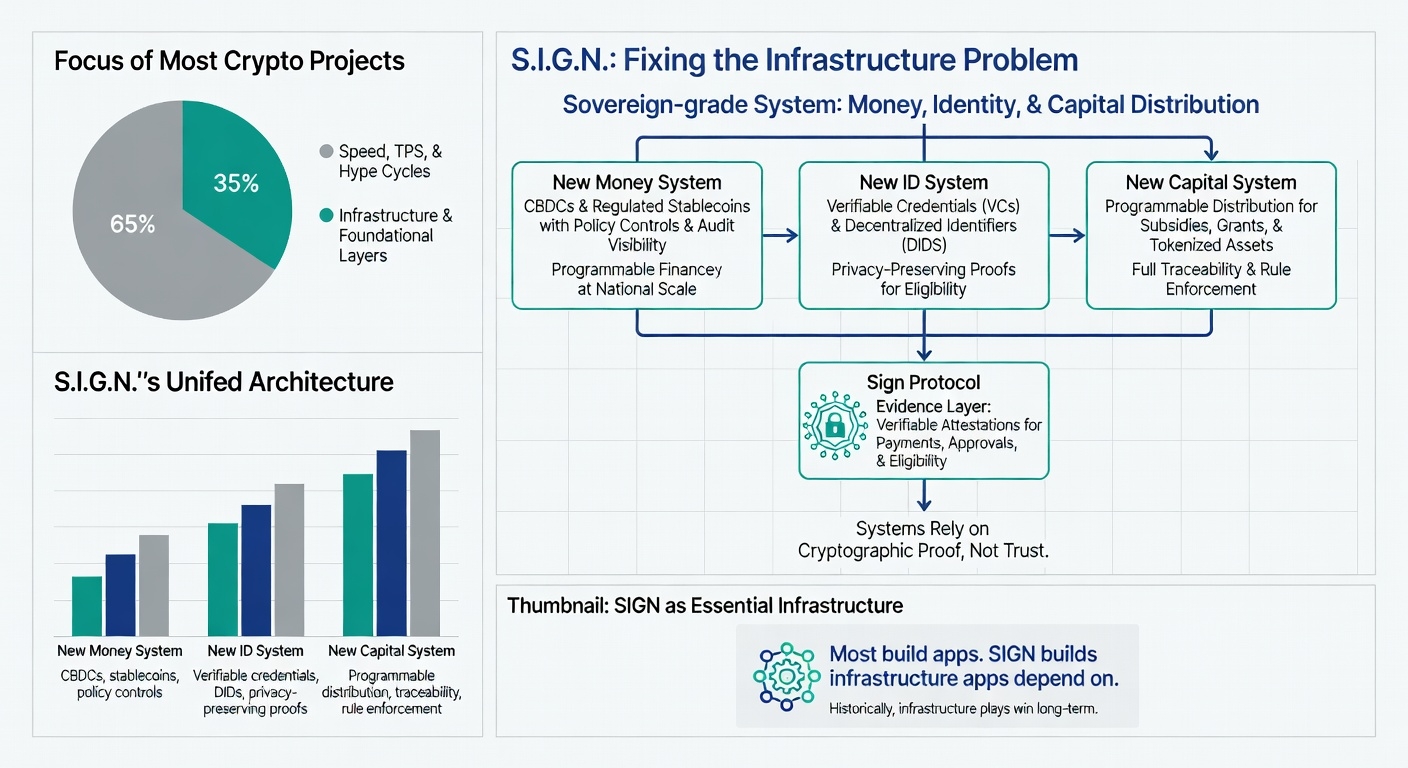
S.I.G.N. introduces a sovereign-grade system combining money, identity, and capital distribution into one unified architecture. That’s powerful because real-world systems don’t operate in isolation. Governments, institutions, and even large-scale DeFi need all three layers working together.
The New Money System enables CBDCs and regulated stablecoins with policy controls and audit visibility. This isn’t just about payments — it’s about programmable finance at a national scale.
Then comes the New ID System, which uses verifiable credentials (VCs) and decentralized identifiers (DIDs). Instead of constantly re-verifying identity across platforms, users can prove eligibility with privacy-preserving proofs. This solves one of crypto’s biggest bottlenecks: trust without exposure.
Finally, the New Capital System introduces programmable distribution — meaning governments or institutions can distribute funds with full traceability and rule enforcement. Think subsidies, grants, or even tokenized assets — all verifiable.
What ties everything together is Sign Protocol, acting as the evidence layer. Every action — payments, approvals, eligibility — becomes a verifiable attestation. That means systems don’t rely on trust anymore, but on cryptographic proof.
My personal take?
Most projects are building apps. SIGN is building infrastructure that apps depend on. And historically, infrastructure plays tend to win long-term.
If adoption of CBDCs, RWAs, and compliant DeFi continues, systems like SIGN won’t just be useful — they’ll be necessary.