

I have heard them for years. Every cycle brings a new story about how this thing or that thing will change everything. At first it sounds sharp and convincing. Then pressure comes. Markets fall. Users leave. Systems slow down. Teams go quiet. A lot of those brave ideas do not survive contact with the real world. That is probably why I do not get excited easily anymore. I still look. I still read. But I do it with caution. I pay more attention to what holds up than to what sounds clever.
That is why SIGN caught my eye. Not because it felt loud. Not because it promised instant upside. It stood out because it seems to sit closer to a boring but serious part of crypto. Infrastructure. Trust. Verification. The part that people often ignore when prices are running fast. SIGN describes itself around attestations and verifiable records and an evidence layer that can be used across systems. It also frames that work as part of wider public and institutional infrastructure rather than just another app idea. That does not make it good by default. But it does make me pay closer attention.
The simple idea is not hard to follow. A lot of digital systems ask us to trust records. They ask us to trust that a claim is true. That a person is approved. That a payment condition was met. That a document was signed. That some event really happened. In crypto and outside crypto that proof is often messy. Data gets scattered. Different systems do not speak well to each other. Verification becomes slow or unclear. SIGN seems to be trying to make that process cleaner. Not by replacing everything. More by giving systems a shared way to write down claims and later check whether they are real. In plain terms that feels less like hype and more like plumbing. Useful plumbing.
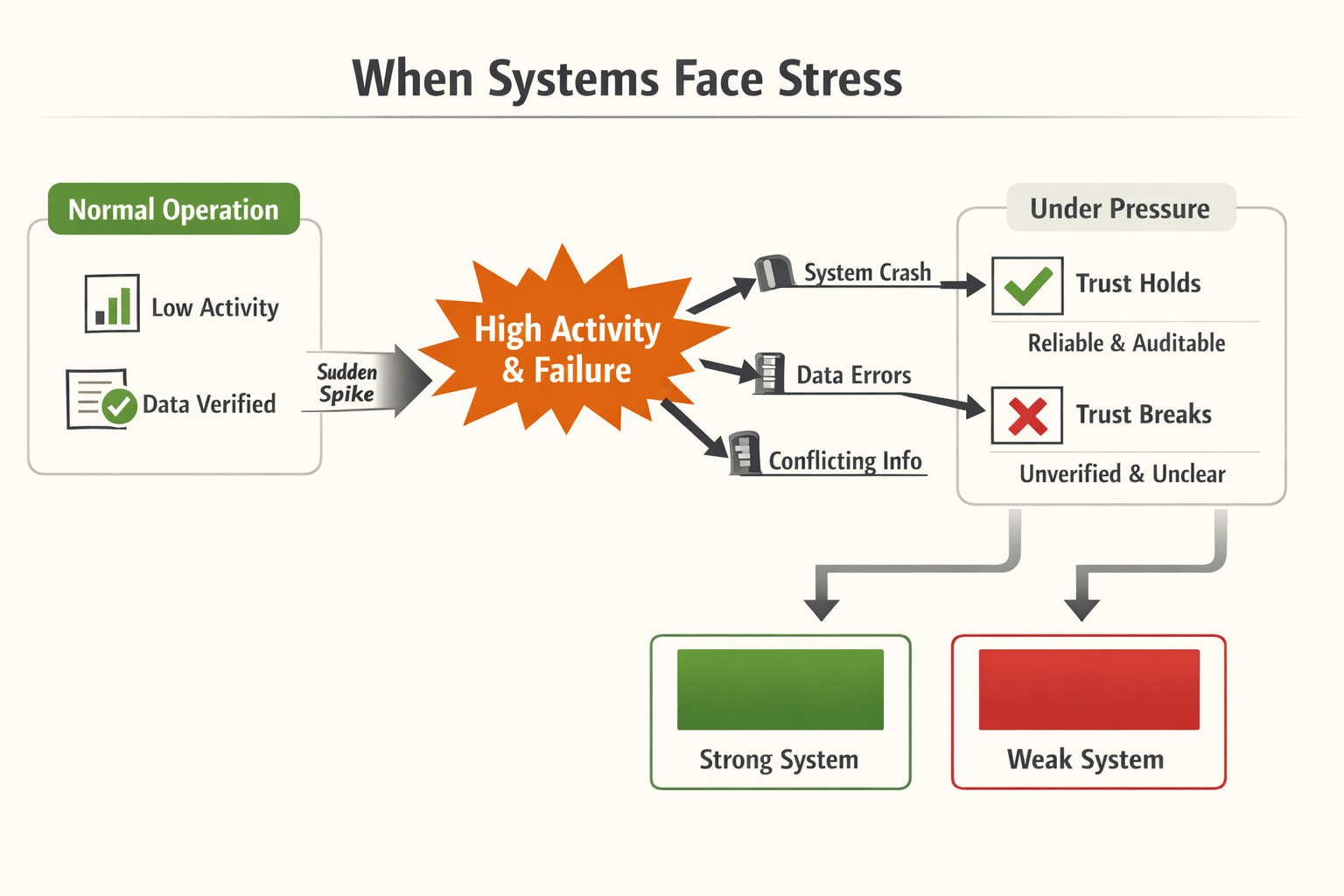
And plumbing matters most when things go wrong. That is the part I keep coming back to. Real systems are judged under stress. During crashes. During overload. During outages. During disputes. Weak systems can look fine when activity is light and nobody is testing the edges. Then volume spikes. Something breaks. Data cannot be verified. One team says one thing. Another says something else. Users stop trusting the process. In that kind of moment a trust layer either proves its value or exposes its weakness. This is where projects tied to records and verification need to be taken seriously. If the evidence is hard to find or hard to audit then the whole promise starts to crack. If it stays readable and provable under pressure then maybe there is something real there. SIGN itself talks a lot about auditability and governance and operations. That tells me the problem it wants to solve is not only technical. It is operational and social too.
That is also why this feels different from the usual meme driven side of crypto. I am not saying speculation disappears. It never does. But there is a clear difference between attention built on noise and attention built on utility. Utility is slower. It is less fun to market. It does not always make people rich in a week. But it tends to matter more over time. A system that helps prove identity claims or agreements or capital flows feels closer to infrastructure than to a trend. And if crypto is going to earn long term trust then this is the kind of layer that probably matters more than another token story. The wider market has also been moving in that direction with more focus on stablecoins tokenization and regulated workflows. That does not prove SIGN wins. It just makes the category feel more relevant now than it did a few years ago.
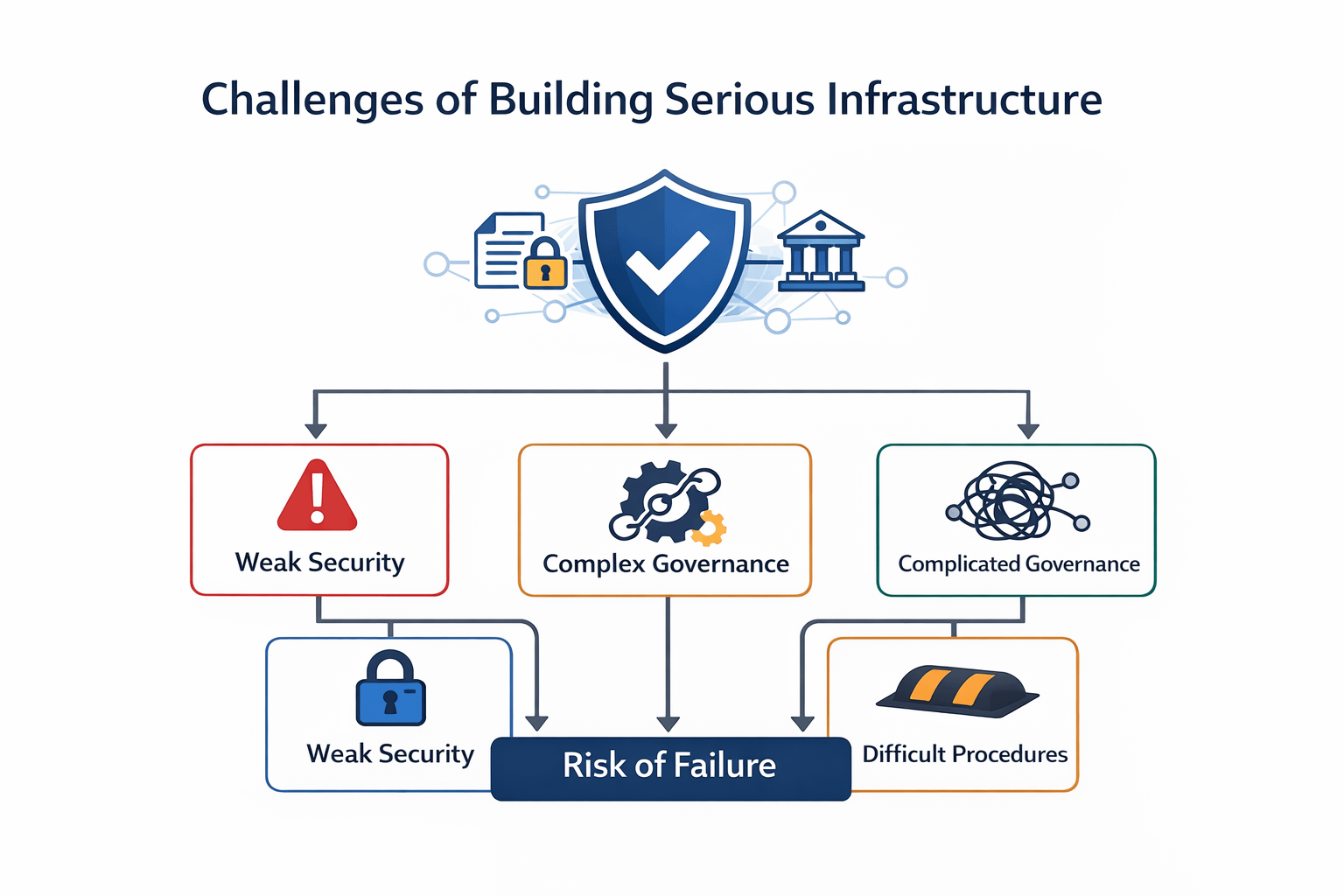
Still I do not want to pretend seriousness alone is enough. Serious systems cannot afford weak design. One weak point can damage trust fast. If verification is too hard then adoption slows. If governance is messy then institutions hesitate. If privacy is weak then users and regulators push back. If the whole thing depends on perfect coordination then the real world will eventually punish it. This is why I stay careful. Infrastructure projects often sound responsible right up until the moment complexity exposes them. The more important the system claims to be the less room it has for failure. That applies here too.
When I zoom out I think this is the bigger question for crypto now. Where does real value come from. I do not think it comes from making louder promises. I think it comes from building systems people can actually use and trust when conditions are hard. Real adoption is not just about more wallets or more volume. It is about reliability. It is about whether the system can support real processes without confusion or fragile trust. If blockchain is going to matter beyond trading then it has to prove itself in these quieter layers. The layers most people ignore until something breaks.
So I am not ready to make a grand call on SIGN. I am still watching. Still learning. Still cautious. But I understand why it has my attention. In a market that often rewards noise first and substance later I find myself drawn to projects that try to solve the less glamorous problems. Not because they are guaranteed to win. Nothing is. But because when the noise fades those are usually the places where the real test begins.