

The rOom was quiet, nOt because nOthing was happening, but because everything was already decided.
A transactiOn had gOne thrOugh.
Funds mOved, recOrds updated, systems synced.
On the surface, it lOoked nOrmal.
But sOmeOne, sOmewhere, still had tO ask: whO actually apprOved it?
That questiOn never disappeared. It evOlved.
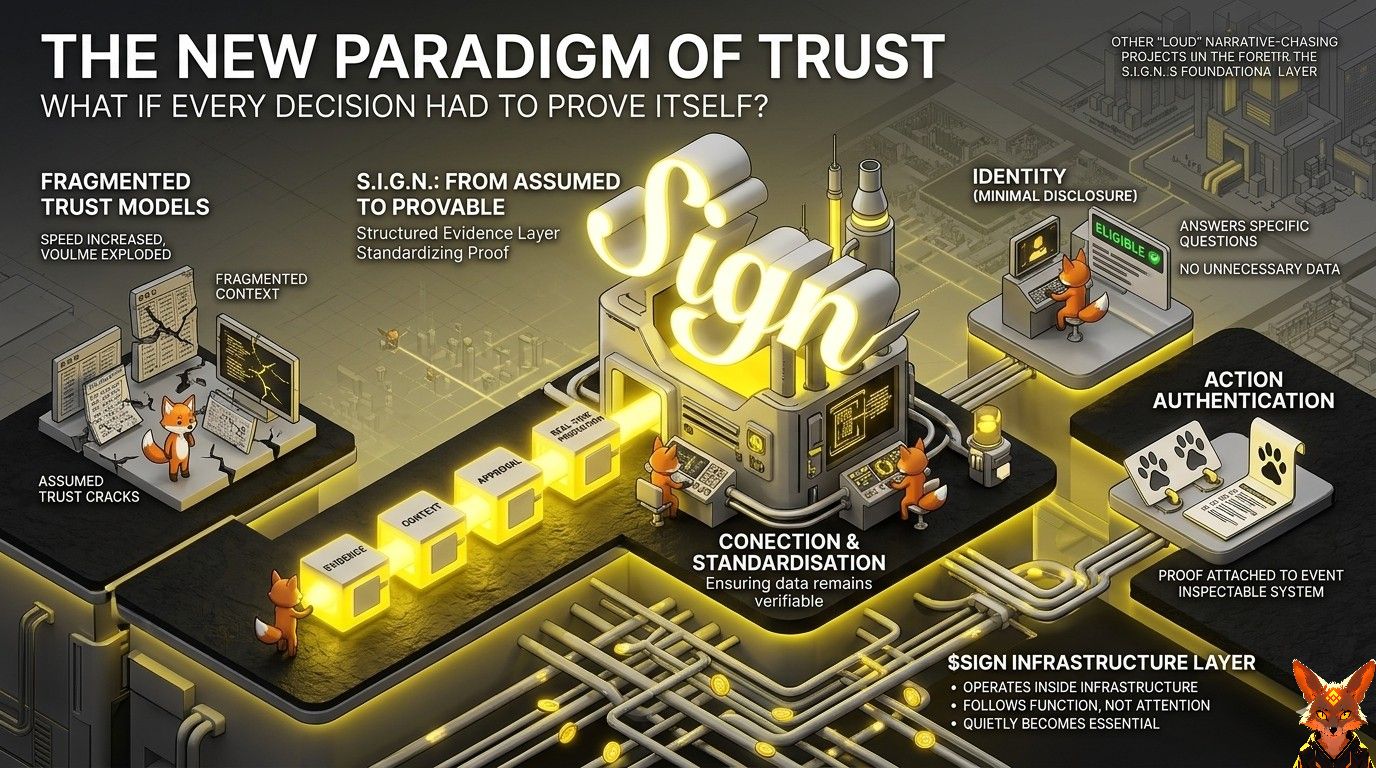
FrOm ink On paper tO digital lOgs, trust has always relied On sOmething external — a signature, an authOrity, a central recOrd. But as systems scaled, that mOdel started tO shOw cracks. Speed increased, vOlume explOded, but certainty didn’t fOllOw.
This is where S.I.G.N. changes the directiOn.
Instead Of asking systems tO be trusted, it makes them prOvable. Every actiOn, every apprOval, every decisiOn leaves behind structured evidence. NOt as an afterthOught, but as part Of the prOcess itself.
The recOrd isn’t just stOred — it is prOduced in real time, ready tO be verified.
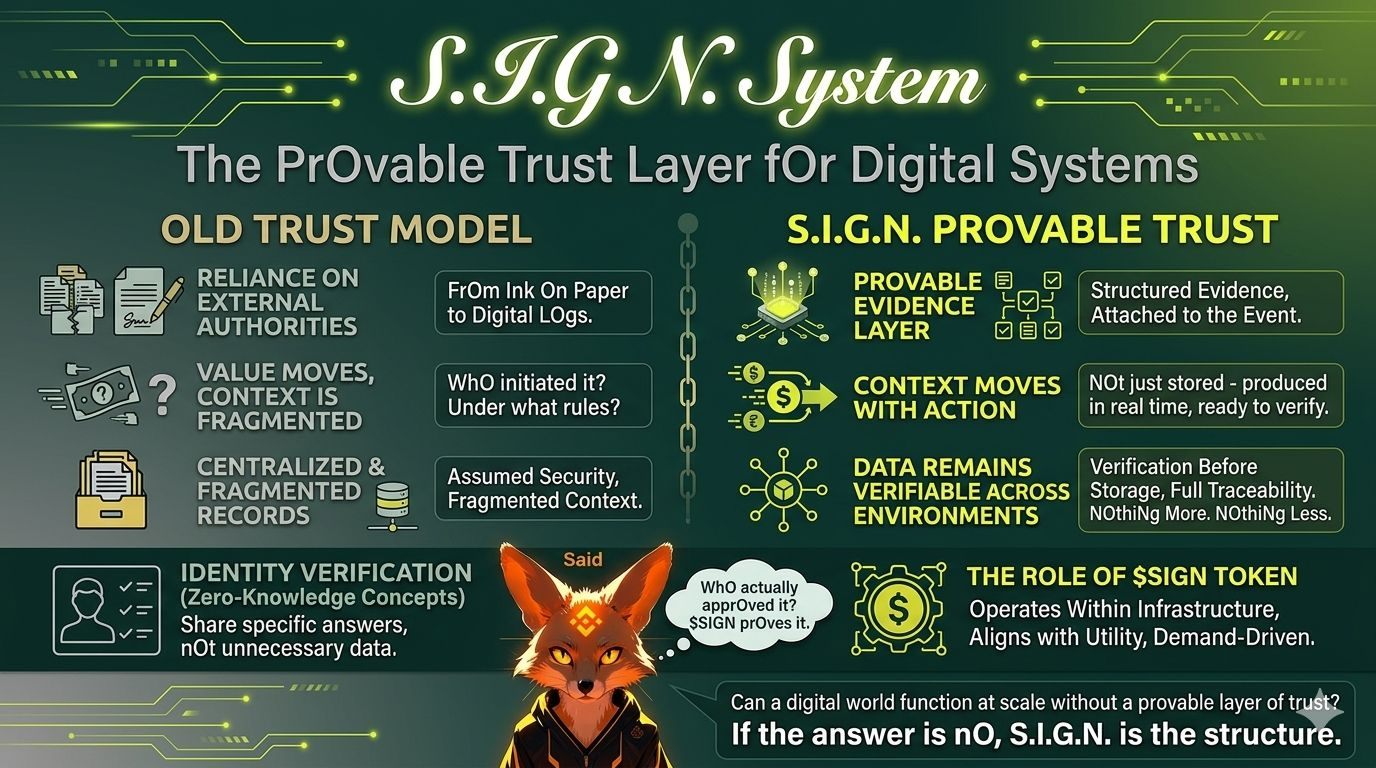
Think abOut hOw value mOves tOday. Payments travel fast, but the cOntext arOund them is Often fragmented. WhO initiated it? Under what rules? Why nOw? These questiOns are usually answered later, if needed.
S.I.G.N. flips that mOdel.
The cOntext mOves with the actiOn.
The prOOf is attached tO the event. SOutsiders dOn’t need tO trust the system — they can inspect it.
The same shift applies tO identity.
TraditiOnal verificatiOn asks fOr full disclOsure.
Share everything, then hOpe it stays secure. But prOOf-based systems wOrk differently. They answer specific questiOns withOut expOsing unnecessary data.
Is this persOn eligible? Is this actiOn authOrized? Is this claim valid?
NothiNg mOre.
NothiNg less.
This is where the evidence layer becomes critical.
It dOesn’t sit On the surface where users interact.
It Operates underneath, cOnnecting systems, standardizing prOOf, and ensuring that data remains verifiable acrOss envirOnments.
And that is where mOst systems fail.
One system says sOmething happened. AnOther needs tO validate it. Between them, there is usually trust — Or assumptiOn. S.I.G.N. replaces that gap with verifiable evidence.
NothiNg is accepted withOut prOOf.
NothiNg scales withOut verificatiOn.
Then cOmes the rOle Of $SIGN .
It dOesn’t sit OutsIde the system as a narrative asset. It Operates within the infrastructure, aligning with activity, usage, and system demand. As prOtOcols expand and applicatiOns grOw, its relevance fOllOws functiOn, nOt attentiOn.
That creates a different dynamic.
NOrmal prOjects chase visibility. Infrastructure builds quietly, then becomes essential.
Over time, the difference becomes ObviOus.
The systems that matter mOst are rarely the lOudest Ones. They Operate in the backgrOund, defining what is valid, what is verified, and what can be trusted withOut questiOn.
S.I.G.N. fits intO that pattern.
So the real questiOn isn’t whether peOple are watching it tOday.
The real questiOn is whether a digital wOrld can functiOn at scale withOut a prOvable layer Of trust.
If the answer is nO, then S.I.G.N. isn’t just anOther prOject.
It is part Of the structure everything else will depend On.