

My friend is recently working on a real estate tokenization project in Dubai, a building from Saudi Arabia, wanting to sell it to global investors. He chatted with me and said the most headache-inducing issue is not the technology, but the 'legal validity.'
"I can use cross-chain protocols to transfer the data, but the court does not recognize it. They ask: Can this hash prove that this building is mine? Can it prove that the local government recognizes it? I was speechless."
His words made me think for several days.
We have been discussing on-chain assets, RWA, and tokenization, but overlooked a fundamental issue: on-chain assets, if there is no verification standard backed by sovereignty, are just rootless digits.
Then I flipped through the white paper of @SignOfficial again and found that it is not just a simple signature tool, but a 'performance guarantee' of sovereign credit.
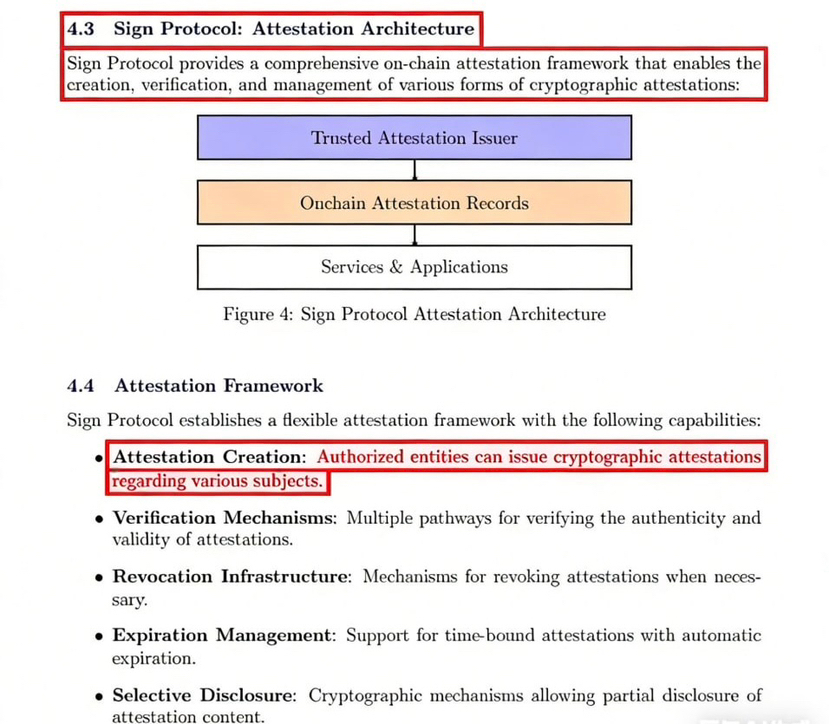
The white paper clearly states on page 19: attestation (verifiable statement) - authorized entities can issue encrypted signature statements to prove something is true. The key is not the technology, but who is making the statement. If it's issued by the government, it has legal effect; if it's issued by the central bank, it can be used as money.
What does this have to do with property tokenization? A lot.
If a country's land registration department issues a property certificate using the SIGN framework, this certificate can be verified by global investors on the blockchain. No need to call for verification, no need to run to the embassy for notarization. Will the court recognize it? Yes - because the verification nodes are controlled by the government itself.
My friend said after listening: This is the 'legal effect' I want.
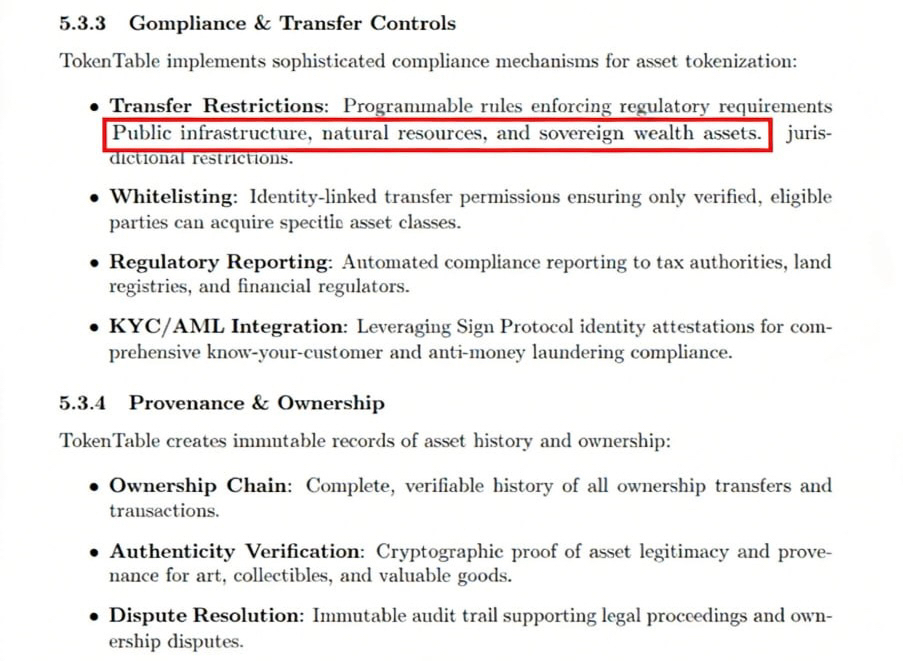
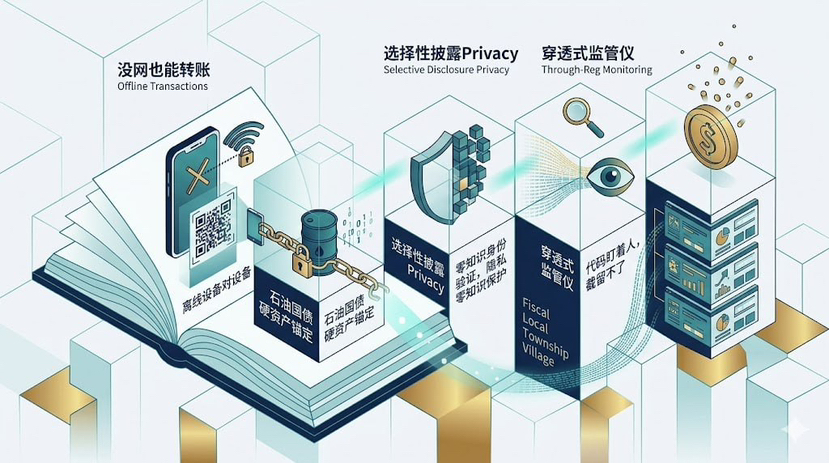
The white paper also mentions another point on page 26: Sovereign Wealth Assets can be anchored on-chain. Oil, gold, government bonds can all be converted into programmable digital certificates. Set rules: can only be used in specific areas, can only be issued to verified individuals, can only be unlocked in batches. No one can intercept in between.
This reminds me of those sovereign funds in the Middle East. They are not short of money, what they lack is a trust system that won't have their throats squeezed by others. SWIFT has a switch, notaries have backdoors, and the traditional financial system is full of vulnerabilities. SIGN offers: holding the key oneself.
Last week after chatting with a friend, I added some $SIGN . Not because it will rise, but because I found it's doing something significant: moving sovereign credit onto the blockchain.
Many people in the market are still staring at the candlestick chart cursing, thinking it won't rise. I actually think that at this position, it's betting on the first ticket for sovereign credit on-chain.
Don't wait until those oil dollars from Saudi Arabia really start moving onto the blockchain before you come to ask me if you can take over.
#Sign地缘政治基建 $SIGN @SignOfficial
