
I’ve been in enough war rooms to know when someone’s romanticizing the mess.
And that article about coordination being the “real” Web3 problem?
Yeah, I read it. Twice.
Because parts of it? Spot on. The spreadsheets at 2am. The grant programs collapsing under their own weight. The moment you realize you’ve been manually checking GitHub profiles for three hours and you still have 400 submissions left.
That part is real.
But here’s where I started to disagree—not loudly, but enough to write this.
The author looked at Sign and saw a fix for coordination.
I looked at the same landscape and realized something else:
Coordination isn’t the problem.
Coordination on someone else’s terms is the problem.
Let me explain.
I’ve Built the “Elegant” Coordination Layer Before
A few years ago, I was deep in a project that was supposed to be the clean answer to on-chain collaboration.
The idea: verifiable credentials, attestations, a lightweight layer that let anyone prove they did something without begging for permission.
Sounds familiar, right?
We built it. It worked.
And then… nobody used it the way we expected.
Why?
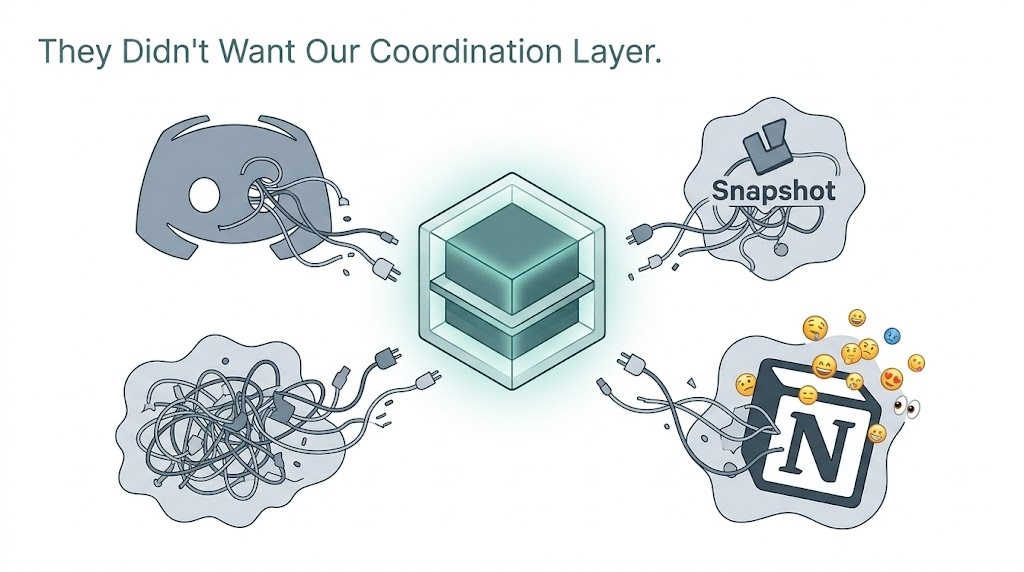
Because every community already had their own way of tracking contribution. Their own weird little system. Some used Discord roles. Some used a private Snapshot. One group literally used a Notion database with emojis as approval signals.
They didn’t want our coordination layer.
They wanted their coordination layer, with our tool bolted on if it made life easier.
That’s the part that always gets missed.
Attestations Are Cool. Ownership Is Better.
The original article makes attestations sound like this elegant unlock.
And technically? They are.
But here’s what happens in reality:
You define conditions as attestations. Great.
Now who issues them?
Who decides that a “contribution attestation” actually means something?
What happens when two different attesters have conflicting standards?
Now you’re not coordinating.
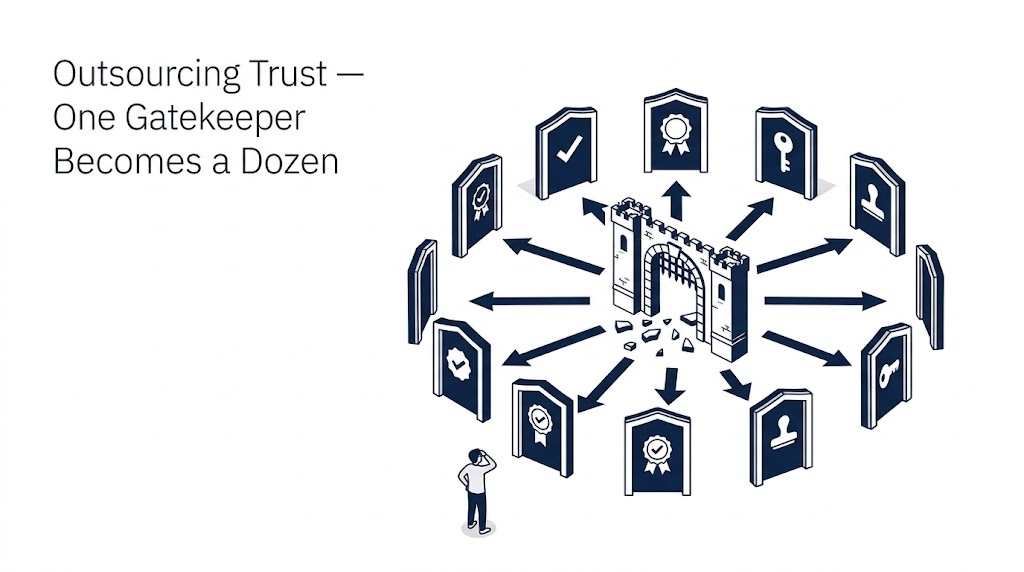
You’re outsourcing trust.
And if you think that’s different from the old world?
It’s not.
It’s just replacing one gatekeeper with a dozen smaller ones.
I’m not saying attestations are bad.
I’m saying if you build your entire coordination model around them, you’ve just moved the bottleneck from “who deserves what” to “who gets to attest.”
That’s a lateral move at best.
Where I Actually Land
I’m not here to tear down Sign.
Honestly, I think the direction is interesting.
The idea of stitching together signals instead of forcing one identity system?
That part I genuinely like.
But if I were building the competitor—and let’s be real, I kind of am—I’d shift the focus.
Not: “Here’s how you coordinate.”
Instead: “Here’s how you let others coordinate without handing over control.”
That means:
· Attestations as opt-in, not default.
You don’t force a model. You let groups define their own truth and plug it in.
· Verifiable but disposable.
Your reputation in one community shouldn’t follow you forever unless you want it to. Sometimes you want a clean slate. That should be your choice.
· Tooling, not doctrine.
The second you tell people “this is how coordination should work,” you lose half the room. The winning approach is the one that disappears into how they already work.
The AI Agent Angle? I’m Watching, But Careful
The original article brought up AI agents and attestations.
And yeah, that’s the part that made me pause.
Because if we’re being honest, AI agents are going to eat the current coordination model alive.
Right now, they’re blind.
They see balances, maybe transactions. No context.
So they either trust blindly or verify everything from scratch.
Attestations could fix that.
But here’s the uncomfortable part nobody’s saying out loud:
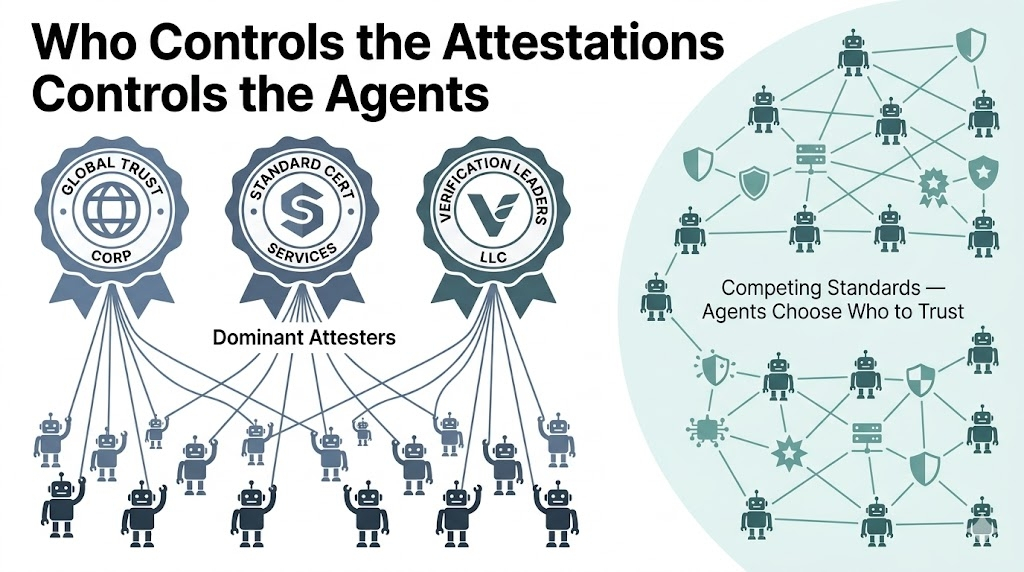
If AI agents start relying on attestations to make decisions,
who controls the attestations controls the agents.
That’s not a small thing.
That’s the entire internet infrastructure debate from the last twenty years, just on-chain.
So if we’re building this future, I’d rather build it with multiple attestation sources, competing standards, and systems that let agents choose who to trust rather than being forced into one layer.
Because the alternative?
We end up with three big attesters and everyone else begging for approval.
That’s not Web3.
That’s just Web2 with better marketing.
So Yeah, I’m Skeptical. But Not Cynical.
I don’t think the original author is wrong about the problem.
I’ve lived the 2am spreadsheet life too.
But I think the “coordination” framing misses the human part.
People don’t want better coordination tools.
They want control over how they coordinate.
And any system that forgets that—no matter how elegant—will end up in the same pile of “great ideas that nobody actually used.”
So if I’m writing the competitor article?
It’s not about fixing coordination.
It’s about giving people the pieces to build their own coordination systems.
Without asking permission.
Without being locked into someone else’s attestation model.
Without waking up one day and realizing the “trust layer” just became the new gatekeeper.
That’s the version I’m building toward.
Call it messy. Call it less elegant than a clean attestation model.
I don’t care.
I’d rather build something that bends to how people actually work
than force them into something that looks perfect on a whiteboard.
Because that’s the real lesson after years of building in Web3:
Elegant systems fail.
Messy, flexible, human systems survive.
This isn’t a takedown. It’s a different path.
If you’re building in this space, I’d love to hear which side you land on.
