
One thing I genuinely like after going through Sign’s take on RWA, especially the idea of bringing Dubai real estate onto blockchain… it’s not because it sounds cool, but because it’s one of the few times crypto is touching something truly real, something heavy, the kind of asset people hold for years, not trade in and out within days.
What stands out is that they’re not just turning real estate into a tradable token for speculation, but focusing on ownership verification. It sounds dry, but if you think about it, this is the core layer. You can fractionalize assets, digitize them, but if you cannot prove who actually owns what, then everything else is just simulation.
Sign leans into attestations, meaning verifiable proofs that don’t rely entirely on a single intermediary. That fits extremely well in markets like Dubai, where real estate involves high value, cross-border participants, and multiple legal layers stacked together.
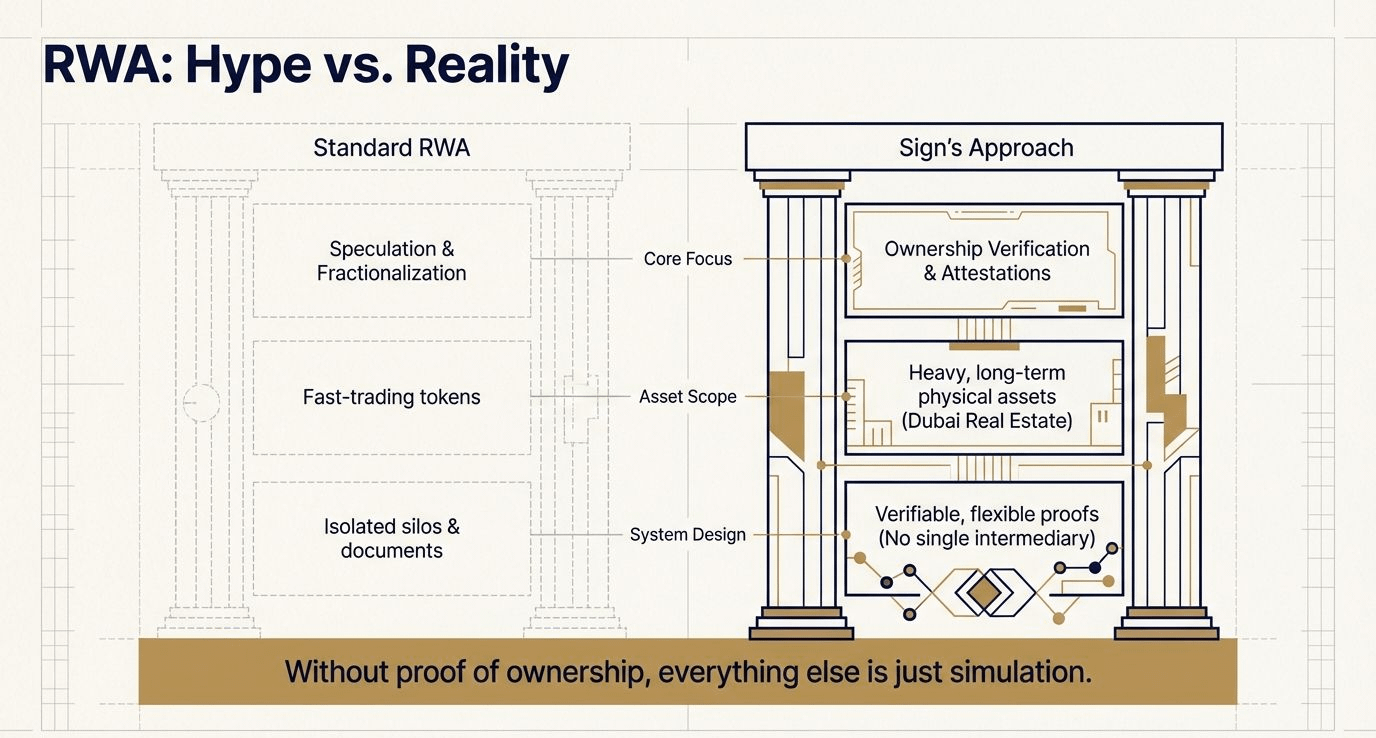
Instead of relying purely on documents or isolated systems, you now get a more flexible way to verify data. Not everything has to be public, but enough can be proven when needed. If done right, this doesn’t just make transactions smoother, it reduces disputes significantly.
But still… there’s one part I’m not fully comfortable with. The bridge between blockchain and real-world legal systems. You can build a clean verification layer on-chain, but if it’s not recognized legally, then in the end, traditional paperwork still dominates.
Crypto has struggled with this before, building parallel systems without fully integrating into reality. And with real estate, this gap becomes even more obvious. A property in Dubai is not just data, it involves land rights, regulations, even political context.
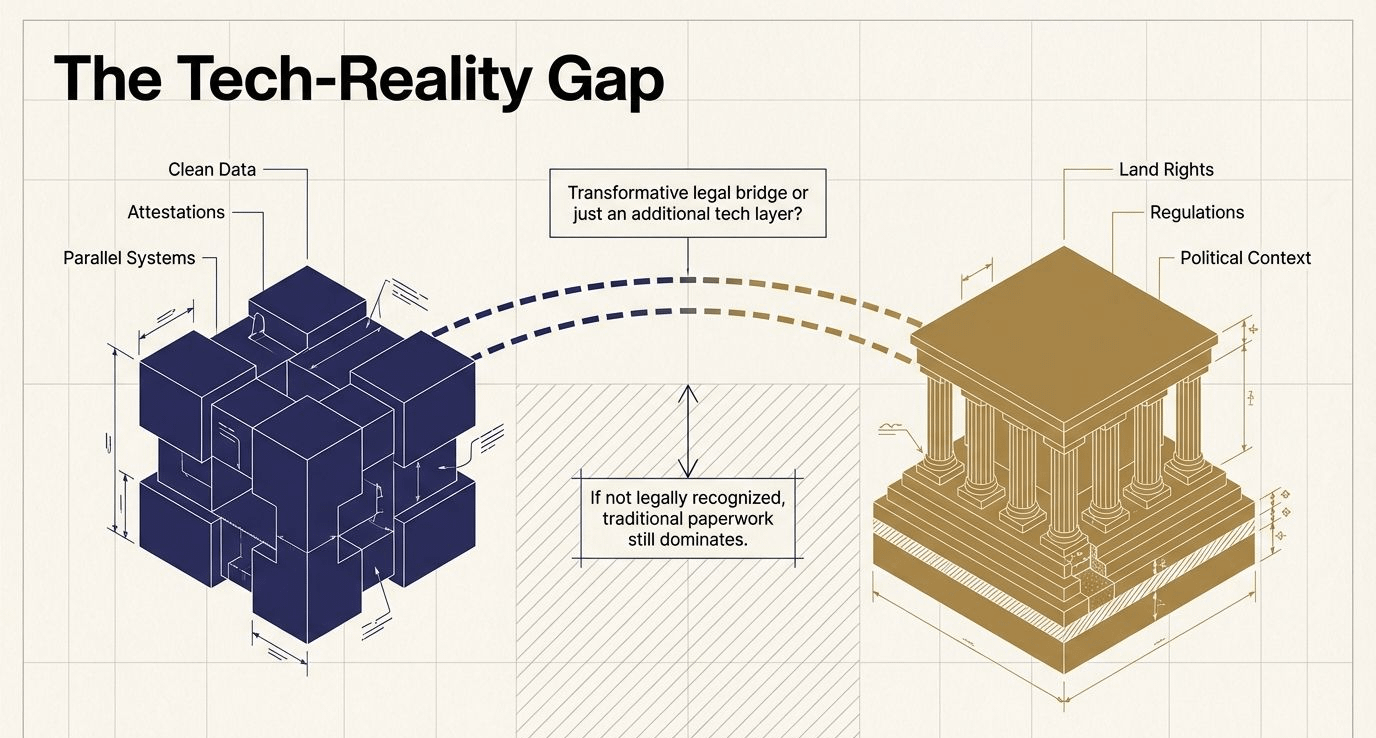
So the real question is: can Sign become an actual bridge between these two worlds, or will it remain just an additional tech layer? If it’s the latter, it’s still useful, but not transformative.
That said, I still rate this direction highly. At least it’s not an empty narrative. It tackles a specific problem, tied to a specific asset class. Not the usual “we will reinvent global finance” kind of pitch.
It may not explode overnight. But if it gradually integrates into legal systems and gains institutional acceptance, it could become something very hard to replace.
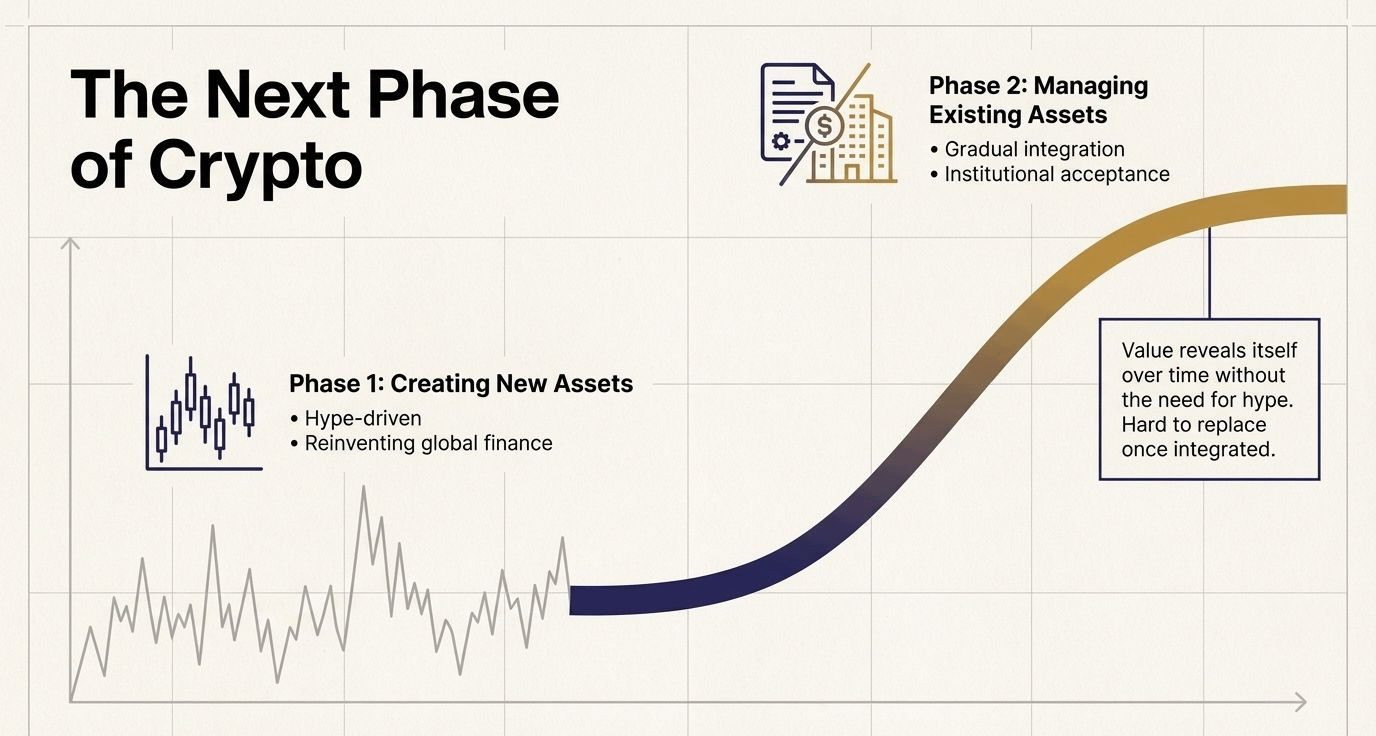
Crypto has spent years trying to create new assets. Maybe the next phase is about managing existing assets better. And if Sign executes this well, it doesn’t need hype… the value will reveal itself over time. @SignOfficial $SIGN #SignDigitalSovereignInfra