

Turn national assets and public programs into programmable, investable digital capital.
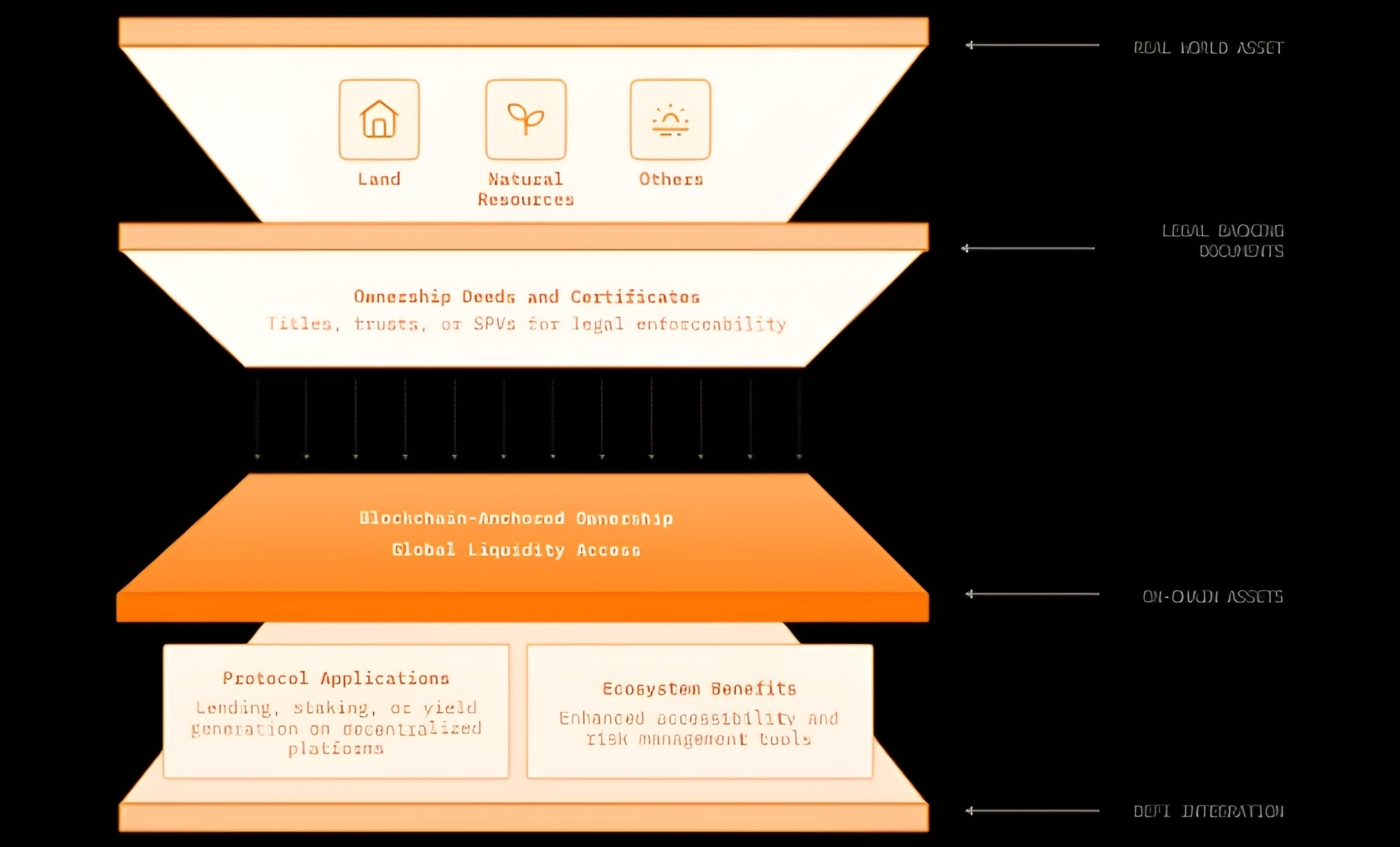
After spending time on Sign.global’s RWA use case page, the idea really resonated with me. This isn’t typical crypto tokenization hype focused on private real estate or art. Instead, it presents a sovereign-first approach to turning government bonds, infrastructure projects, climate initiatives, and public programs into compliant, programmable digital assets that can attract both domestic savings and global capital while keeping control firmly with the nation.
The core vision is straightforward yet powerful. Using the infrastructure provided by Sign Protocol, governments can issue tokenized public assets with fully transparent on-chain lifecycles. This means every stage, from issuance and ownership tracking to coupon payments and maturity, becomes visible and auditable on-chain. The real innovation lies in programmability: coupons, revenue shares, and disbursements can be automated through smart logic, reducing manual overhead and delays.
What makes this approach stand out is the careful balance between openness and control. Identity-aware eligibility (likely powered by verifiable credentials from Sign’s evidence layer) allows nations to prioritize domestic citizens or specific investor categories while still opening doors to foreign participants under standardized disclosures. This creates new channels for domestic savings, ordinary citizens could directly invest in micro-denominated infrastructure bonds or targeted SME growth funds. At the same time, data-driven governance provides real-time visibility into how funds are allocated, how projects perform, and what real-world impact they deliver.
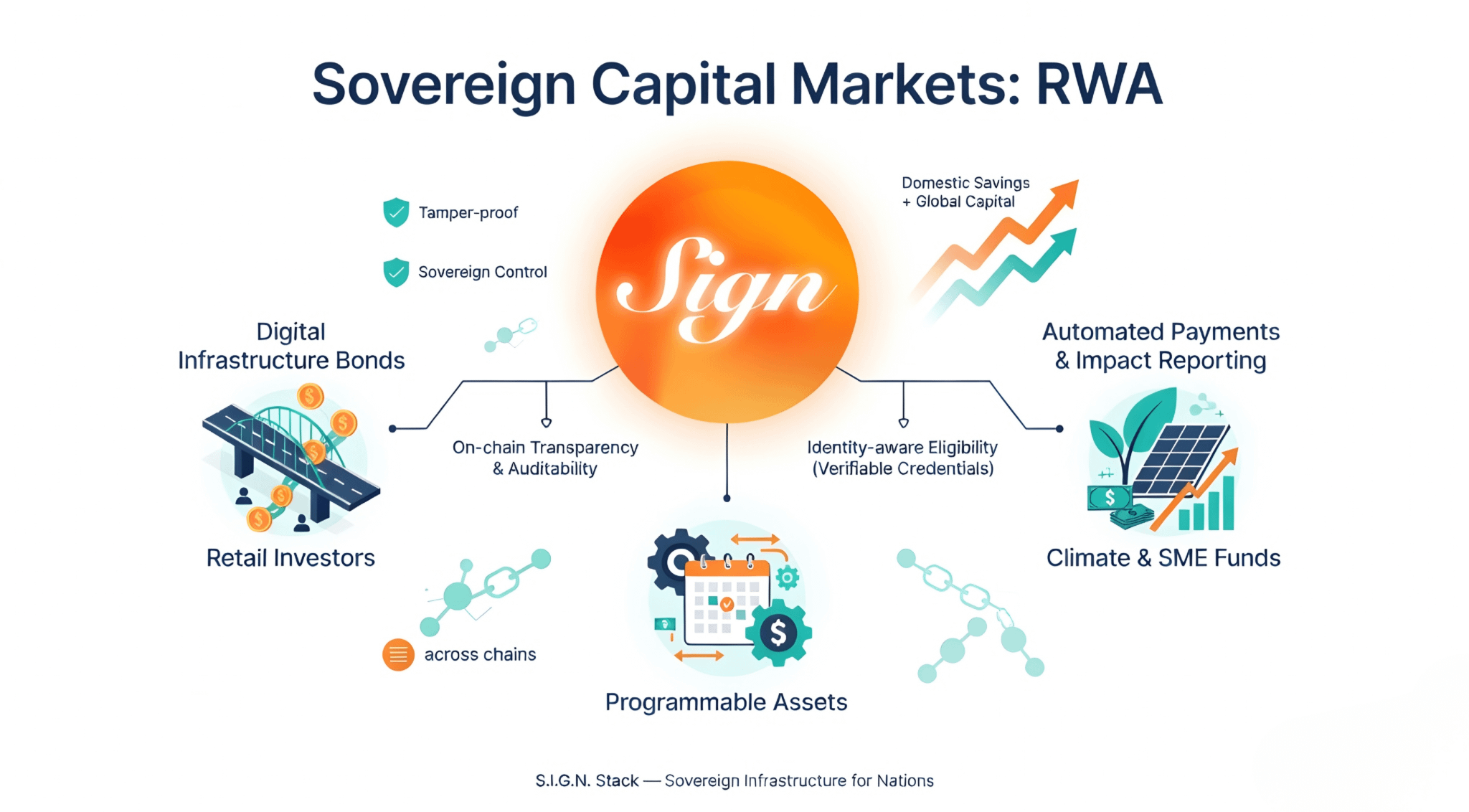
Practical examples mentioned include:
- Digital infrastructure bonds with small denominations and automated coupon payments, making them accessible to retail investors.
- Climate and transition finance instruments that come with automatic on-chain impact reporting.
- Targeted SME growth funds governed by programmable rules and identity-based eligibility.
This setup has the potential to expand participation, lower the cost of capital for public projects, and build greater trust through transparency.
My honest personal take — pros and cons
Advantages that impressed me:
- Efficiency and automation**: Programmable distributions can significantly cut administrative costs and speed up payments to investors or beneficiaries.
- Transparency and accountability: On-chain tracking reduces risks of mismanagement or corruption in public fund allocation, which is especially valuable for emerging economies.
- Financial inclusion: Citizens gain direct access to invest in national assets, potentially mobilizing domestic savings that currently sit in low-yield bank deposits.
- Attracting global capital with guardrails: Standardized disclosures and identity controls allow controlled foreign investment without fully opening the door to speculative flows.
- Better policy outcomes: Impact reporting on climate or development projects becomes verifiable, helping governments demonstrate results to both citizens and international partners.
Potential drawbacks (being realistic):
- Regulatory and legal complexity: Tokenizing sovereign assets requires harmonizing with existing securities laws, taxation rules, and custody frameworks, this could delay rollout in many jurisdictions.
- Security and operational risks: Any vulnerability in the programmable layer or underlying infrastructure could expose public funds; robust auditing and contingency plans would be essential.
- Liquidity challenges: While primary issuance might work well, building deep secondary markets for these sovereign RWAs may take time, especially in the early stages.
- Adoption barriers: Citizens and smaller investors need simple, user-friendly interfaces and education; connectivity or digital literacy gaps could limit reach in some regions.
Overall, Sign.global’s Sovereign RWA framework feels like a thoughtful extension of the broader “Blockchain for Nations” philosophy. It leverages the attestation and evidence capabilities of Sign Protocol to bring standardization, programmability, and transparency to capital markets without sacrificing sovereignty. In countries like India, this could complement existing efforts in digital public infrastructure — imagine tokenized green bonds or infrastructure instruments that channel retail and diaspora savings more effectively while maintaining full oversight.
This model positions national assets not as static liabilities on government balance sheets but as dynamic, investable instruments that can drive economic growth and innovation in public finance.
What’s your view on sovereign RWAs? Do you see governments successfully tokenizing bonds and public programs in the coming years? Would you consider investing in programmable national infrastructure assets if they offered transparency and fair access?
I’d love to hear your thoughts in the comments.