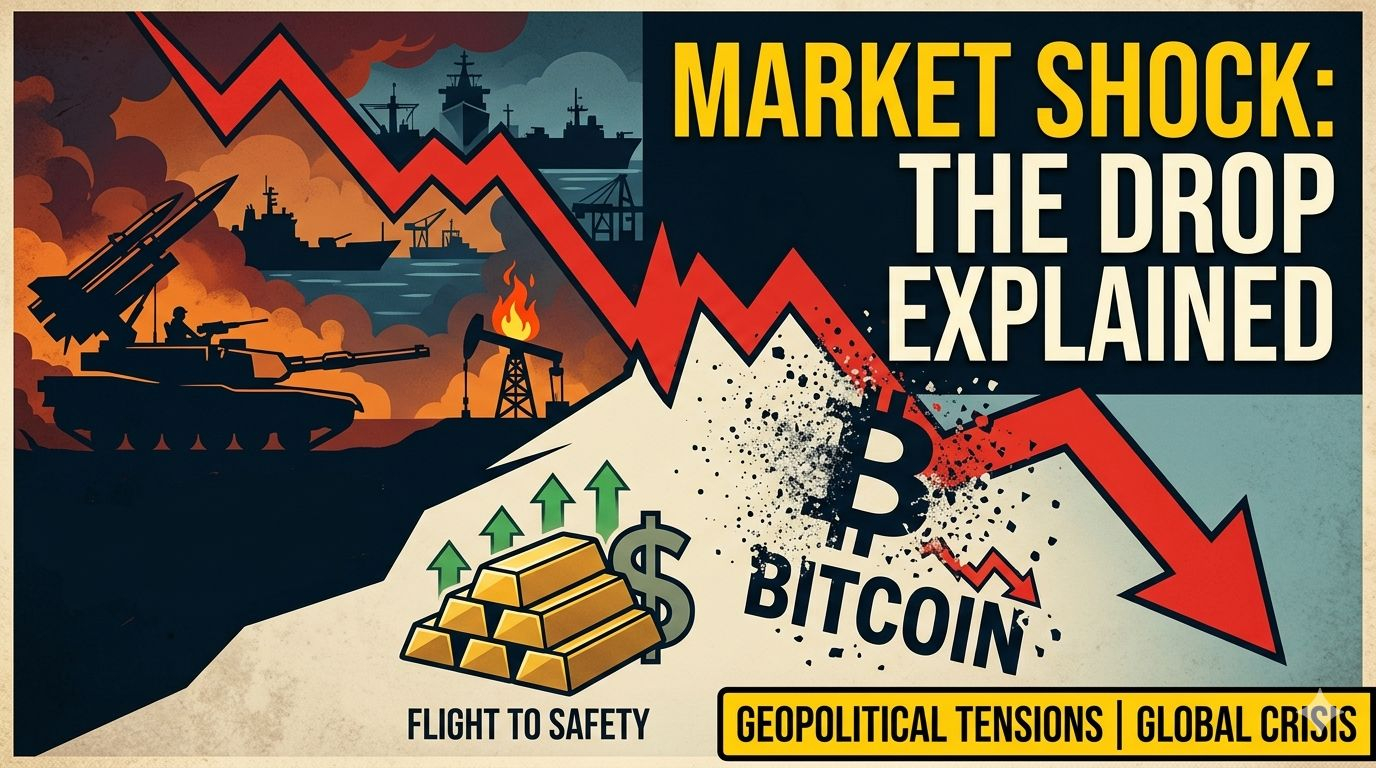
The recent drop in Bitcoin wasn’t just another routine correction—it was driven by a chain reaction of global tensions and financial stress. When geopolitical instability rises, markets respond fast, and this time was no different.
Geopolitical Trigger
The failure of negotiations involving Iran escalated tensions across the region. Reports of attacks affecting infrastructure near Persian Gulf, including energy assets linked to Qatar, created immediate uncertainty.
At the same time, threats from the United States regarding restrictions around the Strait of Hormuz intensified panic in global markets.
Investor Reaction
When fear enters the market, capital moves quickly. Investors began exiting high-risk assets like crypto and equities, shifting toward safer options. Despite its long-term narrative, Bitcoin failed to act as a short-term hedge, leading to rapid selling pressure.
Mass liquidations followed, with hundreds of millions wiped out in leveraged positions. Institutions also contributed by selling BTC to meet margin calls in other markets.
Flight to Safety
As risk assets dropped, Gold surged sharply. Central banks, particularly across Asia and the Middle East, increased gold reserves to hedge against uncertainty and potential financial restrictions.
What It Means
This isn’t just a crypto event—it’s a liquidity shift. When global uncertainty rises:
Risk assets fall
Liquidity tightens
Safe havens rise
The key takeaway: Bitcoin is still influenced by macro forces, especially in times of crisis. Understanding these connections is critical if you want to protect your capital in volatile markets.