
On-chain futures for raw assets are currently gaining momentum. Traders are gradually moving away from altcoins, which have been looking weak lately.
This is especially evident in oil and precious metals. Trading volumes for such futures have noticeably increased. Money is gradually flowing from altcoins into more understandable assets.
This is already clearly noticeable on Hyperliquid. Futures for oil and metals account for over 67% of all HIP-3 contracts in the first quarter of 2026.
Everything was different before. The main volume was provided by index products, almost 90% of all activity.
Currently, their share has significantly dropped. Approximately down to 17%, according to Sygnum.
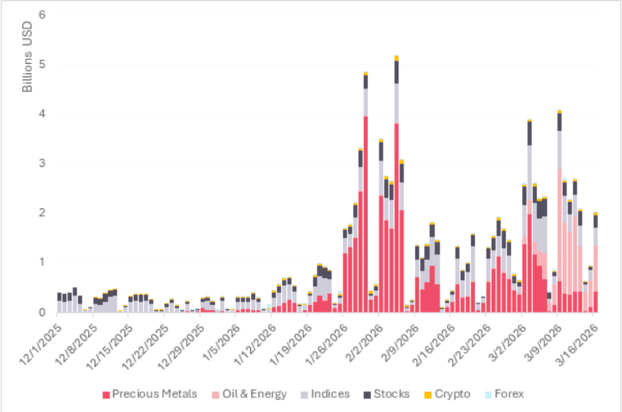
Trading volumes for HIP-3 by asset classes. Source: Sygnum
Trading volumes for HIP-3 over the weekends have sharply increased. Since January 2026, almost 9 times, as noted in the report.
«It seems that crypto-native traders have started to move into traditional assets. Altcoins continue to decline during this time.»
Lukas Schweiger from Sygnum also points this out. He says that interest in on-chain assets has noticeably increased.
This is also evident in the numbers. The capitalization of tokenized real assets has increased by approximately 250% over the year.
Currently, there are about $23 billion in open blockchain networks for such assets.
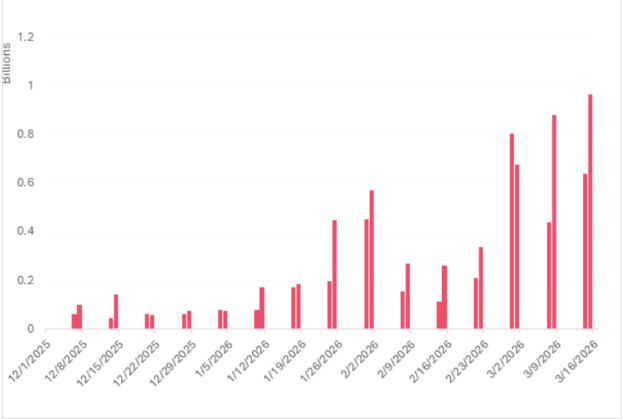
Trading volume for HIP-3 over the weekends. Source: Sygnum
He also noted that traders increasingly perceive altcoins as 'BTC with leverage.'
«This creates an environment where crypto-native capital naturally flows into futures on traditional assets. They can be traded through the same wallet, with the same collateral, simply opening another deal.»
Additional pressure on the market is exerted by geopolitics. Against the backdrop of the ongoing conflict in the Middle East and disruptions in energy infrastructure, oil prices have risen. At the same time, many altcoins have already lost from 80% to 90% of their historical highs, as noted by Sygnum.
Concerns about a recession are growing against the backdrop of a protracted conflict in the Middle East.
The conflict between the U.S., Israel, and Iran has already affected energy in the region. Because of this, oil sharply rose and reached about $120 per barrel.
Since then, prices have been constantly bouncing. The market reacts literally to everything. Any statement from Donald Trump, words from Iranian authorities, or new news about the situation immediately moves the price.
If oil stays above $100 in 2026, it could drive inflation. This is believed by analyst and Coinbureau founder Nick Pakrin.
For now, the market believes more that everything will end quickly or at least go into decline. But Pakrin warns that it may not be that simple. If the conflict drags on, inflation will rise more sharply. And then, the possibility of lowering rates in 2026 can be forgotten.
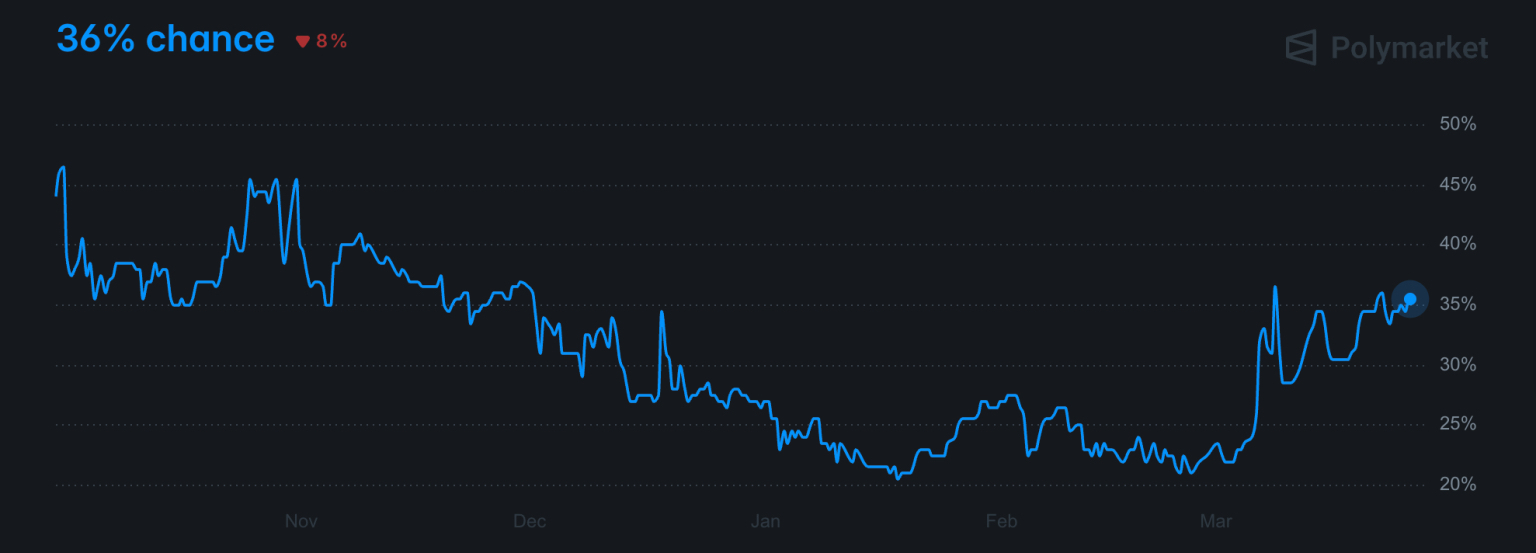
The probability of a recession in the U.S. in 2026 has risen to 36%. Source: Polymarket
Since the beginning of the conflict on February 28, the probability of a recession in the U.S. has risen to 36% on the Polymarket platform.
At the same time, according to estimates by the rating agency Moody’s, the probability that the U.S. economy will enter a recession in 2026 is already approaching 50%.
#Hyperliquid #oil #iran #Write2Earn
