𝗜𝗺𝗽𝗿𝗲𝘀𝘀𝗶𝘃𝗲 𝗰𝗼𝗺𝗽𝗮𝗿𝗶𝘀𝗼𝗻. ⚡
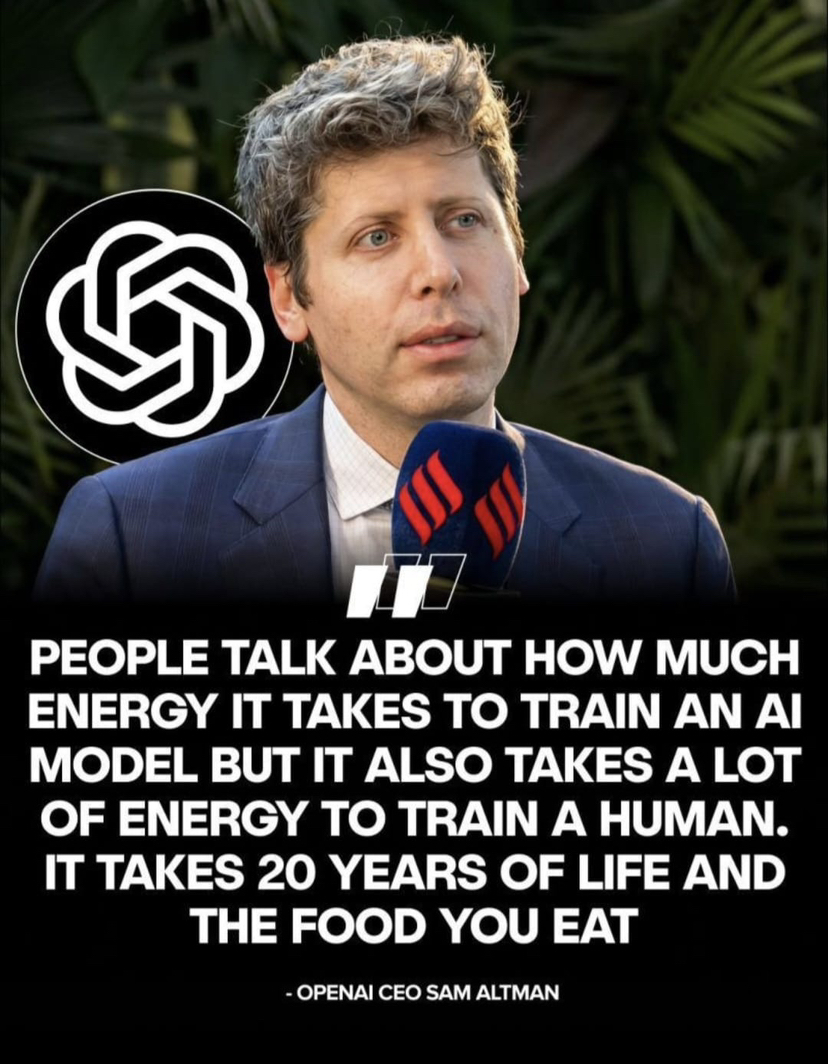
Sam Altman recently responded to criticism about 𝗔𝗜 𝗲𝗻𝗲𝗿𝗴𝘆 𝘂𝘀𝗲 with an argument that made many people pause.
People often talk about how much electricity it takes to 𝗰𝗿𝗲𝗮𝘁𝗲 𝗮𝗻𝗱 𝘁𝗿𝗮𝗶𝗻 𝗮𝗻 𝗔𝗜 𝗺𝗼𝗱𝗲𝗹.
But we rarely compare it with what it takes to “train” a human.
Think about it:
→ roughly 𝟮𝟬 𝘆𝗲𝗮𝗿𝘀 𝗼𝗳 𝗹𝗶𝗳𝗲
→ food, education systems, and infrastructure
→ centuries of accumulated human knowledge
His point is simple.
The fair comparison is not 𝗔𝗜 𝘁𝗿𝗮𝗶𝗻𝗶𝗻𝗴 vs a human answering one question.
It is the energy required for a 𝘁𝗿𝗮𝗶𝗻𝗲𝗱 𝗔𝗜 𝗺𝗼𝗱𝗲𝗹 to answer a question compared with the energy used by a 𝘁𝗿𝗮𝗶𝗻𝗲𝗱 𝗵𝘂𝗺𝗮𝗻 𝗯𝗿𝗮𝗶𝗻.
Once the model is trained, he believes AI may already be approaching similar or even better 𝗲𝗻𝗲𝗿𝗴𝘆 𝗲𝗳𝗳𝗶𝗰𝗶𝗲𝗻𝗰𝘆 𝗽𝗲𝗿 𝗾𝘂𝗲𝗿𝘆.
Working in AI, I find this framing interesting.
Maybe the real debate is not simply how much energy AI uses.
Maybe it is 𝗵𝗼𝘄 𝘄𝗲 𝗰𝗼𝗺𝗽𝗮𝗿𝗲 𝗶𝗻𝘁𝗲𝗹𝗹𝗶𝗴𝗲𝗻𝗰𝗲 𝗮𝗻𝗱 𝗲𝗳𝗳𝗶𝗰𝗶𝗲𝗻𝗰𝘆.