
Understanding the Trust Gap in Today’s Digital World
In today’s fast moving digital environment people interact with platforms apps and services every single day. Yet trust often feels fragile as users worry about data misuse hidden processes and unclear ownership. This growing frustration has created a clear need for systems that are transparent reliable and easy to understand.
What Makes SIGN Different from Traditional Systems
SIGN steps into this space by focusing on verifiable trust rather than blind confidence. Instead of asking users to simply believe in a system it provides ways to confirm authenticity and ownership through secure digital methods. Think of it like a digital handshake that both sides can verify instantly without confusion or delay.
How SIGN Simplifies Trust for Everyday Users
For many people complex technology can feel overwhelming but SIGN aims to remove that barrier. It presents trust as something simple and visible rather than hidden behind technical layers. Imagine sending a message where the receiver instantly knows it is genuine without needing extra checks or doubts. That is the kind of simplicity SIGN is working to deliver.
Building Confidence Through Transparency and Verification
Transparency is one of the strongest ways to build trust in any system. SIGN uses clear verification processes so users can see how information is handled and confirmed. Instead of relying on assumptions users are given signals that show authenticity in real time. It is similar to checking a sealed package before accepting it ensuring that 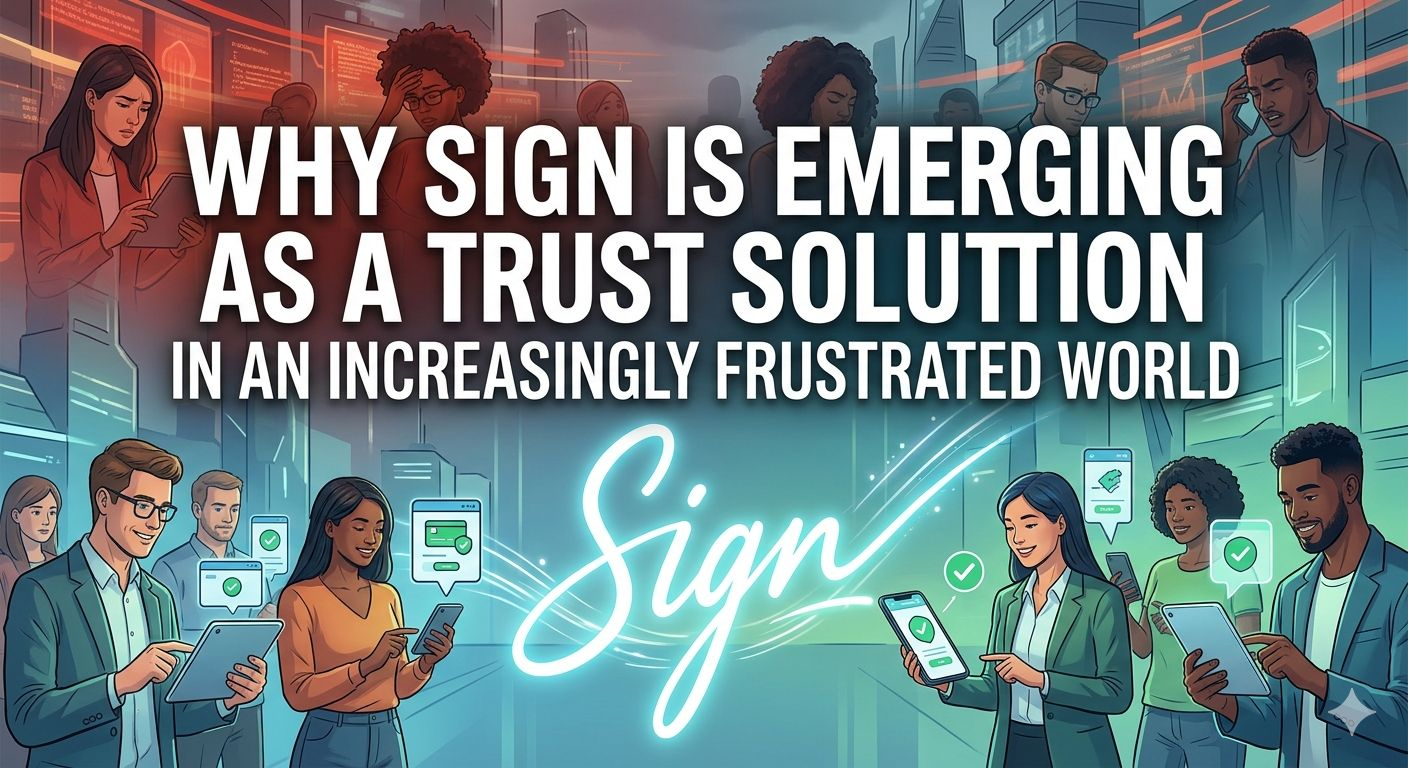 what you receive is exactly what was sent.
Why Frustration Is Driving the Need for Better Trust Layers
The modern digital world offers convenience but it also introduces uncertainty. From online interactions to digital ownership people often question what is real and what is not. This constant doubt leads to frustration and hesitation which can slow adoption and limit growth. A reliable trust layer like SIGN helps reduce that uncertainty by providing clarity and consistency where it matters most.
The Role of Community in Strengthening Trust
Trust is not built by technology alone but also by the people who use it. SIGN benefits from a growing community that values openness and shared understanding. When users participate and engage they help reinforce the system by validating processes and encouraging transparency. It is like a network of individuals all contributing to a safer and more dependable environment for everyone involved.
Looking Ahead Toward a More Trusted Digital Future
As digital interactions continue to grow the importance of trust will only increase. SIGN represents a step toward systems where users feel confident and informed rather than uncertain or confused. By focusing on clarity and verification it aligns with the broader goal of making digital spaces more user friendly and dependable. This approach does not promise perfection but it moves in a direction that many users have been waiting for.
In simple terms SIGN can be compared to a trusted guide in a busy marketplace. When everything around you feels noisy and uncertain a reliable guide helps you navigate with ease. This analogy highlights how trust layers can make digital experiences smoother and more enjoyable for everyday users. It transforms confusion into confidence and hesitation into action.
It is important to note that innovations like SIGN are part of a broader evolution in digital systems. They aim to improve how people interact with technology without requiring deep technical knowledge. This makes them accessible to a wider audience including those who are new to the space. By simplifying trust they open the door for more inclusive participation.
At the same time it is essential to remember that every system has its limitations and risks. Users should always stay informed and make decisions based on their own understanding. SIGN contributes to trust building but it does not replace personal responsibility or awareness. This balanced perspective helps maintain a healthy and realistic approach to digital adoption.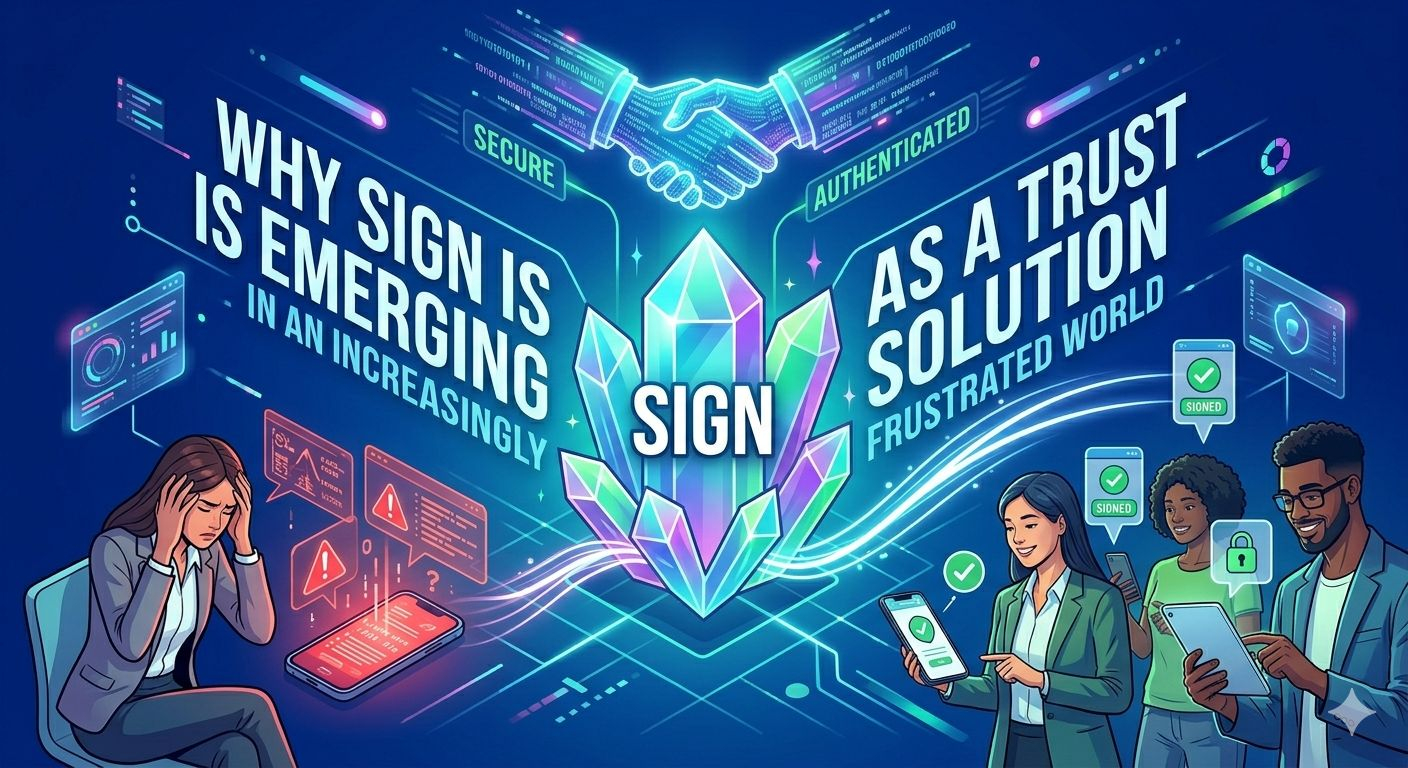
From a community viewpoint the rise of solutions like SIGN reflects a shared desire for better digital experiences. People are no longer satisfied with unclear systems or hidden processes. They want clarity accountability and fairness in how things work. By addressing these expectations SIGN aligns with what many users are actively seeking today.
This shift also encourages more meaningful participation within digital communities. When trust is easier to establish users feel more comfortable engaging sharing and collaborating. It creates an environment where ideas can grow and interactions become more productive. In this way trust layers do not just support systems but also strengthen the connections between people.
As awareness continues to spread more users may begin to recognize the value of verifiable trust in their daily digital lives. This awareness can drive further adoption and inspire new ideas that build on the same principles. Over time this could lead to a more consistent and trustworthy digital landscape for everyone.
Ultimately the emergence of SIGN highlights an important moment in the evolution of digital trust. It shows that users are ready for systems that prioritize clarity and accountability. While the journey toward complete trust is ongoing each step forward helps reduce friction and build confidence. By focusing on real solutions SIGN contributes to a more reliable and user focused future.
For anyone exploring digital systems today the key takeaway is to value transparency and understanding. Tools and platforms that emphasize verification can make interactions safer and more predictable. SIGN fits into this narrative by offering a structured way to approach trust without unnecessary complexity. As adoption grows it may continue to shape how people think about reliability in the digital world.
In the end progress in trust is not about perfection but about improvement and consistency. SIGN represents a meaningful step in that direction by addressing real user concerns with practical solutions. As more people recognize its value the path toward a more trusted digital experience becomes clearer for everyone.