
The more I think about how governments are approaching blockchain right now, the more it feels like they’re not actually against it they just don’t want to lose control in the process. That’s been the main hesitation for years. And honestly, that’s where Sign Global starts to make more sense to me compared to a lot of other projects.
It’s not really trying to replace existing systems or push some extreme version of decentralization. It’s more like giving governments a way to use blockchain without giving up how they operate. That S.I.G.N. framework idea sounds complex at first, but when you break it down, it’s basically about helping them run digital currencies, identity systems, and even funding programs with proper oversight still in place.
At the center of it is the Sign Protocol, and the easiest way I think about it is like an evidence layer. Instead of just storing data somewhere, it turns things into records that can actually be verified later. That sounds simple, but it matters a lot when you’re talking about systems that need auditing and accountability.
What I find interesting is that it doesn’t force governments into one setup. A lot of projects try to do that like “everything should be on this chain” but that doesn’t really work at a national level. Here, they can structure things how they want. They still manage their own keys, their own rules, and how compliance works. That flexibility probably matters more than anything.
Privacy is another part that feels more realistic here. It’s not about hiding everything or exposing everything. With zero-knowledge proofs, you can prove something without showing all the details behind it. So someone could verify they qualify for a program without sharing all their personal data, but at the same time, there’s still a clear record for auditing. That balance is actually hard to get right.
When you look at how the system is split, it kind of falls into three areas. One is money things like CBDCs or regulated digital currencies, with programmable features built in. Then identity, using verifiable credentials so people can actually use one system across different services. And then capital distribution, which is honestly one of the more practical parts making sure funds go where they’re supposed to, with proof instead of just paperwork.
What makes it more interesting is that it’s not just theoretical anymore. There are already collaborations happening. The work with the National Bank of the Kyrgyz Republic is one example, especially around digital currency. And then places like Abu Dhabi are exploring how this fits into public sector systems. It’s still early, but it’s not just ideas on paper.
There’s also been backing from different sides, which usually tells you something is moving beyond just concept stage. Infrastructure scaling, token distribution those aren’t things people invest in unless there’s a real use case behind it.
On the token side, it’s pretty straightforward. $SIGN is used for governance, fees, and incentives across the system. It’s not overly complicated. The idea is that as more things are built and used on top of it, the token naturally becomes more relevant. It’s tied to activity, not just speculation.
Looking ahead, the flexibility is probably what stands out the most. Governments can keep things private when they need to, but still connect with other systems if required. Most countries don’t want to be completely isolated, but they’re also not willing to give up control.
Of course, there are always concerns when you bring blockchain into government systems. People worry about control, about surveillance, about how it might be used. But at the same time, having systems that are actually auditable and verifiable could also improve transparency if it’s done right.
At a bigger level, this feels less like a “crypto project” and more like infrastructure being built quietly in the background. It’s not trying to grab attention it’s trying to solve a specific problem.
And usually, the things that matter long-term are the ones you don’t really notice at first.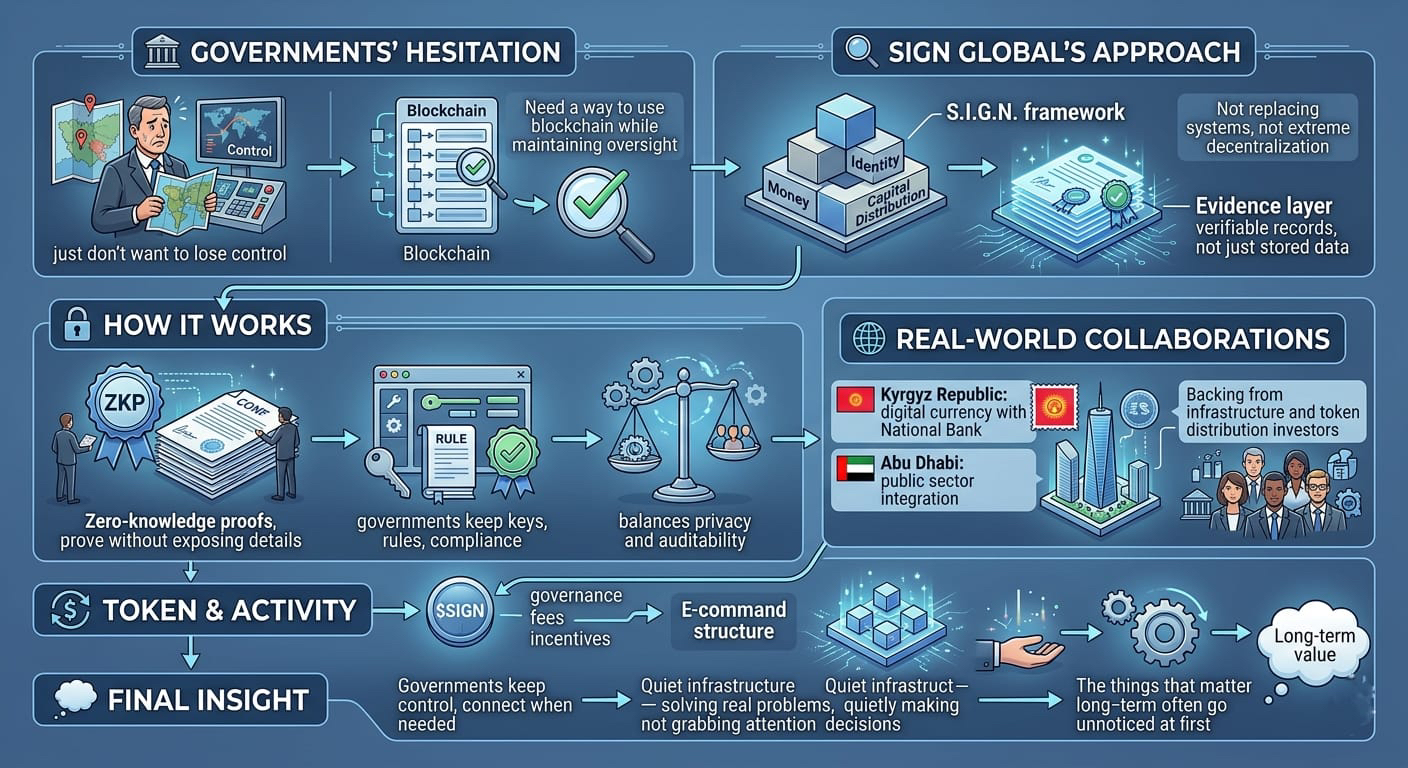
#signdigitalsovereigninfra @SignOfficial $SIGN
