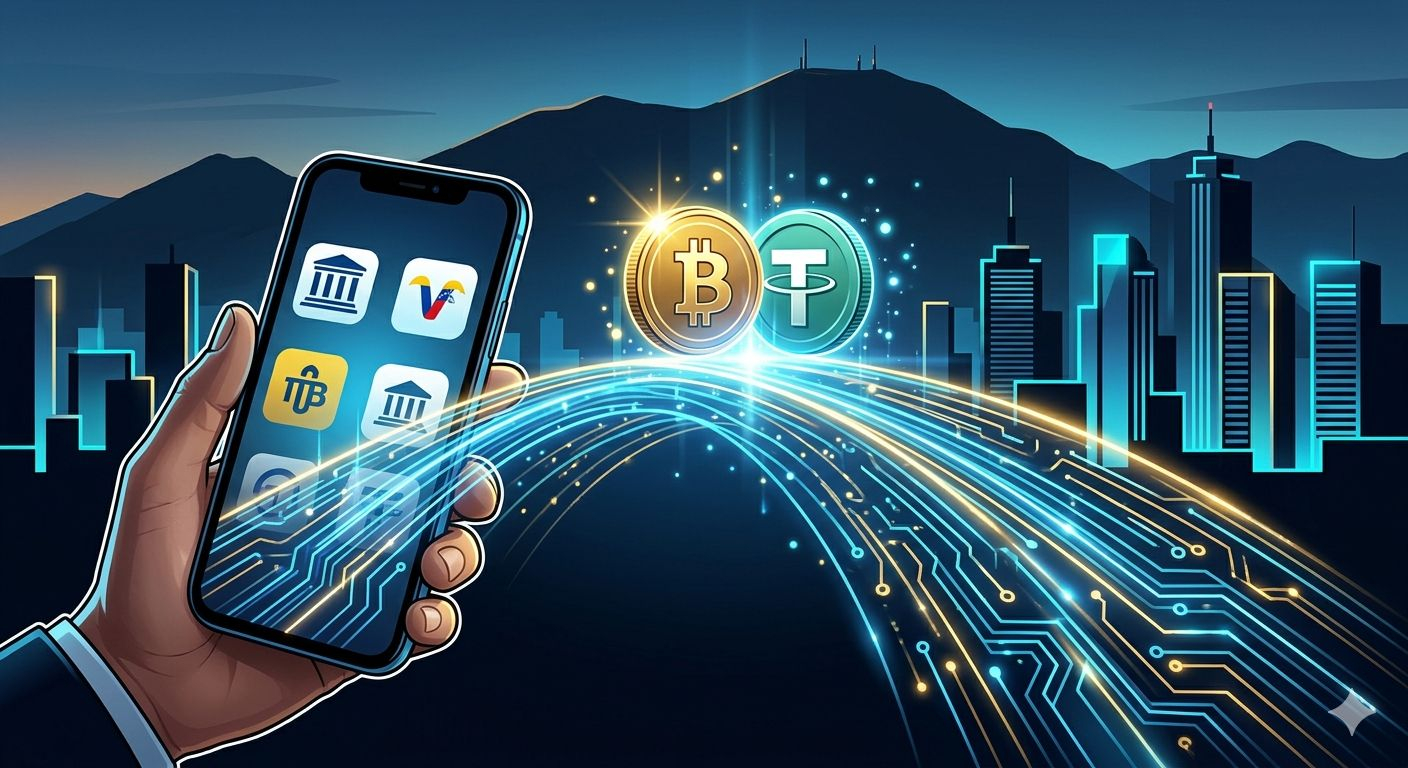
In the economic laboratory that is Venezuela, financial survival has forced citizens to become engineers of their own capital. While the local currency struggles against depreciation, a digital structure has emerged that is changing the rules of the game: the integration of the National Bank with the Binance ecosystem (P2P and Binance Pay).
Is it possible for a digital tool to have a deflationary impact on the common Venezuelan's pocket? The technical answer is yes, and here I explain the architecture of this phenomenon.
1. The Highway: From Bolívares to USDT in seconds
The biggest historical barrier to saving in Venezuela was the difficulty of accessing foreign currency safely and quickly. Today, Binance's P2P (Peer-to-Peer) market acts as a direct bridge.
By using local payment methods (National Banking, Mobile Payment), the user transforms a high-turnover currency (Bolívares) into a reserve asset (USDT or Bitcoin). This ability for immediate "digital dollarization" allows purchasing power not to evaporate between the payday and the spending day.
2. Binance Pay: The end of invisible fees
One of the major impacts on the daily economy is the use of Binance Pay. By allowing direct payments between users and businesses without going through international banking correspondents, intermediary fees are eliminated.
Real Impact: When you pay with Binance Pay at an allied business, the price tends to be more accurate, avoiding the problem of "cash" or the inefficient rounding that usually makes products more expensive on the street. This, in microeconomic terms, acts as a deflationary relief for the consumer.
3. Bitcoin or USDT? The Balance Strategy
As a specialist, my advice for the Venezuelan user is the diversification of objectives:
USDT (Stablecoin): Use it for your operational expenses of the month. It is your shield against daily volatility.
Bitcoin (BTC): Use it as your "Safe Box" in the long term. By buying small fractions from the national bank, you are applying the strategy of Dollar Cost Averaging (DCA), accumulating the world's scarcest asset with the local currency.
4. The Psychological Impact and "Personal Deflation"
When a citizen stops receiving their salary in a currency that devalues and starts managing their finances on a global platform, their unit of account changes.
The perception of "everything is rising in price" is mitigated when savings are in a stable currency. For the Binance user in Venezuela, the market stops being chaos and becomes a structure of opportunities. Technology not only facilitates purchasing; it is democratizing access to a stability that was previously exclusive to the large financial elites.
Conclusion: The Engineering of Tomorrow, Today
The Venezuelan national banking system and Binance are not enemies; they are pieces of a new mechanism. Understanding how to move capital between these two worlds is the most valuable skill a Venezuelan can have in 2026.
You are not alone buying crypto; you are building your own financial sovereignty.
💡 Question for the community in Venezuela:
What has been your experience using Mobile Payment and national credit cards to fund your Binance wallet? Do you feel that your economy has improved by using USDT for your daily purchases? Comment below and let’s share strategies!