As an experienced investor in the crypto space, the author advises focusing on projects that address significant structural issues rather than those that rely on hype. The SIGN Token, which powers the Sign Protocol, exemplifies such a project by addressing the gap between digital identity and its application in important transactions, attracting interest from infrastructure observers and compliance-oriented investors.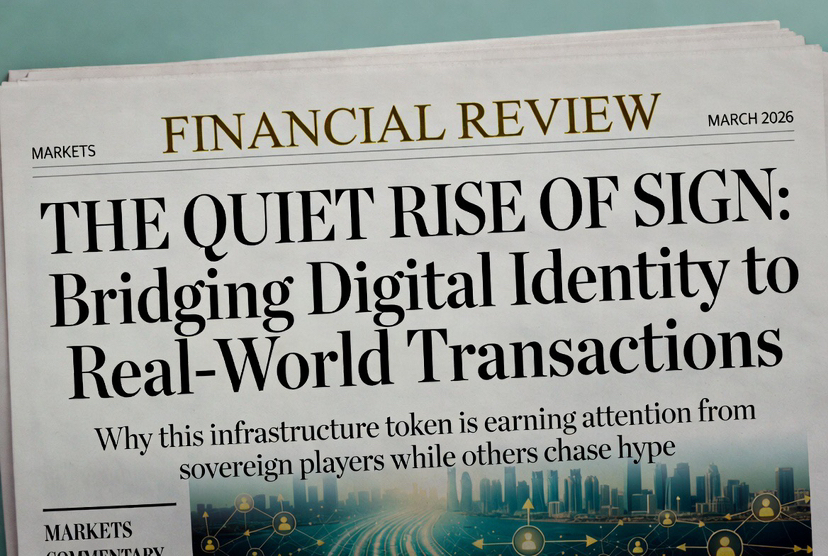
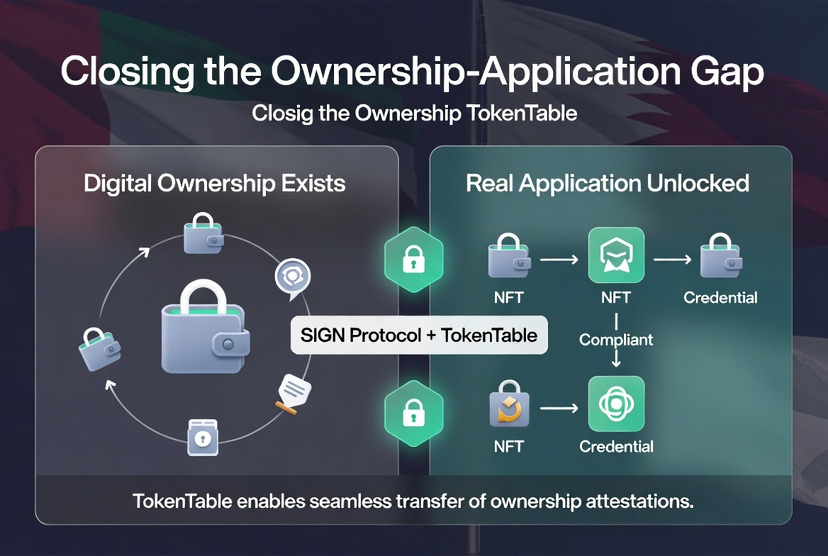
Sign Protocol addresses the ownership-application gap by providing tamper-proof attestations through an omni-chain evidence layer. This infrastructure enables verified claims, such as NFTs and self-sovereign identity proofs, to be transformed into executable, auditable actions across chains, facilitating seamless applications in areas like finance and government programs.
Sign Protocol has processed millions of attestations and facilitated over $2 billion in digital asset distributions. TokenTable enhances this by adding layers of vesting schedules, conditional unlocks, and compliance measures, all tied to verifiable identity data, transforming ownership into operational capital.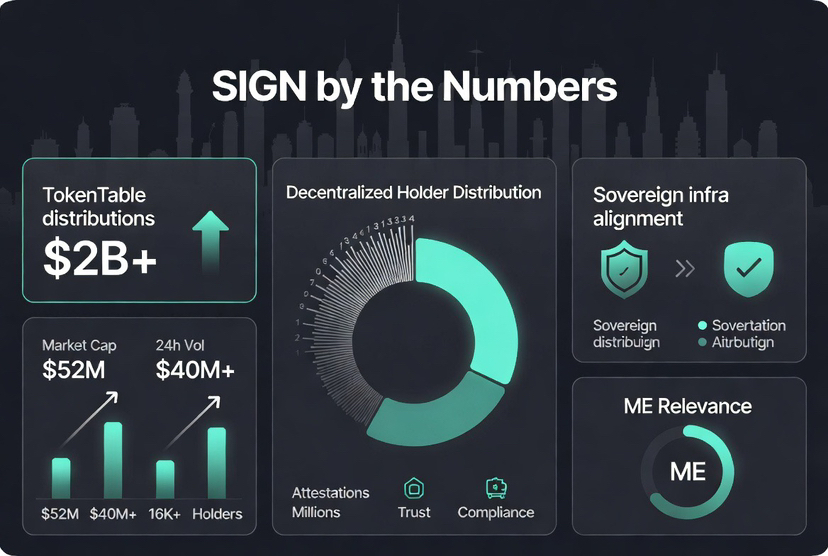
Market signals indicate that $SIGN is not merely speculative, as shown by its market cap of approximately $52 million and a circulating supply of 1.64 billion out of a maximum of 10 billion. The token boasts exceptional liquidity, with daily trading volumes exceeding $40 million, resulting in a volume-to-market-cap ratio near 90%. This volume represents significant capital movement on major exchanges like Binance and Upbit. The distribution among holders is healthy, with over 16,000 unique addresses, reflecting organic growth. Price movements are driven by steady accumulation congruent with protocol usage and partnerships, demonstrating that SIGN’s demand arises from utility rather than market hype.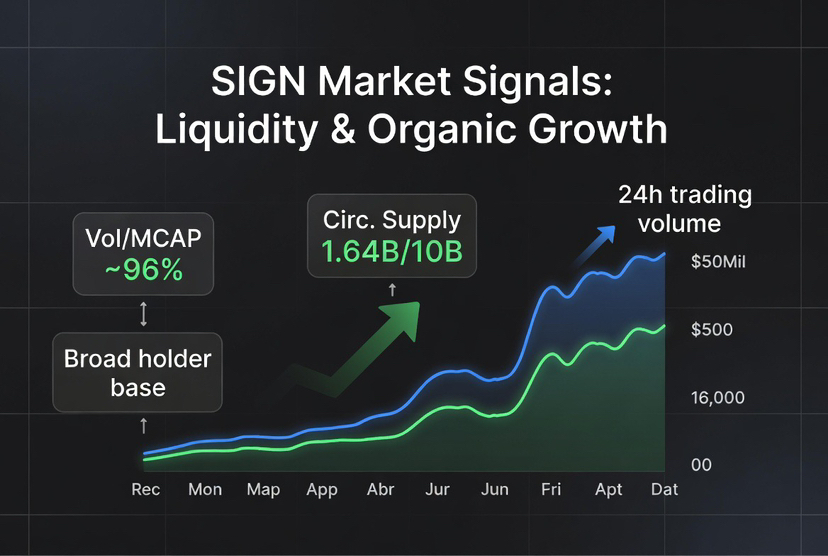
Critically, the valuation exceeds $300 million, and early adoption may be slow. However, the token's design for protocol fees, resolver staking, governance, and compute resources establishes a direct relationship between real-world activity and token value, which is notable and worth monitoring.
Sign's relevance is particularly pronounced in the Middle East, where nations are developing digital economies alongside regulatory frameworks that prioritize control and trust. Its dual-layer architecture, combining public transparency with private confidentiality, allows for verifiable digital IDs and compliant tokenized asset management. Recent partnerships in Abu Dhabi highlight Sign's emergence as a crucial infrastructure for regulators, providing a competitive advantage in fostering trust and capital inflow in the region.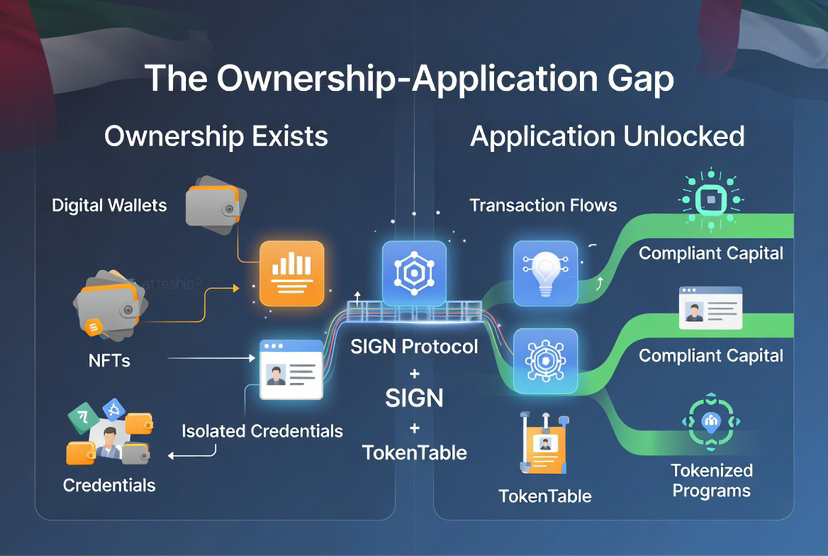
As a skeptical observer, I find excitement in SIGN's pragmatic focus at the intersection of digital ownership and practical use. It boasts deep liquidity and broad holder engagement, with demand reflecting real protocol activity rather than mere narratives. In the Middle East, where compliance and trust are crucial for billion-dollar ambitions, this technology is not just relevant but essential.
The attention $SIGN is attracting isn’t loud, but it’s building on substance. For investors tired of zero-sum speculation, that’s the signal worth tracking.