

I’ll be honest — the first time I went through S.I.G.N.’s architecture, it felt like too much.
Too many layers. Identity, rails, evidence, program engines… it almost looked like someone tried to solve everything at once. And usually, that’s a red flag.
Most systems that try to do everything end up doing nothing well.
But the more time I spent with it, the more I realized I was looking at it the wrong way.
This isn’t trying to be “everything.”
It’s trying to connect things that already exist but don’t talk to each other properly.
And that’s a very different problem.
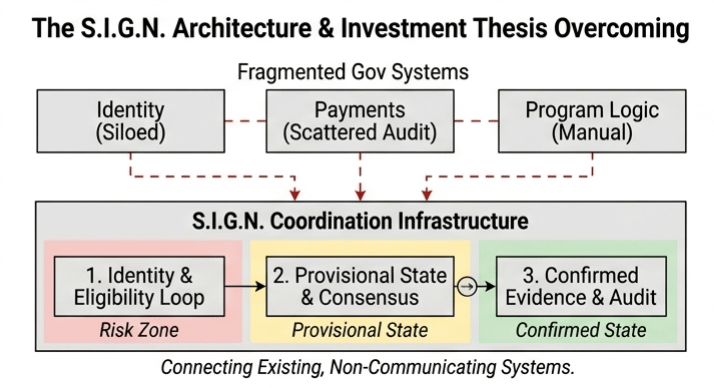
What actually changed my perspective was thinking about how fragmented government systems are today.
Payments sit in one place. Identity sits somewhere else. Audit trails are scattered across departments. And when something goes wrong, you don’t get a clean answer — you get a process.
That process is slow, manual, and often incomplete.
So when S.I.G.N. talks about “inspection-ready evidence,” it’s not just a feature. It’s basically saying:
what if the system didn’t need to be investigated… because it was already provable?
That idea stuck with me more than anything else.
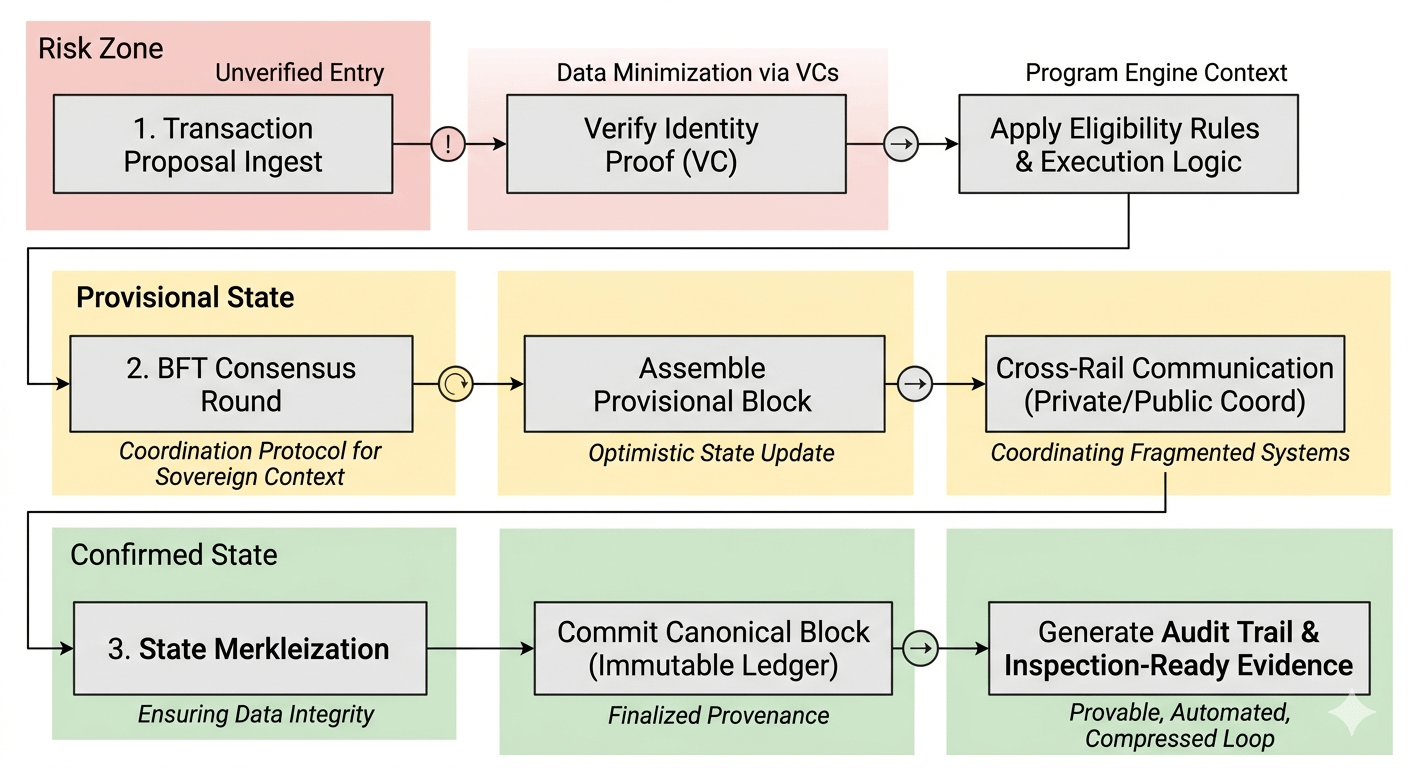
The architecture starts to make more sense when you stop viewing it as blockchain infrastructure and start viewing it as coordination infrastructure.
Because that’s really what’s happening here.
You’ve got a public rail and a private rail, which at first looks like a technical decision. But it’s actually a behavioral one
Some things need to be visible. Others don’t.
Trying to force both into the same environment is where most designs break. Either you lose privacy or you lose transparency.
Here, they’re separated but still connected.
And that connection is where most of the value sits.
I kept coming back to the identity layer, because honestly, that’s where most systems quietly fail.
Everyone talks about payments. Nobody wants to deal with identity complexity.
But without identity, nothing scales.
What S.I.G.N. is doing with verifiable credentials and selective disclosure feels less like innovation and more like correction.
Instead of sending raw data everywhere and hoping it’s handled properly, users prove specific things when needed.
Not everything. Just enough.
That sounds obvious, but current systems don’t work that way.
They default to over-sharing because it’s easier than designing around minimal disclosure.
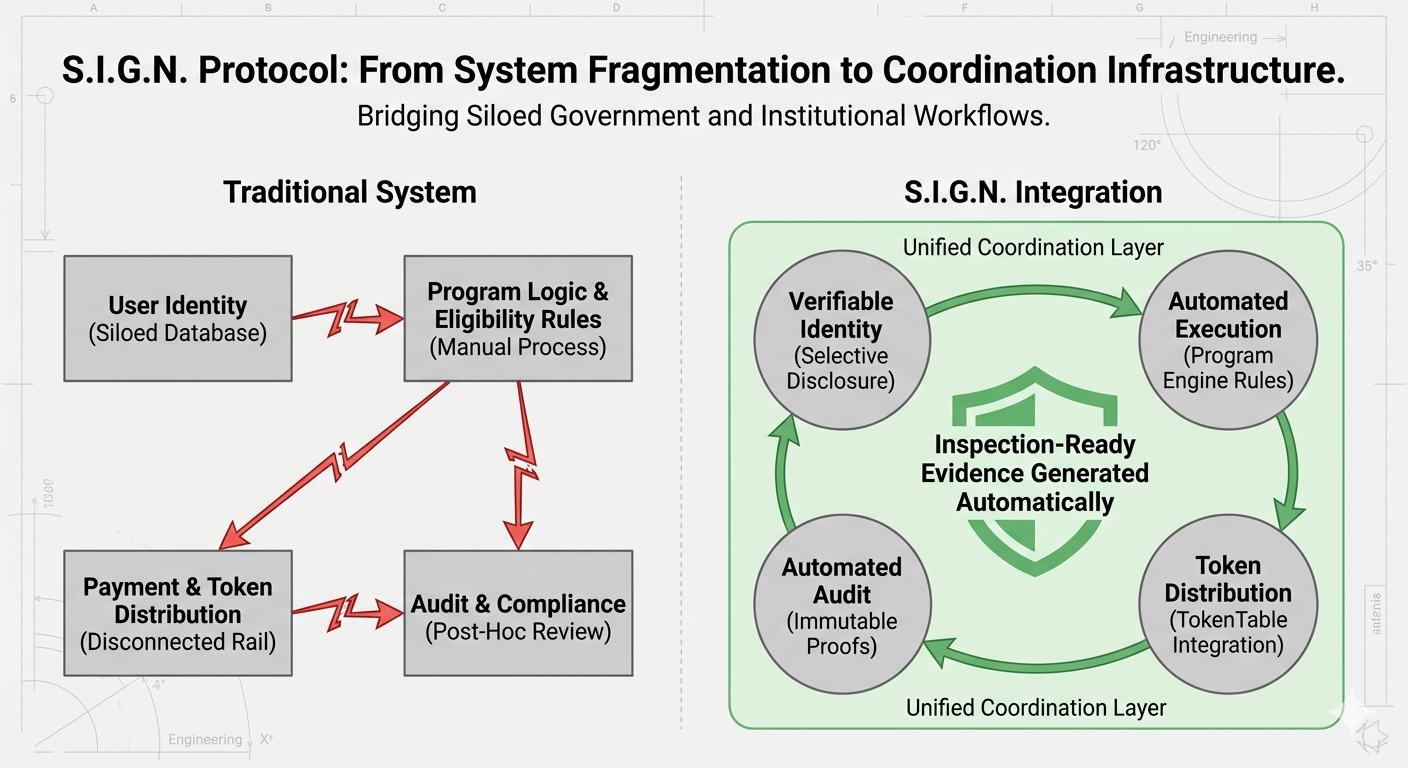
The part that really changed how I see this is how tightly identity, execution, and audit are linked.
Usually, these are separate steps
You verify someone. Then you execute something. Then you audit it later.
Three different systems. Three different timelines.
Here, it’s compressed into one flow.
Eligibility is proven.
Rules are applied.
Execution happens.
Evidence is generated automatically.
All in the same loop.
That’s not just efficiency. That’s a different model of trust.
I’ve seen a lot of projects talk about programmability, but most of them stop at smart contracts.
S.I.G.N. goes a step further with the program engine.
It’s not just “if this, then that.”
It’s structured around real-world constraints like scheduling, batch processing, eligibility rules, and reconciliation.
Which sounds boring… until you realize that’s exactly how governments operate.
They don’t need experimental logic. They need predictable systems that can handle millions of people without breaking.
And that’s what this is trying to replicate.
TokenTable is interesting in this context because it’s already being used.
That matters more than people think.
Once a distribution system is in place, it becomes part of the workflow. Replacing it isn’t just a technical decision, it’s operational risk.
So even if adoption starts small, it can compound over time.
That’s usually how infrastructure wins. Quietly, then suddenly.
One thing I don’t see many people talking about is how strict this system actually is.
Everything is tied to:
who approved something
under which authority it happened
what rule set was applied
That level of structure forces discipline.
And I’m not sure every institution is ready for that.
Because it removes flexibility in areas where systems have historically relied on it.
Sometimes inefficiency isn’t accidental. It’s tolerated because it allows room for adjustment, or even control.
This kind of architecture reduces that room.
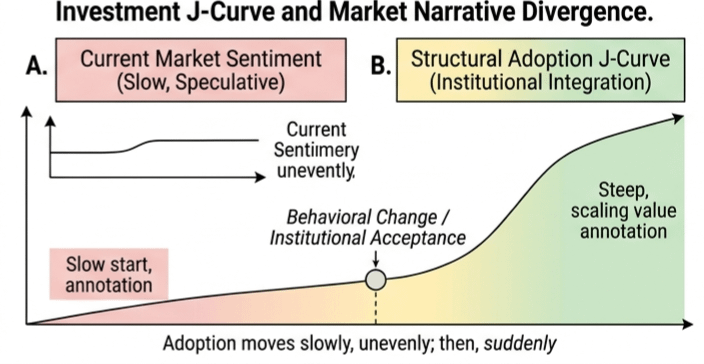
From an investment perspective, this creates a weird situation.
On paper, the system makes sense. It’s coherent. It solves real coordination problems.
But its success depends on something that’s hard to measure early:
behavior change.
Do institutions actually want systems where every action is provable and constrained?
Or do they prefer systems that are flexible, even if they’re inefficient?
That’s not a technical question. It’s a structural one.
There’s also something else that keeps bothering me.
If this architecture is as solid as it looks, why isn’t the market pricing that optionality more aggressively?
Usually, infrastructure narratives get ahead of reality. Here, it feels like the opposite.
Either the opportunity is being underestimated…
or the market has seen enough similar attempts fail that it’s no longer willing to speculate early.
I’m not fully sure which one it is yet.
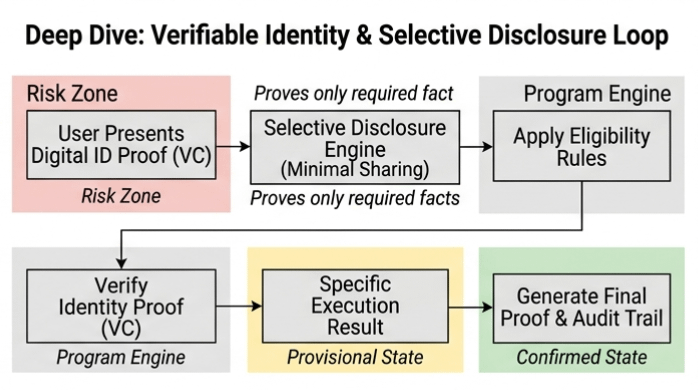
The flows themselves tell a clearer story than the architecture diagrams.
Eligibility to distribution to audit.
CBDC to stablecoin conversion.
Registry updates for tokenized assets.
Each one solves a real workflow.
And more importantly, they connect.
That’s what makes this different from isolated solutions.
It’s not just doing one thing well. It’s trying to make multiple systems work together without friction.
Where I’ve landed for now is somewhere in the middle.
I don’t think this is just another overbuilt crypto system.
But I also don’t think it’s guaranteed to succeed just because the design is solid.
Adoption here isn’t about hype. It’s about integration.
And integration at a sovereign level moves slowly, unevenly, and sometimes unpredictably.
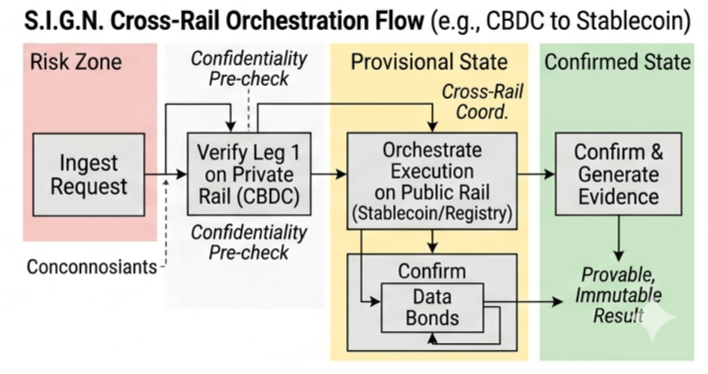
So instead of focusing on announcements or surface-level metrics, I’m watching something simpler.
Are these systems being used repeatedly?
Not tested. Not announced. Used.
Because once usage becomes consistent, everything else starts to matter less.
And until that happens, this stays in that uncomfortable category of projects that are hard to ignore… but even harder to fully believe in.