
It started with something utterly ordinary, the kind of moment that has nothing to do with blockchains or tokens. I was helping my neighbor sort through old family documents after her father passed away. There were stacks of signed papers—wills, property deeds, medical directives—all technically valid, notarized, and filed years ago. Yet none of them prevented the arguments that erupted among siblings over what their father “really meant.” The signatures were there, but the agreement had never truly been reached. Everyone had their own interpretation, their own incentives, and no amount of legal ink could force alignment.
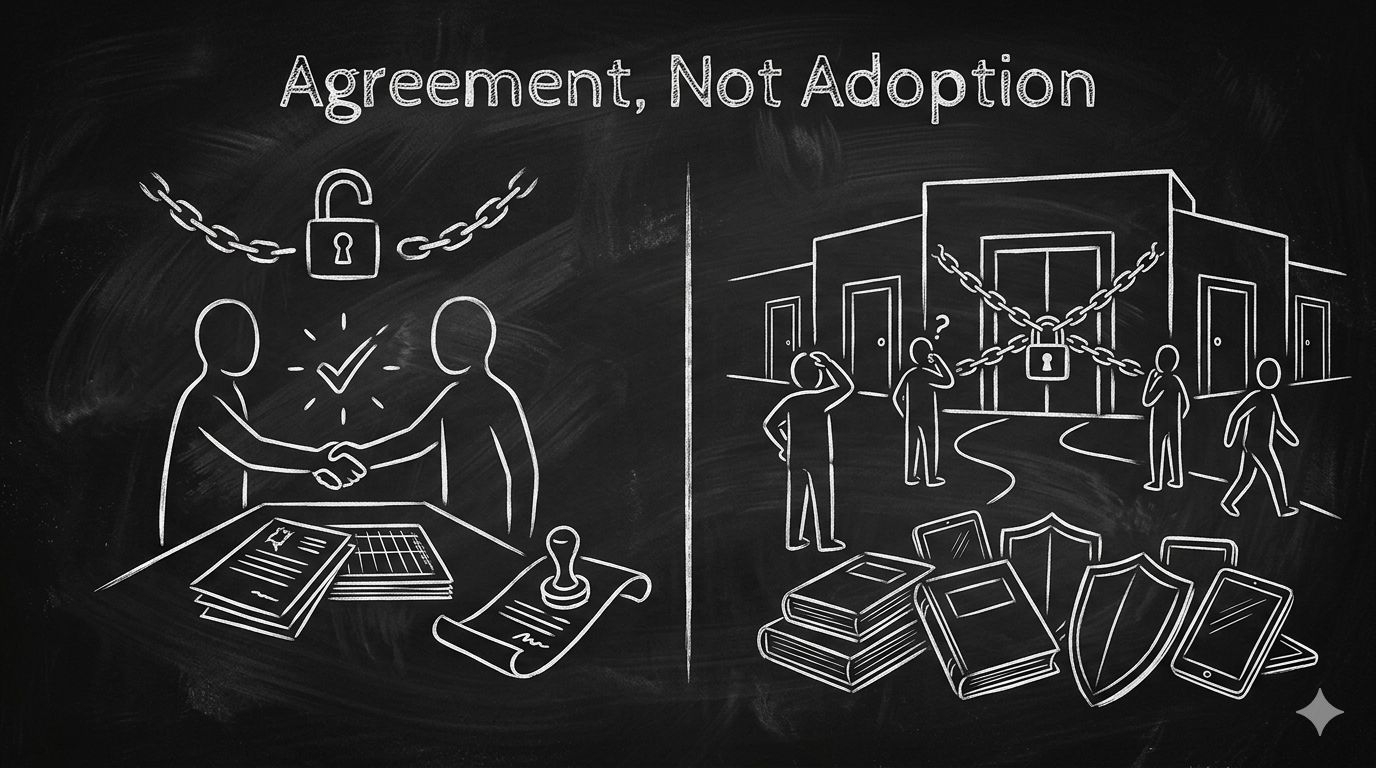
That same quiet discomfort returned when I opened the CreatorPad task for Sign ($SIGN). The prompt laid it out plainly: the real bottleneck for SIGN isn’t adoption—it’s agreement between parties. I figured it would be another exercise in testing technical flows. Instead, the task pulled me into a simulated multi-party scenario. Halfway through, while I was in the counterparty agreement module—specifically when the interface displayed the “mutual consent pending” status and required both simulated parties to acknowledge the same attestation terms—the realization landed hard. The technical side executed perfectly: proofs generated instantly, data synced across chains without a hitch. But the simulation deliberately paused at that consent step, forcing me to confront how even perfect verifiability changes nothing if the humans involved don’t see eye to eye.
This moment corrected something I had taken for granted. We in crypto love to believe that adoption is the ultimate unlock—that once enough wallets connect and enough users onboard, the network will hum along on its own. Sign ($SIGN) exposed the flaw in that thinking. Here is a protocol built for exactly the kind of trust-minimized interactions we celebrate: attestations that are immutable, portable, and private. Yet during the task it became obvious that the system’s real test isn’t whether parties can technically participate. It’s whether they choose to align on the shared reality the attestation represents. One party might want to use it for compliance, another for reputation, a third for simple record-keeping; without that prior convergence, the credential sits there, verifiable but inert.
The discomfort runs deeper when you step back. Crypto narratives have long centered on scaling technology—faster chains, cheaper transactions, more seamless interfaces—as the path to mass use. We measure progress in user counts and transaction volumes, assuming the social layer will sort itself out once the tech is good enough. But what the task illustrated, in its understated way, is that agreement between parties is a different kind of problem entirely. It’s not solvable by better cryptography or lower gas fees. It lives in incentives, reputations, and the messy business of human coordination. Sign handles the ledger part with elegance, making sure no one can forge or deny what was attested. The bottleneck it surfaces, though, is older than any blockchain: getting independent actors to commit to the same understanding at the same time.
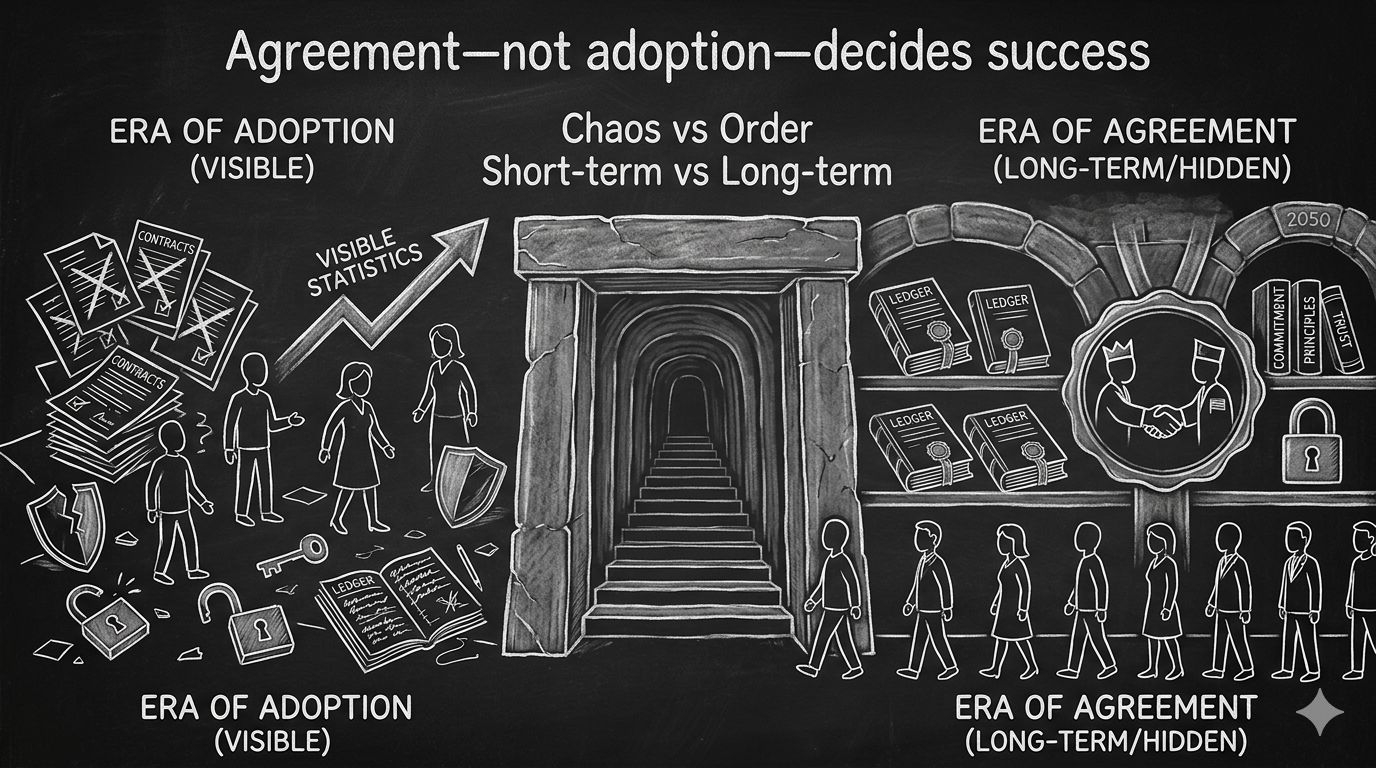
I kept turning this over after closing the task. It feels slightly risky to admit, because it undercuts the optimistic story we tell ourselves about decentralized systems. If the technology can verify everything but still depends on that fragile pre-agreement, then perhaps we’ve been optimizing for the wrong constraint. Projects like Sign don’t fail because people ignore them; they risk stalling because the parties who matter most can’t—or won’t—reach consensus on the value of participating together. It’s not about lacking users. It’s about lacking shared will.
So I’m left with one lingering question I can’t quite shake: if agreement, not adoption, is the true limiter, then what kind of design changes will it actually take to make trust-minimized systems work at the scale we keep imagining?
@SignOfficial #SignDigitalSovereignInfra $SIGN