

Not long ago, I carelessly downloaded an app of unknown origin, and within half a day, my bank card was directly deemed high risk by the anti-fraud center, resulting in a protective freeze. To unfreeze it, I had to go to a branch, provide transaction details, explain the purpose, and repeatedly prove my innocence, which left me exhausted.
This is just a personal friction faced by an ordinary person when confronting centralized risk control. If this kind of distrustful resistance is magnified to the scale of tens of billions in multinational business, it would be a disaster.
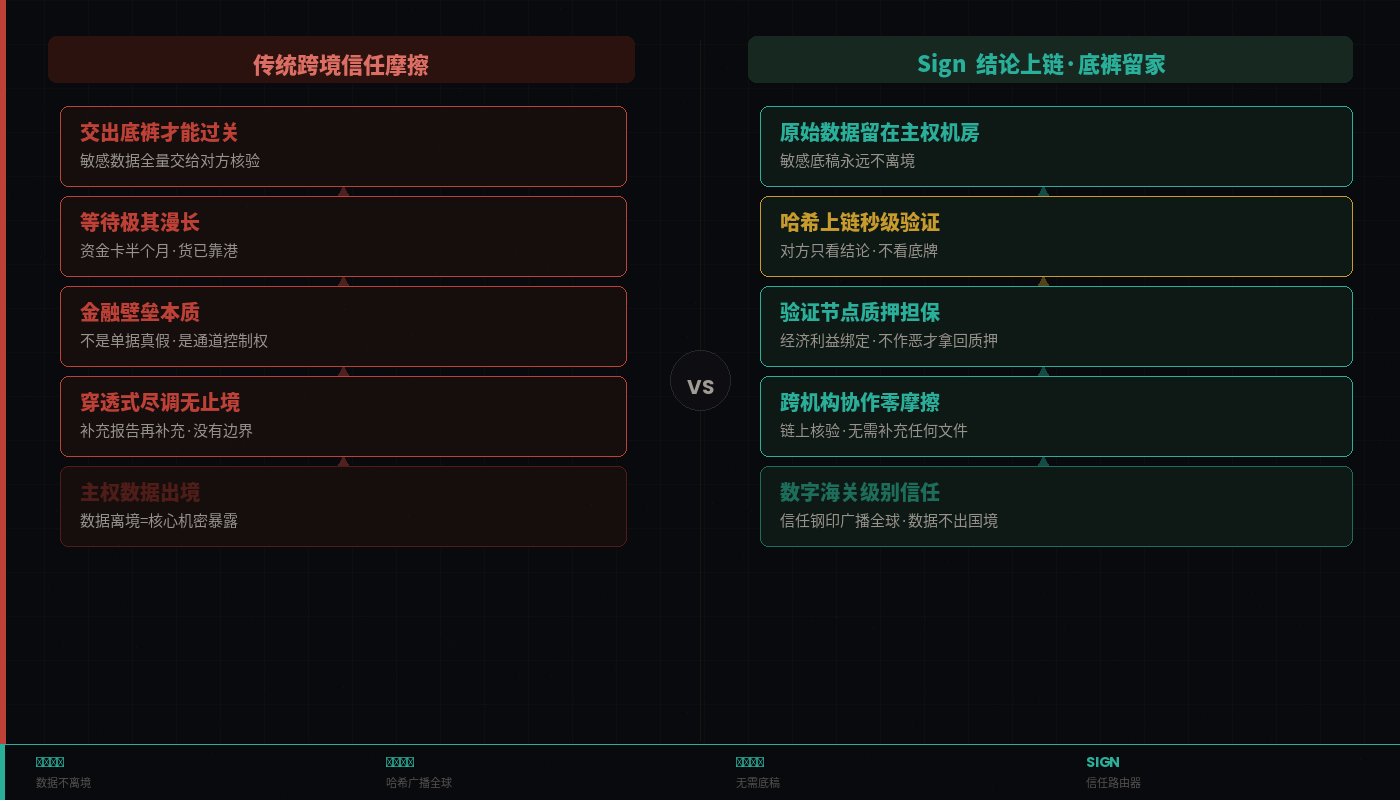
A few days ago, I met an older brother who does large-scale trade settlement in the Middle East. One of his energy deals worth tens of millions of dollars had arrived at the port, but the funds were stuck for half a month at a transit bank in Europe. The compliance department of the foreign bank was extremely suspicious of the underlying storage documents issued by a certain Middle Eastern country and required a very detailed penetrating due diligence report. The older brother was banging his thighs at the time, saying this was not a matter of the authenticity of the documents, but purely a financial barrier. If you want to run funds through someone else's settlement channel, you have to lay all your cards on the table for them to inspect.
At that moment, I strongly realized that the retail investors on the square, who argue fiercely over a few K lines every day, have no idea how expensive the cost of 'self-proofing' is in the real business world. This is also the fundamental reason why I have recently shifted my focus from short- to medium-term speculation to the reconstruction of the @SignOfficial underlying protocol.
Now, if you look through various research reports, the vast majority of people’s understanding of Sign still remains at the level of issuing airdrop tools. This understanding is too superficial. If you dig into its underlying architecture, you will find that what it is truly competing for is the most core privilege in the entire cross-border digital world: the ultimate right of interpretation for cross-border assets.
The Middle East and Central Asia, regions that place great importance on digital sovereignty, are now in a state of extreme division. They desire to integrate into global trade but simultaneously guard the red line of keeping data from crossing borders, absolutely refusing Western-style disclosure verification. The underlying logic of Sign is simply a reality solution tailor-made for this grand narrative.
SIGN has executed an extremely sophisticated physical cut at the code level. Whether you are issuing a business license from the Economic Department of Abu Dhabi or a freight bill from Kazakhstan's National Railway, the core confidential raw data is always locked tightly in the local data centers of sovereign countries. The system only packages the result after successful verification into a hash value and throws it on the chain.
The logic of putting this conclusion on the chain while keeping the pants at home is too ruthless. The settlement banks or multinational trade partners from the Chinese side do not need to request sensitive drafts at all; they can directly verify the issuer and status of this certificate on the chain in seconds. The data has not left the borders of the Middle East, but the trust's steel seal has been broadcasted globally. This not only breaks the threshold for inter-agency collaboration but also acts as a digital customs for parallel financial tracks in a substantial way.
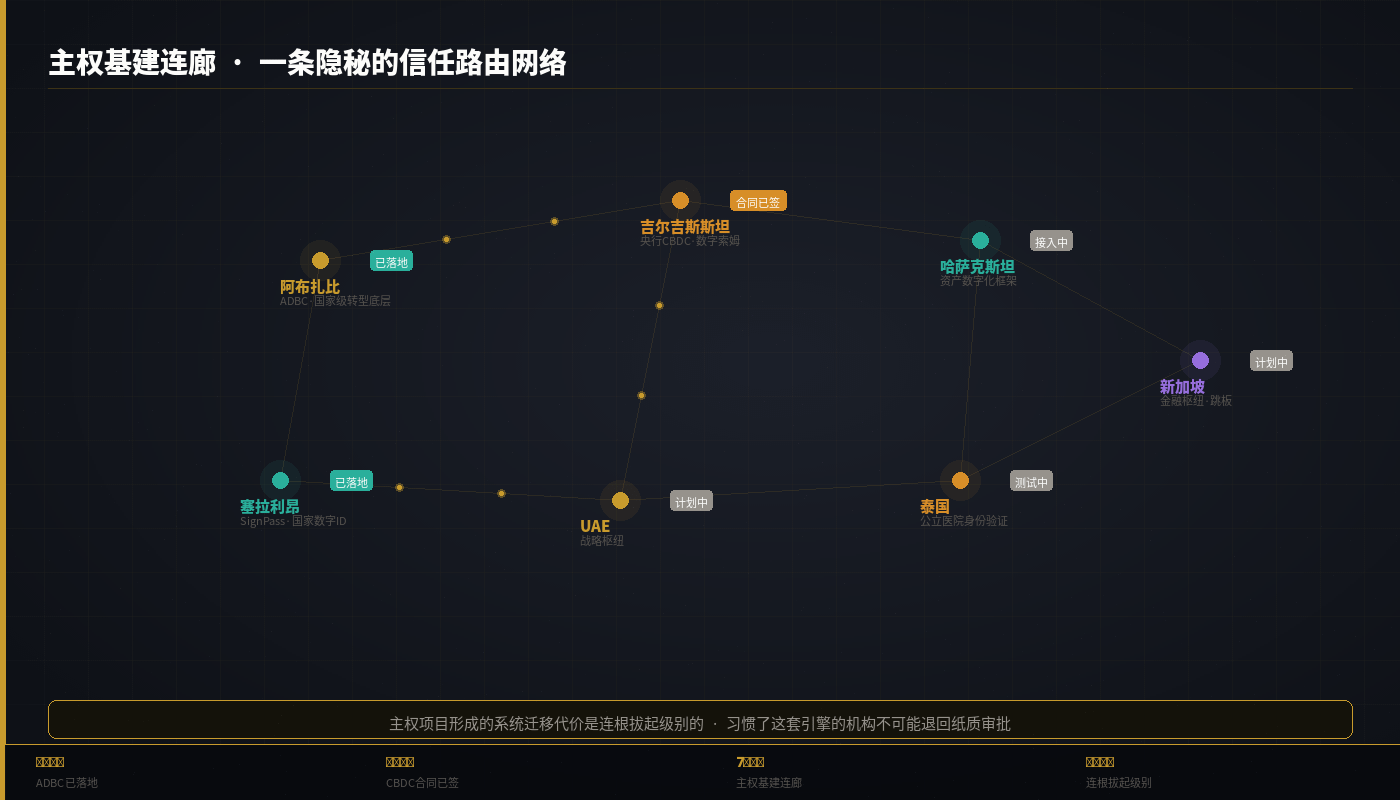
Looking back at the actions of Sign over the past year, a hidden infrastructure corridor has already taken shape. The Abu Dhabi Blockchain Center has incorporated it into the national-level transformation foundation, while the Central Bank of Kyrgyzstan has handed over the validation rights of the digital som to it, along with Kazakhstan's asset digitalization framework. Once this set of standards is deployed into sovereign governance and trillion-level trade corridors, the cost of system migration it creates will be monumental. Institutions accustomed to this seamless verification engine can never go back to endure the long paper approval process. When real-world business calls take off, the value capture of tokens shifts from an illusory expectation to an unavoidable necessity in multinational collaboration.
But since we are doing serious investment research, upon understanding this logic, we must splash cold water on ourselves to wake up. This infrastructure path that directly confronts the national machine hides extremely deadly real-world pitfalls.
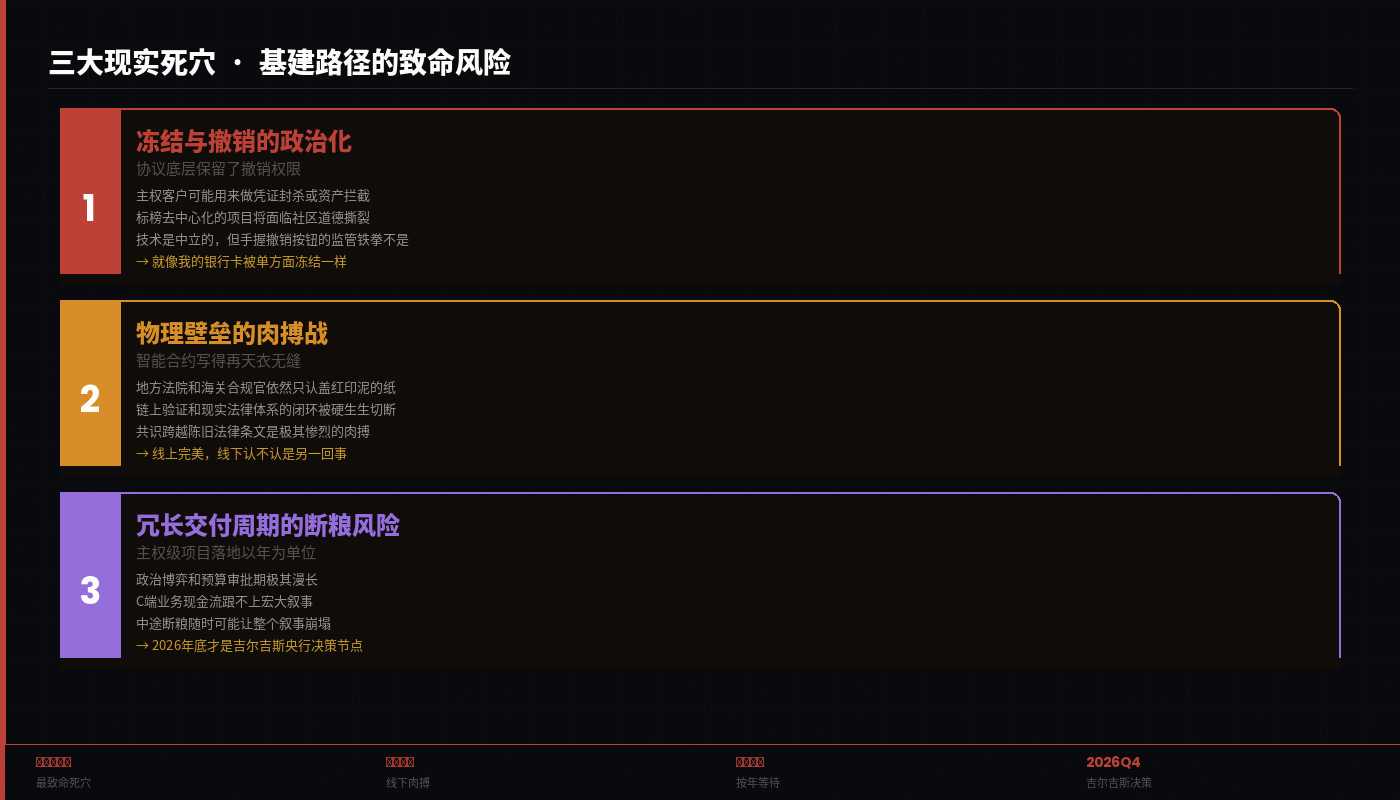
First and foremost is the freezing and revocation mechanism that I deeply resonate with. The underlying protocol of Sign retains the power of revocation. Just like my bank card can be frozen unilaterally, if a sovereign client uses this underlying protocol in the future to politically color certificate bans or asset interceptions, this project that claims to be decentralized will undoubtedly face significant moral rifts within the community. Technology is neutral, but the regulatory iron fist holding the revocation button is not.
Secondly, there are the physical barriers of the traditional world. No matter how seamlessly Sign's smart contracts are written, if local courts or customs compliance officers in the offline real world still only recognize that paper document stamped with red seal, the closed loop of this protocol will be forcibly cut off. How consensus crosses outdated legal texts is an extremely brutal hand-to-hand combat.
Finally, there are the despairing lengthy delivery cycles. The implementation of sovereign-level projects is measured in years, and during the long political games and budget approval periods, if the cash flow of C-end businesses cannot keep up, the so-called grand narrative may face the embarrassment of running out of resources at any time.
Having seen through all this, you can then examine the fluctuations in this position of $SIGN . In the extremely fragmented 2026, what we are buying is no longer simply code tokens; we are betting on the possibility of reconstructing the global settlement order. #Sign地缘政治基建 #国际油价下跌