
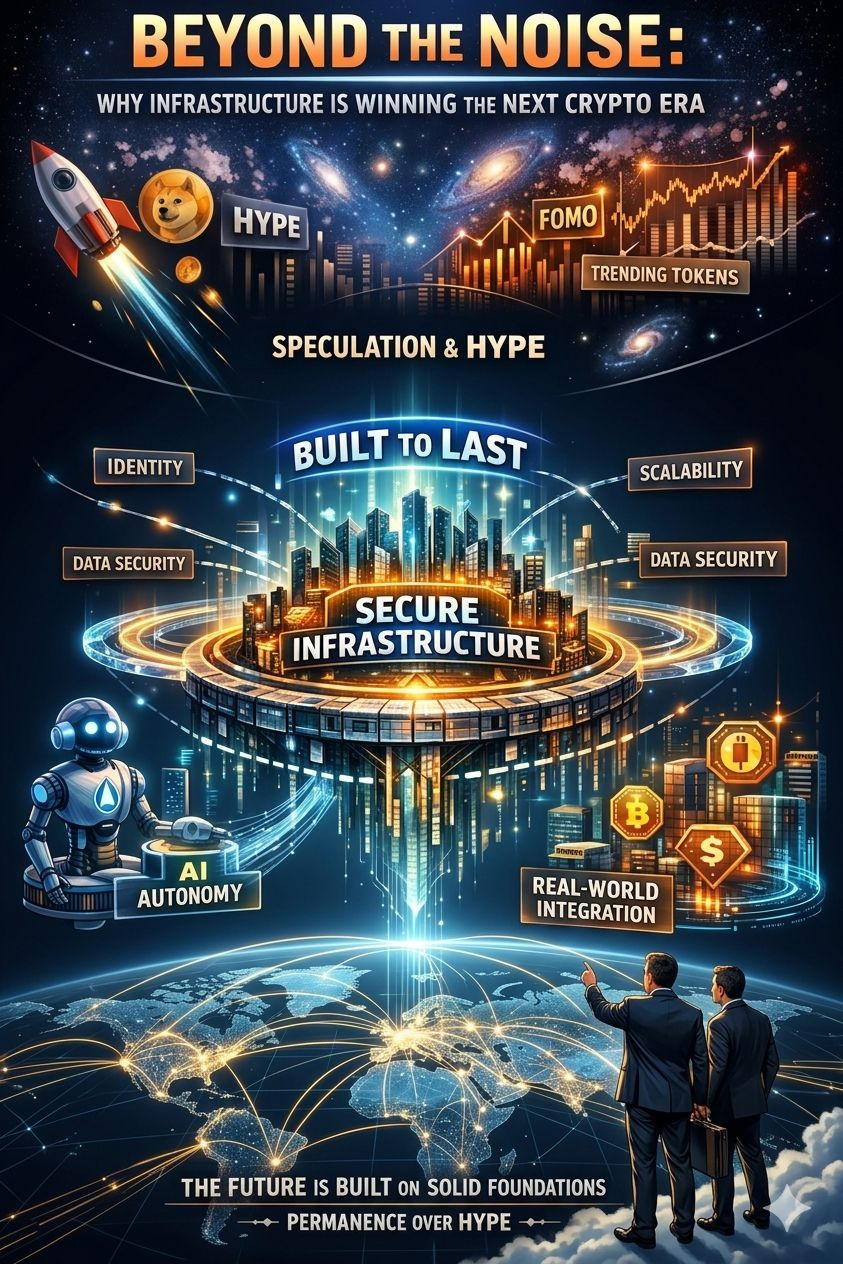
Cryptocurrency markets have always evolved with waves of attention. Each cycle begins with media frenzy: stories surge overnight, and new tokens make headlines, as if the momentum itself were synonymous with innovation. Yet, beneath this clamor, something much more significant is unfolding. The real transformation lies not in the speed at which trends intensify, but in the ability of systems to endure long after attention has shifted elsewhere.
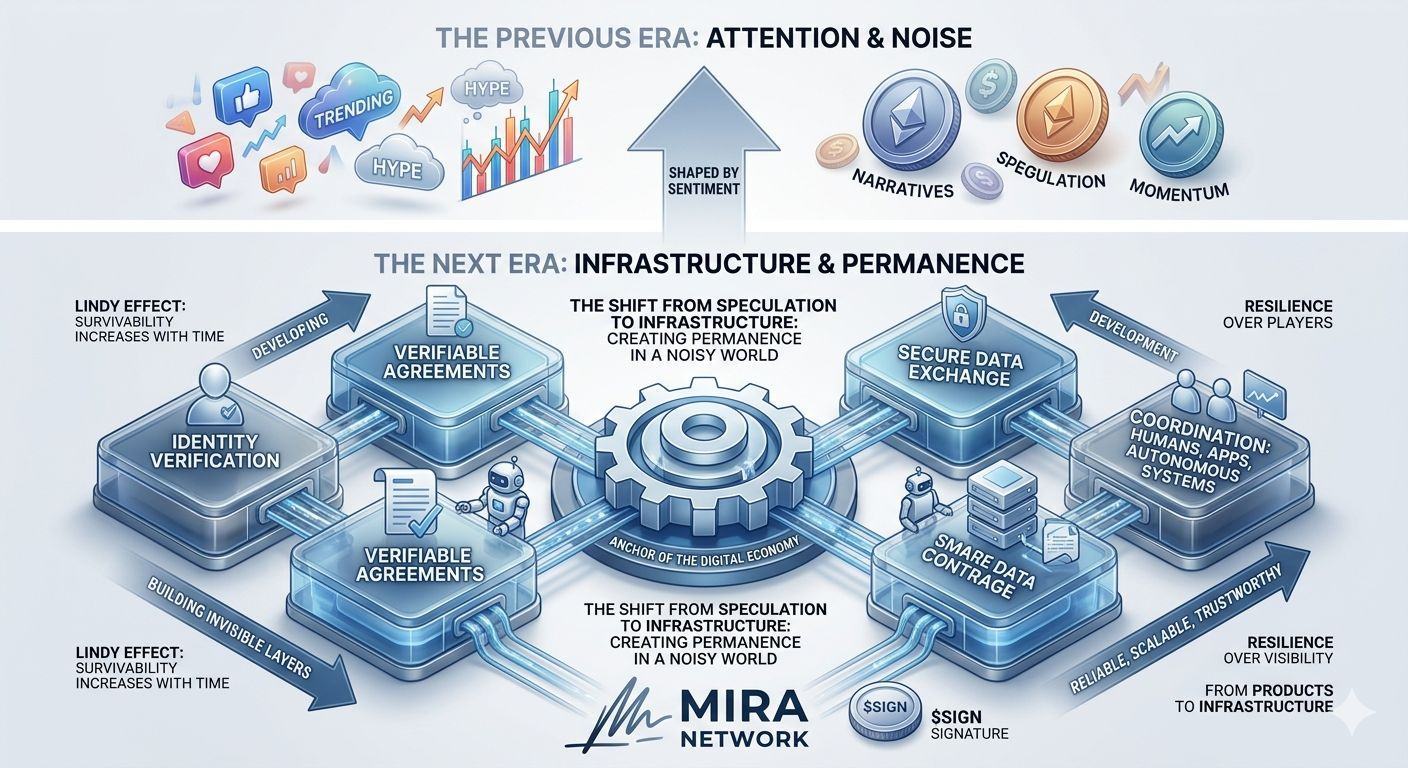
In previous cycles, success was measured by visibility. Projects competed to generate excitement, influencers shaped opinions, and liquidity depended on narrative rather than sustainability. But today, the atmosphere is different. Builders are no longer trying to dominate conversations; they are focusing on establishing invisible layers that make digital coordination reliable, scalable, and trustworthy.
This silent evolution marks the shift from speculation to infrastructure. Instead of promising future possibilities, modern networks focus on solving fundamental problems: identity verification, verifiable agreements, secure data exchanges, and coordination among humans, applications, and autonomous systems. These are not features designed to generate excitement, but mechanisms built to last.
The most efficient ecosystems are rarely spectacular at first glance. They develop slowly, integrate deeply, and become indispensable without requiring particular attention. When infrastructure works well, users barely notice it, and yet entire digital economies depend on it. Value then emerges not from fleeting demand, but from repeated use, integrated into daily workflows.
What makes this moment unique is the convergence of artificial intelligence, decentralized coordination, and programmable trust. As machines, agents, and decentralized applications interact autonomously, the need for reliable verification layers becomes essential. Without trusted infrastructure, intelligence cannot coordinate, and without coordination, innovation fragments into isolated experiences.
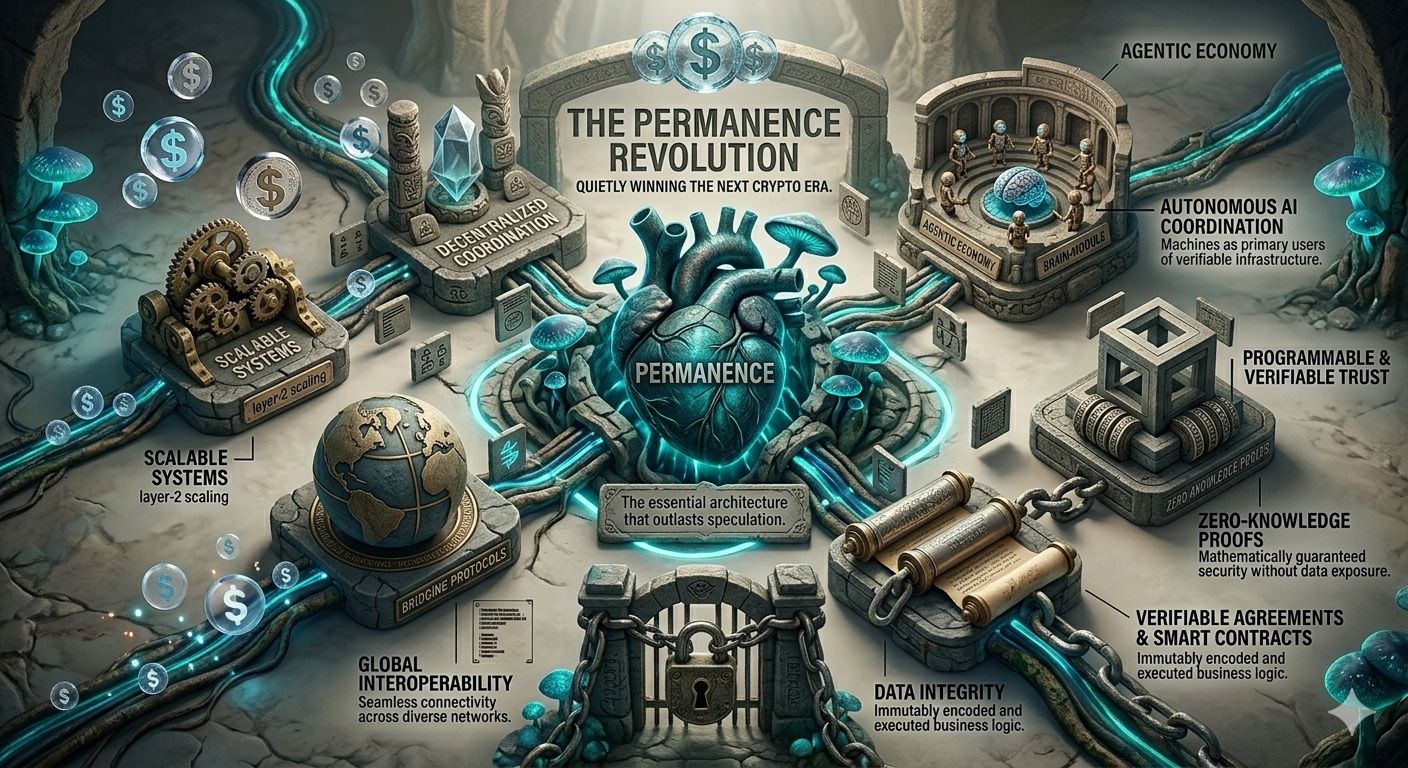
Investors are gradually becoming aware of this reality. Capital is now directed towards systems that facilitate the work of others rather than towards competing systems. Platforms that support developers, validate interactions, and streamline exchanges within networks are discreetly establishing themselves as the cornerstone of the next digital economy.
History shows that sustainable technological revolutions are rarely driven by the loudest speeches. The internet itself did not experience a meteoric rise due to websites that briefly captured attention, but due to protocols enabling reliable information flow across the globe. Cryptocurrency today seems to be entering a similar phase where resilience takes precedence over visibility.
The future winners may not be the projects that monopolize the news today. Rather, it will be the networks that build operational trust layers regardless of market fluctuations. These systems transition from being products to infrastructures, and once an infrastructure becomes essential, its replacement becomes nearly impossible.
The real question of this cycle is no longer which token is trendy, but which architecture will remain functional in several years. Attention creates a dynamic, but infrastructure ensures longevity. And, discreetly, almost imperceptibly, this longevity is starting to prevail.
@SignOfficial
#SignDigitalSovereignInfra