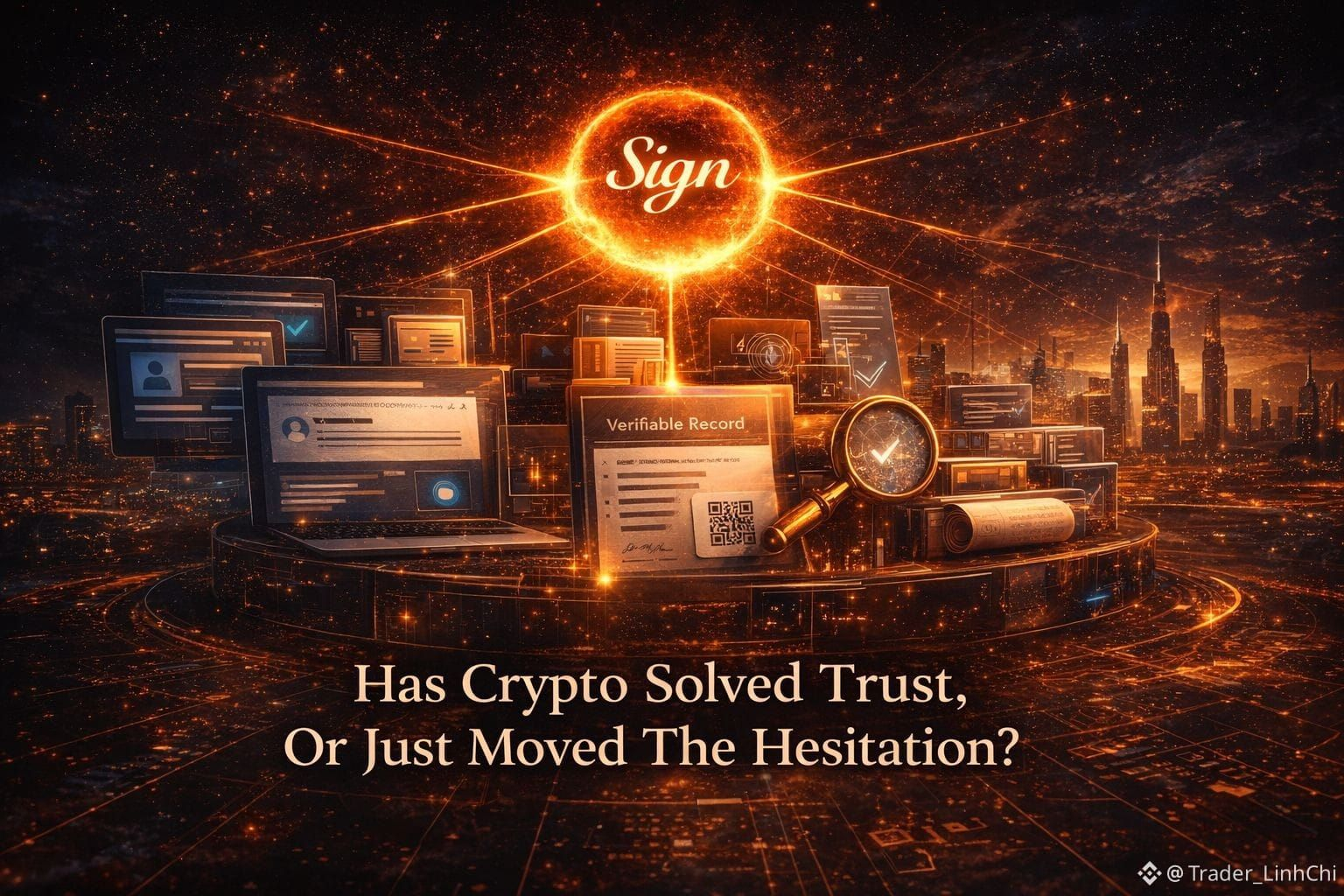
Does Sign Protocol actually unify trust, or just move it around?
Honestly, I’ve been diving into $SIGN Protocol again lately, trying to figure out if it’s just another piece of infrastructure, or if it’s quietly changing how trust actually works across systems.
At first glance, a lot of people treat $SIGN like your standard utility or governance token. But looking closely at the architecture, it acts way more like a coordination engine. It sits right between issuers, validators, and apps, perfectly aligning incentives so everything runs without a middleman. It’s not just about paying gas fees—it’s about keeping people actively participating. But here's what keeps bugging me: if those incentives ever drop off or misalign, does the verification layer survive, or does trust just start to fragment all over again?
Then there’s TokenTable. It looks super simple on the surface but solves a massive operational headache. We all know airdrops right now are messy, gas-heavy, and usually pretty unfair. TokenTable fixes this by handling the distribution logic off-chain and then anchoring the final results on-chain. It saves a ton of money and complexity, especially when you're distributing to thousands of users. But there’s a subtle trade-off—you’re basically trusting that off-chain coordination layer to play nice before the final settlement. It works beautifully, but let's be real, it’s not strictly "trustless."
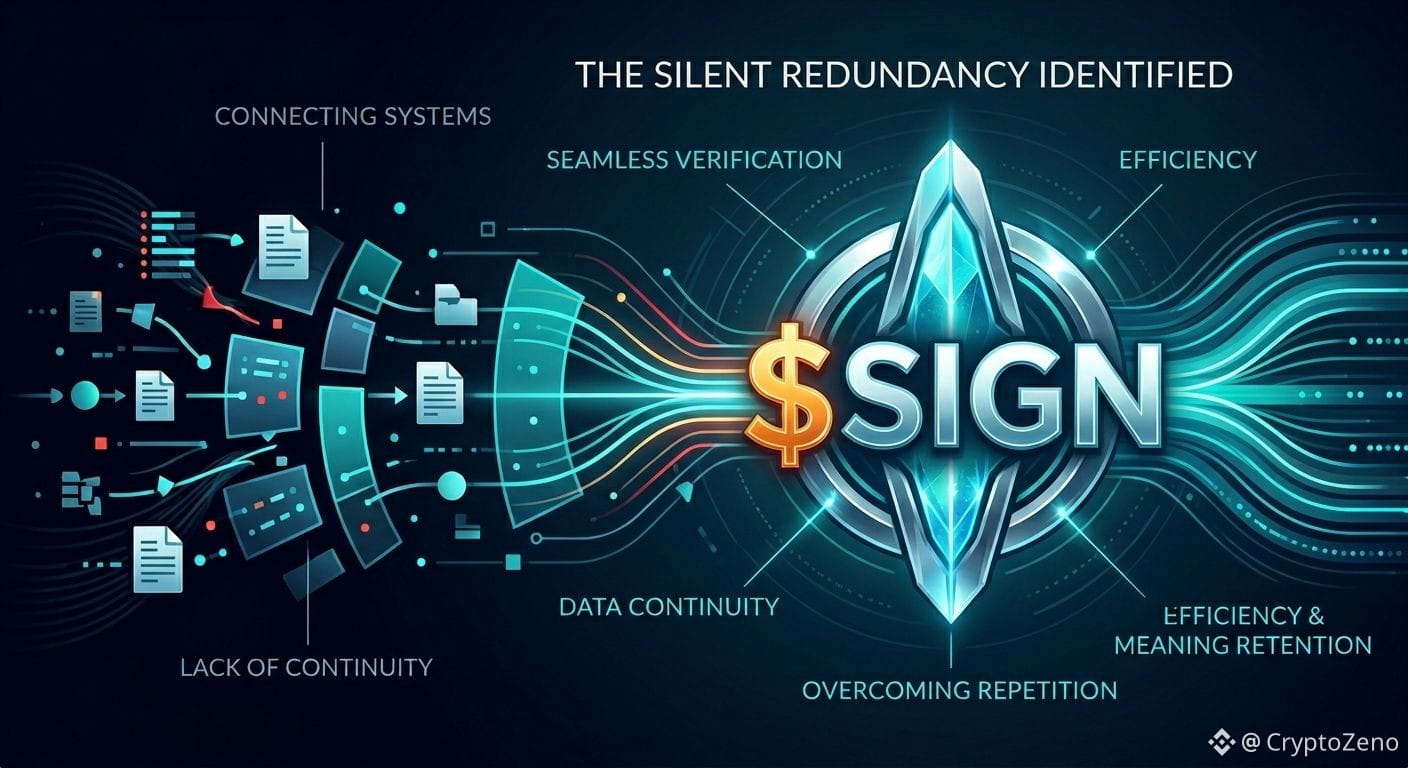
Performance at scale is where Sign actually gets super interesting to me. Instead of forcing every single verification on-chain, it uses attestations that can be verified without starting from scratch every time. It cuts out the redundancy and keeps things fast and lightweight, which is exactly what massive digital identity systems need. But the friction here is consistency. If different environments interpret those attestations differently, aren't we just back to fragmentation, just at a completely new layer?
And that leads to how Sign really positions itself: a true trust layer for digital identity. Portable, reusable credentials mean you don’t have to prove the same thing over and over. The system verifies the proof, not the institution behind it. It’s a massive shift. But socially? I’m still wondering how that plays out. In the real world, institutions don’t just verify data; they verify each other.
So yeah, the design is incredibly clean, it solves actual problems, and the approach makes total sense. But I’m still stuck on this one question: does solving verification at the protocol level actually unify trust, or does it just create a brand-new layer where trust still has to be negotiated?
@SignOfficial #SignDigitalSovereignInfra #sign