
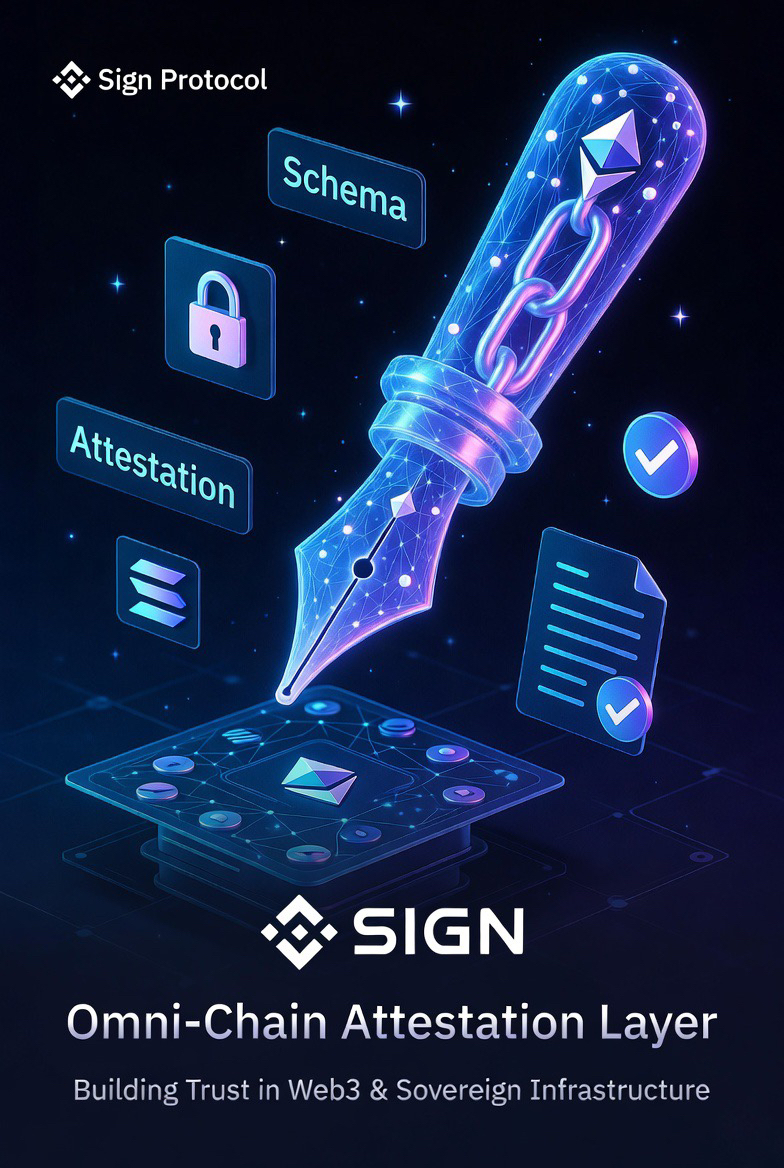
In a world full of scams, rug pulls, and fake credentials, verifiable trust is the holy grail of Web3. Enter Sign Protocol — the omni-chain attestation infrastructure that turns claims into cryptographically signed, reusable evidence.
Unlike traditional blockchains that mainly track asset transfers, Sign focuses on “trusted data.” It lets individuals, projects, and even governments issue attestations about identity, behavior, certifications, or agreements. These can be queried and verified instantly across chains without relying on centralized authorities.
Key features:
• Cross-chain compatibility: Works seamlessly on EVM chains, Solana, TON, and others.
• Flexible storage: Full on-chain, off-chain with on-chain anchors, or privacy-enhanced with ZK-proofs.
• Composable attestations: Build complex systems like reputation scores, eligibility checks for airdrops, or KYC-lite solutions.
@SignOfficial Protocol powers real-world use cases: decentralized identity (DID), compliant token distributions via TokenTable, educational diplomas on-chain, and even national-scale digital infrastructure.
Recently, the project has been expanding into sovereign-grade solutions, partnering on blockchain initiatives for governments while keeping crypto accessible for everyone.
For builders, it’s a powerful toolkit. For users, it means less friction and more confidence when interacting with dApps.
Sign Protocol isn’t just another token narrative — it’s infrastructure that could underpin the next wave of mass adoption. What use case excites you the most: on-chain credentials, private attestations, or sovereign applications?
 Let’s discuss in the comments!
#SignProtocol #Blockchain #VerifiableCredentials #Web3Trust $SIGN
