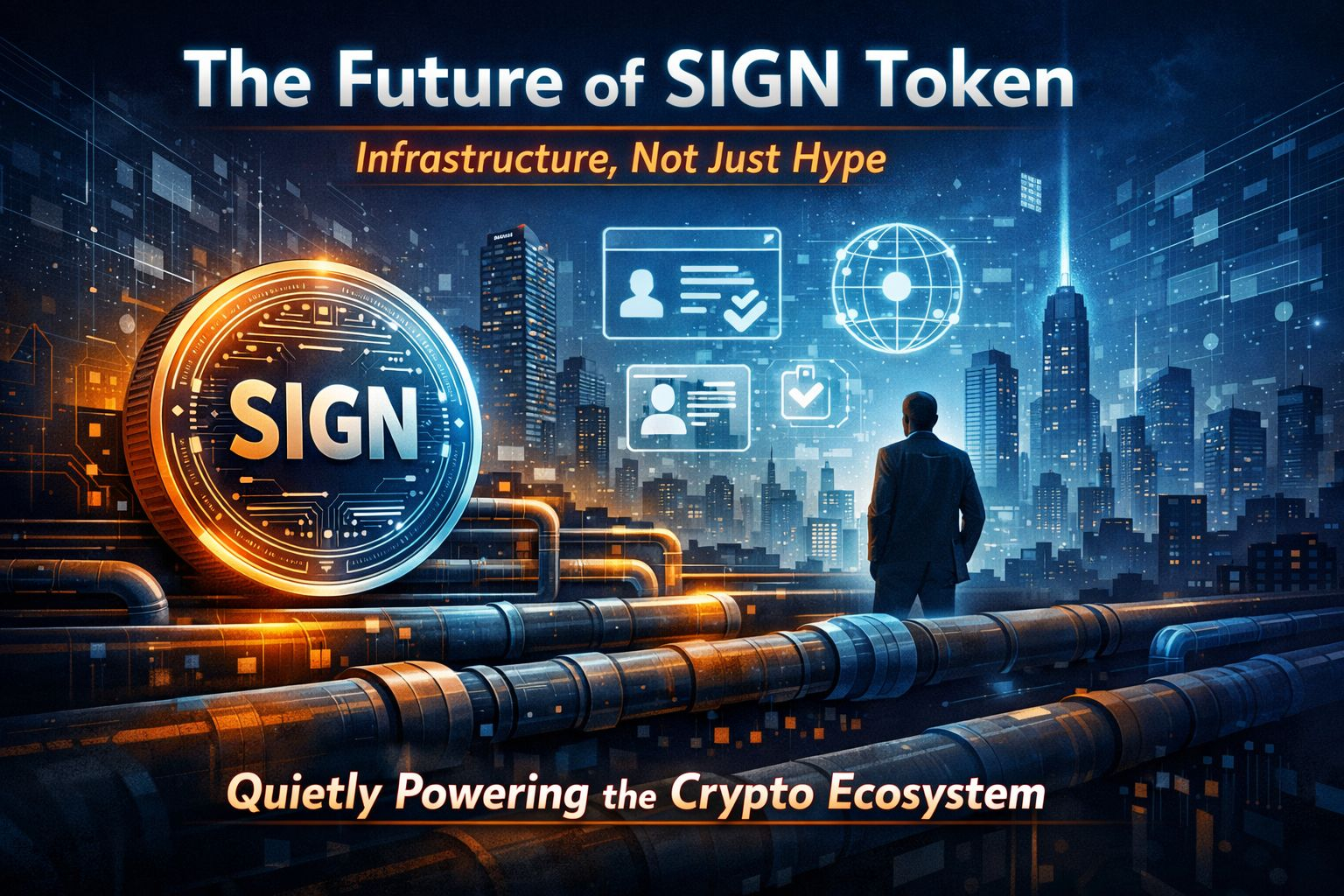
If you’ve spent any time in crypto, you know most tokens live and die by hype. Airdrops, quick pumps, then silence. But SIGN feels a bit different—and I don’t say that lightly.
What stands out first is its focus on infrastructure, not just price. SIGN is tied closely to how digital claims are verified—things like who gets an airdrop, who owns what, and who actually did something on-chain. These sound simple, but they break all the time in crypto. SIGN is trying to fix that layer quietly in the background.
And honestly, that’s where long-term value usually hides.
The future of SIGN likely depends on adoption more than speculation. If more projects start using it for distribution, identity, and verification, the token could become deeply embedded in how crypto systems operate. Not flashy—but essential. Think of it like plumbing. Nobody talks about it, but everything depends on it working.
There’s also an interesting angle with real-world use. As systems like digital identity or even CBDCs evolve, tools that verify claims without exposing too much data could become very important. SIGN seems to be leaning in that direction, which gives it a wider runway beyond just Web3.
Of course, there are risks. If adoption stays limited or competitors build better solutions, SIGN could struggle to stand out. Crypto moves fast, and being early doesn’t always mean winning.
Still, if you zoom out, SIGN doesn’t feel like a short-term play. It feels like a bet on infrastructure—the kind that grows slowly, then suddenly becomes hard to replace.
Final Thought
SIGN’s future isn’t about hype cycles. It’s about whether it becomes something projects quietly rely on every day. If it does, the token might end up being far more valuable than people expect right now.
#signdigitalsovereigninfra $SIGN @SignOfficial