
@SignOfficial #SignDigitalSovereignInfra
I’ve watched enough systems rise with confidence and fade with quiet excuses to know that what sounds right is rarely what survives. Ideas arrive fully formed, elegant in their simplicity, persuasive in their language. They promise aligment, fairness, clarity. But the real world is less interested in elegance than it is in enduance. What holds up is not what sounds convincng in the begining, but what continues to function when atention drifts, when incentives shift, when people behave in ways no one planned for.

I’ve come to think of trust as something much heavier than we pretend it is. It isn’t a feeling, even though we often describe it that way. It isn’t a statement or a badge or a line written somewhere to reasure people. It behaves more like a record—something acumulated slowly, something that can be measured in small consitencies and quiet follow-through. And like any record, it can be broken, erased, or misread. The systems that endure seem to understand this. They don’t ask to be trusted; they build mechansms that make trust observable, traceable, and, over time, difficult to fake.
When I think about identity in these systems, I don’t think about names or profiles or any of the obvious markers. I think about friction. The subtle kind that doesn’t anounce itself but shapes everything. The hesitation before an action. The uncertainty about whether something—or someone—can be relied on. Identity, in practice, becomes less about who someone claims to be and more about how consitently they can be recognized across time and context. And credibility follows closely behind, not as a label but as a pattern. It’s rarely declared; it’s inferred, sometimes reluctantly.
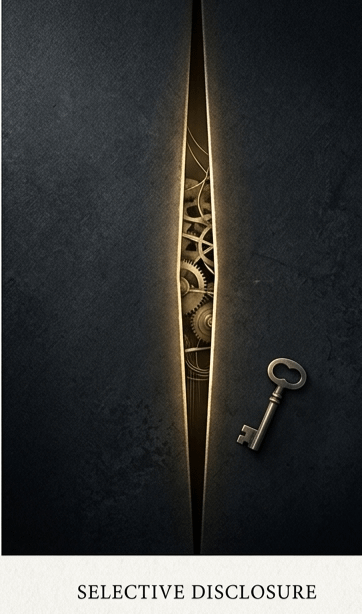
There’s always this quiet tension between being seen and staying protected. I’ve noticed how systems tend to swing too far in one direction. Either everything is exposed, in the name of openness, or everything is hidden, in the name of privacy. Both feel principled at first. Both fail in practice. Total visibility invites manipulation, performance, and sometimes harm. Total concalment breeds uncertainty, making cordination fragile and trust expensive. What seems to work—if anything does—is something more restrained. A kind of selective disclosure, intentional and precise. Not everything revealed, not everything concealed, but just enough shared at the right moments to allow the system to function without collapsing under its own contradictions.
Even then, the design is never the system. I’ve learned to be wary of clean diagrams and carefully worded explanations. They flatten reality. Implementation is where things begin to fray. People interpret rules differently. Institutions impose constraints that weren’t considered. Edge cases stop being rare. Operational complexity accumulates quietly until it reshapes the entire structure. What looked seamless becomes layered with workarounds, exceptions, and compromises. And yet, sometimes, that’s exactly what allows it to keep going.
Human behavior doesn’t bend easily to theory. It resists neat assumptions. People act in their own interest, or what they believe is their interest, and that belief changes depending on context, pressure, and time. Systems that ignore this tend to become brittle. They depend on ideal behavior that never fully materializes. The ones that last seem to expect inconsistency. They account for it, absorb it, sometimes even rely on it in ways that aren’t immediately obvious.
I’ve noticed that the systems that matter most rarely feel impressive at first. They don’t announce themselves loudly. They don’t rely on attention to sustain themselves. In fact, they often operate best when they’re barely noticed. There’s something unglamorous about them—almost disappointingly so. They move slowly, adjust carefully, and resist the urge to promise too much. Over time, though, they begin to show a different kind of strength. Not the kind that draws excitement, but the kind that holds under pressure.
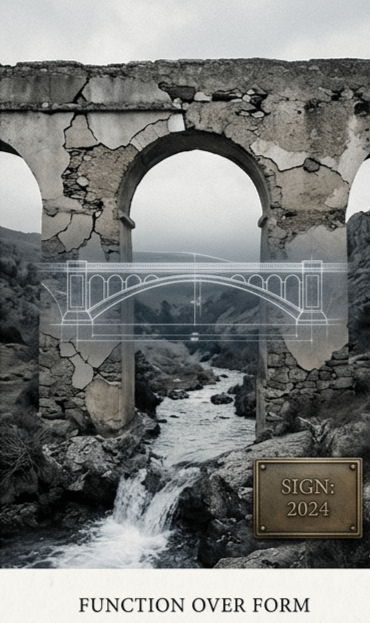
SIGN, in the way I’ve been thinking about it, isn’t just a name but a reminder of that underlying tension—between what is claimed and what is proven, between identity as an idea and identity as something lived and verified over time. It sits somewhere in that space where systems either become real or quietly fall apart.
I keep coming back to the same uneasy thought: maybe the systems we’re searching for aren’t the ones that look complete or convincing at the start, but the ones that leave room for correction, for doubt, for gradual proof. The ones that don’t try to resolve every tension, but learn to live within it.
And I’m not entirely sure if that makes them stronger—or just more honest.