I started thinking about trust online from a slightly different angle…
Not how it is created — but how long it actually lasts.
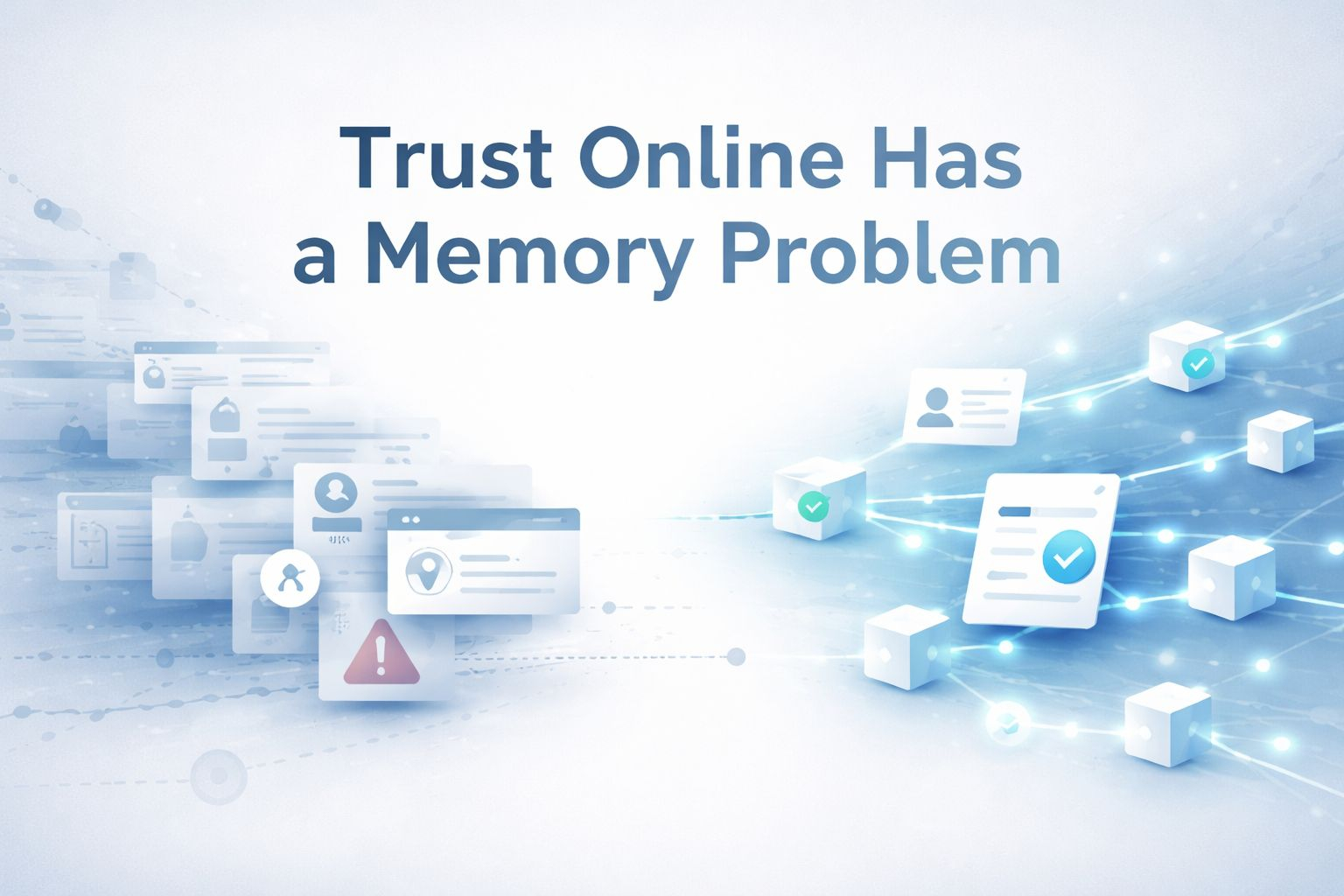
Because if you look closely, most digital trust has a very short memory.
You prove something once… and it works.
You move somewhere else… and suddenly it’s like none of that ever happened.
New platform.
New check.
Same person… zero history.
That pattern feels small at first. Just part of using the internet.
But over time, it becomes a hidden cost. Not in money — in repetition, delay, and quiet friction that keeps resetting progress.
That’s where something like @SignOfficial started to click for me… but not in the usual “verification solution” way.
More like a shift in how proof behaves.
Right now, proof is static.
It sits where it was created.
If it moves, it loses clarity.
So systems don’t really trust the movement — they restart the process instead.
SIGN feels like it’s trying to change that behavior.
Not by making verification louder or more complex…
But by making proof carry its own context.
So instead of asking:
“Can you prove this again?”
The system starts asking:
“Can I understand and trust what’s already been proven?”
That’s a very different direction.
Because the real issue was never lack of data.
We already have too many credentials, records, proofs.
The issue is… they don’t travel well.
A certificate becomes a file.
A record becomes a screenshot.
A claim becomes something that needs human interpretation again.
And every time that happens, systems slow down.
What’s interesting here is how this connects to tokens too.
We usually think tokens are simple — you send, you receive, done.
But in reality, every token has a question behind it:
Why this person?
Based on what proof?
Can that proof still be trusted?
Without solid answers, distribution becomes guesswork.
So verification and distribution are not separate problems.
They depend on each other.
One defines truth.
The other acts on it.
If that connection is weak, everything feels disconnected.
If it’s strong, systems start to feel smooth… almost invisible.
And that’s probably the point.
Good infrastructure doesn’t announce itself.
It removes moments where you have to stop and explain things again.
Less re-checking.
Less repeating.
Less doubt between steps.
Not perfect… but more continuous.
So instead of thinking “this verifies better”…
It feels more accurate to say:
This tries to make trust last longer than one interaction.
And if that actually works at scale…
it doesn’t just improve systems.
It quietly changes how often we have to start over.