
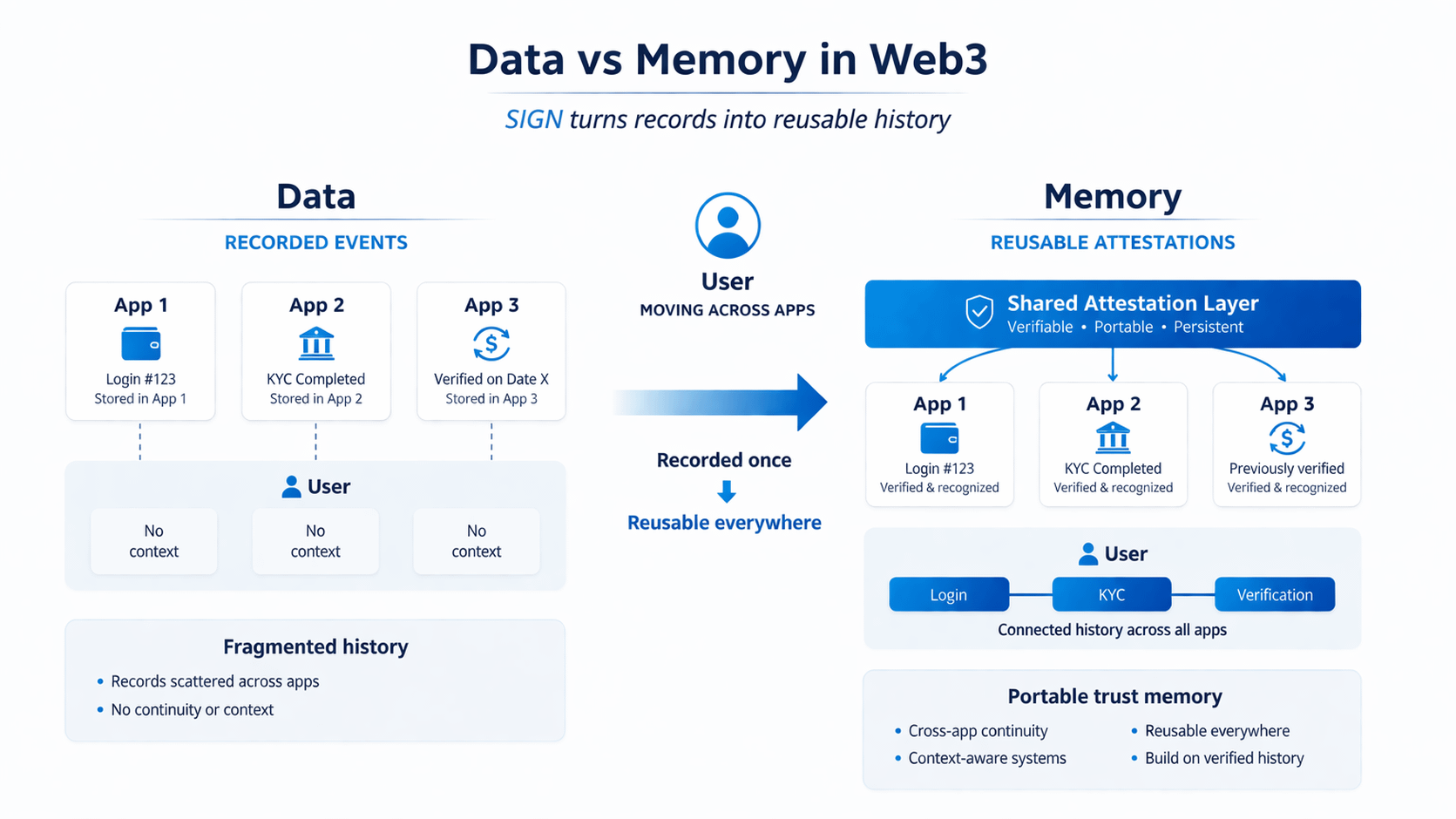
I’ve always felt like the internet has this weird habit of resetting people.
You show up somewhere, contribute, build trust, actually do things that matter… and then you move to another platform and it’s like none of it ever happened. New profile, new metrics, new grind. Like your past just got wiped because it crossed the wrong boundary.
That’s always felt broken to me.
And it’s probably why $SIGN keeps getting more interesting the longer I think about it. At first it sounds like infrastructure, verification, credentials… all the usual words. But the more I sit with it, the less I think the story is about proving something once.
It’s about what happens after.
Because if Sign can verify that someone contributed, stayed consistent, met certain conditions, actually showed up over time… then that stops being a one-time event. It becomes something reusable. Something another system can recognize without rebuilding the entire context from scratch.
That’s a big shift.
Most systems are good at recording. Not so good at remembering in a useful way. Your effort stays locked where it happened. It helps one app, one protocol, one community… and then just sits there. Like archived effort that can’t really do anything else.
That’s not capital.
It’s just history.
What SIGN seems to be aiming for is making that history usable. Not just proof for a moment, but something that can carry forward. Something that can influence access, rewards, coordination in other places too.
And if that actually works, it changes how participation feels.
Because suddenly you’re not just doing tasks for one isolated environment. You’re building something that compounds. A trail that other systems can read. Contribution starts to feel less disposable and more like something that accumulates over time.
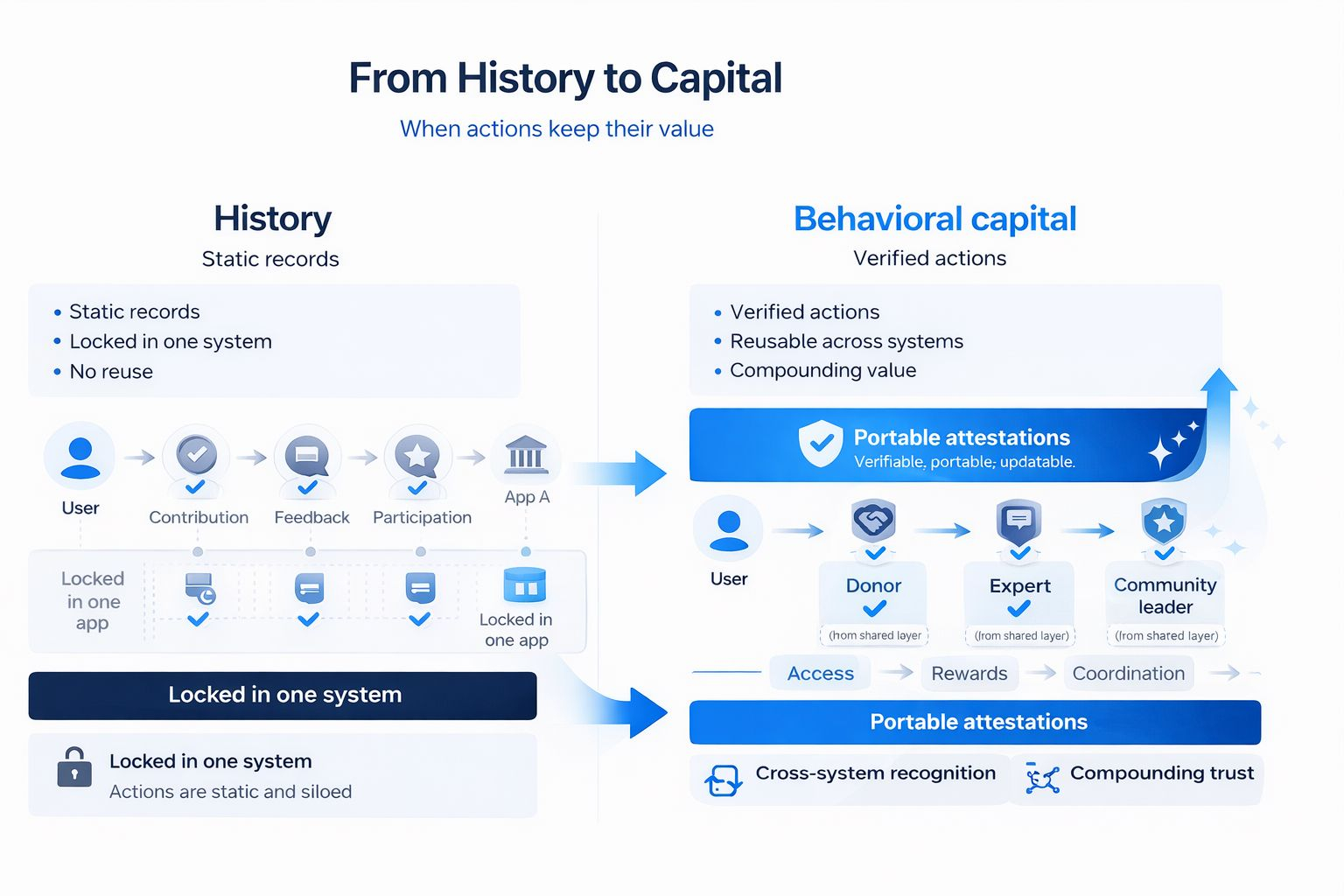
That’s where it starts to feel like a different kind of capital.
Not financial, at least not directly. More like behavioral capital. Reputation that’s backed by proof and doesn’t disappear the moment you leave the original platform.
Crypto talks a lot about identity and ownership, but a lot of it still feels shallow. Signals are either too local, too easy to fake, or too stuck inside one ecosystem to matter anywhere else. SIGN feels like it’s pushing toward something more transferable.
Less “this happened here once” and more “this can still matter somewhere else.”
And that’s a stronger idea than it sounds at first.
Because once history becomes portable, the whole system changes. You don’t start from zero every time. You carry weight with you. Systems don’t have to treat every interaction like the beginning of time. They can inherit context, make decisions faster, recognize patterns of behavior without rebuilding everything.
That’s how things start to feel connected instead of fragmented.
Of course, that also makes everything heavier.
The moment behavior becomes reusable, the stakes go up. Who verifies it, what counts, how portable it really is… those questions stop being theoretical. But honestly, those are the kinds of problems you get when something starts to matter.
And I think that’s the direction this is pointing toward.
So when I look at SIGN, I don’t really see just a trust layer or a credential system. I see an attempt to make the past… useful again. To make actions persist in a way that actually carries forward.
Not just data. Not just receipts.
Something closer to memory that works.
And if that becomes real, then crypto finally stops forcing people to restart every time they move.
Which, honestly, feels long overdue.