

Habibies! Do you know? I remember the first time I heard someone describe a CBDC as “just government crypto,” and it felt off in a way I couldn’t quite explain at the time. Not wrong, exactly, but shallow. Like describing the internet as email. Technically related, but missing the deeper shift underneath.
What struck me later is that CBDC is not really about currency in the way most people think. It is about control over the infrastructure that money moves through. And once you start looking at it from that angle, a lot of things that seem disconnected begin to line up.
Right now, most of what we call digital money is not actually digital in its foundation. It is a digital record of something else. Your bank balance, your mobile wallet, your payment app, all of them point back to deposits sitting inside commercial banks. The system works, but it carries a certain weight. Transactions move through layers. Settlement takes time. Visibility gets fragmented the moment money leaves the central bank and enters the broader system.
That structure made sense when the world was slower. It makes less sense now, when information moves instantly but value does not.
You can see this gap clearly in moments of stress. During the COVID period, the United States issued stimulus payments worth over 800 billion dollars across multiple rounds. On paper, that is direct fiscal action. In practice, millions of people waited weeks, sometimes months, to receive funds. Some could not receive them at all because they lacked bank access. The intent was precise, but the execution was not.
That disconnect reveals something important. Monetary systems today are precise at the top and approximate at the edges. Central banks can calculate exactly how much liquidity to inject. Governments can define who should receive support. But once those decisions enter the system, they diffuse through intermediaries, delays, and imperfect channels.
CBDC starts to close that gap. Not by adding another payment layer, but by changing the base layer itself.
On the surface, a central bank digital currency is simply a digital form of sovereign money. Underneath, it is a redesign of how money is issued, distributed, and tracked. If this holds, it means the central bank does not lose visibility the moment funds enter the economy. It means money can move with fewer steps between creation and use. And that changes what policy can actually do in practice.
Take financial inclusion. Around 1.4 billion adults globally remain unbanked. That number is not just a statistic. It reflects people who cannot receive digital payments easily, cannot save in formal systems, and often rely on cash economies with limited security. Traditional approaches tried to solve this by expanding banking services. More branches, more accounts, more onboarding.
But banks operate on incentives. Low-income or remote users often do not generate enough activity to justify the cost. So the system leaves them out, not because it cannot reach them, but because it does not prioritize reaching them.
CBDC shifts that logic slightly. It treats access to money as infrastructure rather than a product. If a person can hold state-issued digital currency without needing a full banking relationship, the baseline changes. It does not solve inequality on its own, but it removes one layer of exclusion that has persisted for decades.
At the same time, there is a different pressure building from the opposite direction. Private digital money is already filling gaps that public systems left open. Stablecoins are the clearest example. USDT alone often processes daily trading volumes that exceed Bitcoin, sometimes moving tens of billions of dollars in a single day. That scale is not theoretical demand. It is active usage.
What that reveals is not just interest in crypto, but dissatisfaction with existing rails. People are choosing speed, liquidity, and accessibility over formal structure. In countries dealing with inflation or capital controls, this becomes even more visible. Digital dollars circulate because they work better in practice than local alternatives.
From a policy perspective, that creates tension. Monetary sovereignty depends on the ability to issue and manage currency within a defined system. If economic activity begins shifting into instruments outside that system, control weakens gradually. Not in a dramatic collapse, but in a steady erosion.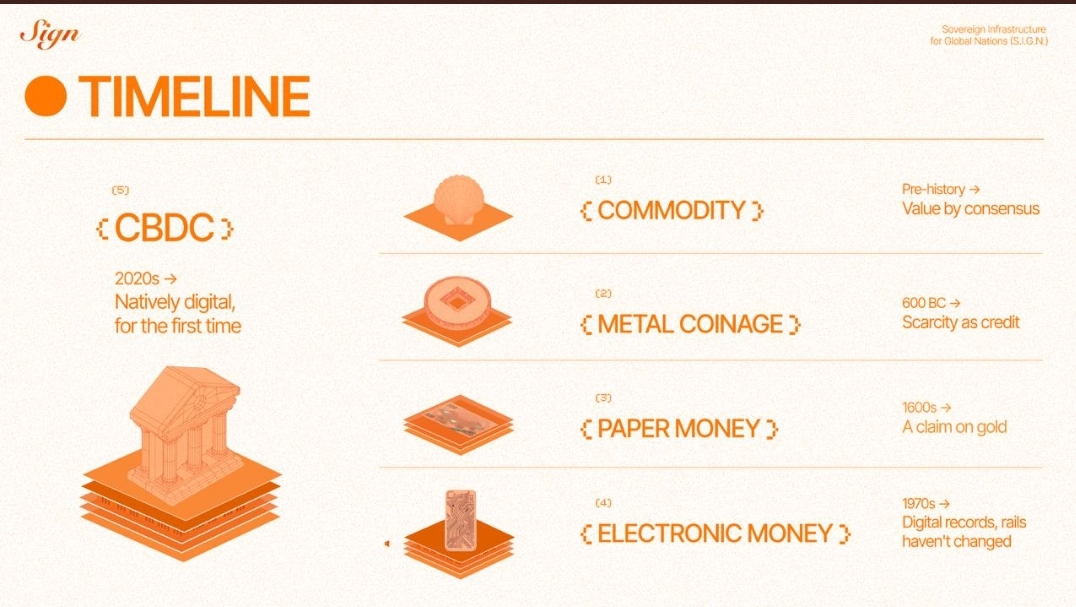
CBDC is one response to that. It gives states a native digital alternative that operates on their own terms. Not to replace private innovation entirely, but to ensure that the foundation remains public.
Meanwhile, another layer of inefficiency sits in cross-border payments. The global system still relies heavily on infrastructure built in the 1970s. Transfers often take days. Fees can reach 5 to 7 percent in some corridors, especially for remittances. For migrant workers sending money home, that is not a minor cost. It is a meaningful loss of income.
If money were designed today from scratch, it would not look like this. It would move closer to how data moves. Direct, fast, and traceable within clear rules. CBDC opens the possibility of that shift, especially if different countries build interoperable systems. Early signs suggest progress, but coordination remains a challenge.
Then there is the idea of programmability, which tends to generate the strongest reactions. On the surface, programmable money means attaching conditions to how funds can be used. A welfare payment that only works for essential goods. A subsidy that expires after a certain period. A grant that is restricted to a specific region.
Underneath, this introduces a level of precision that monetary systems have never had before. Policy can move from broad signals to targeted actions. That could reduce waste and improve effectiveness. But it also raises obvious concerns. Control over money becomes more granular. The line between guidance and restriction becomes thinner.
That tension is real. It is not something that can be designed away entirely. Privacy, governance, and accountability will shape how these systems are accepted. Without trust, even the most efficient infrastructure will face resistance.
Meanwhile, something quieter is happening in the background. Cash is declining. In countries like Sweden, cash transactions represent less than 10 percent of total payments. The trend is similar, though slower, in many other regions. As cash fades, the only widely accessible form of public money disappears with it.
What replaces it today are private platforms. Payment apps, card networks, digital wallets. They work well, but they operate on their own incentives. Over time, they become the practical interface of money, even if the currency itself remains sovereign.
CBDC steps into that gap. It offers a public option in a digital environment. Not necessarily to dominate, but to exist as a baseline. A reference point that ensures the system does not become entirely dependent on private rails.
When I look at all of this together, the pattern becomes clearer. This is not a story about digitizing money for convenience. It is about aligning the form of money with the structure of a digital economy. The current system carries legacy constraints that are becoming more visible as everything else accelerates.
If this shift continues, the real question will not be whether money becomes digital. That is already happening. The question is who defines the rules of that digital layer, and how those rules balance efficiency with control.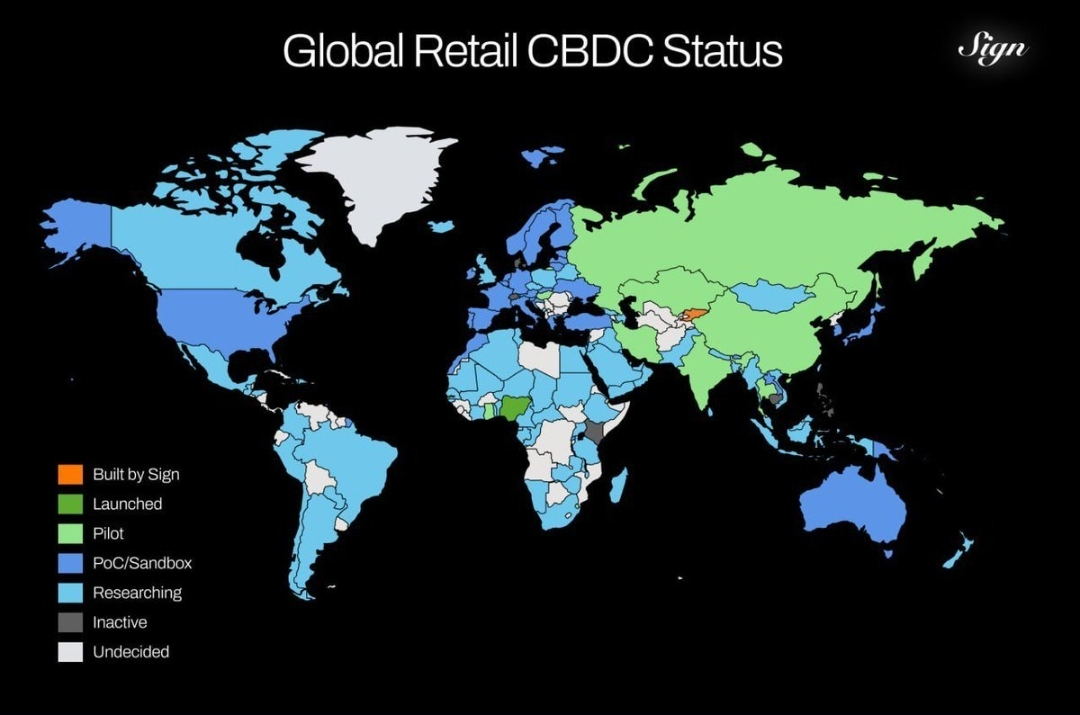
And that is where the misunderstanding begins to fade. CBDC is not just a financial tool. It is a decision about where the foundation of money sits in a world where everything else has already moved on.
@SignOfficial #SignDigitalSovereignInfra $SIGN
