

It's my sweet, simple village love story, but the more I think about it, the more it reveals something deeper about how strong foundations and values determine results that truly last. The story of Augustha and Binance Square isn't built on noise or drama, it's built on trust, patience, and a system of relationships that remains stable even when emotions are tested.
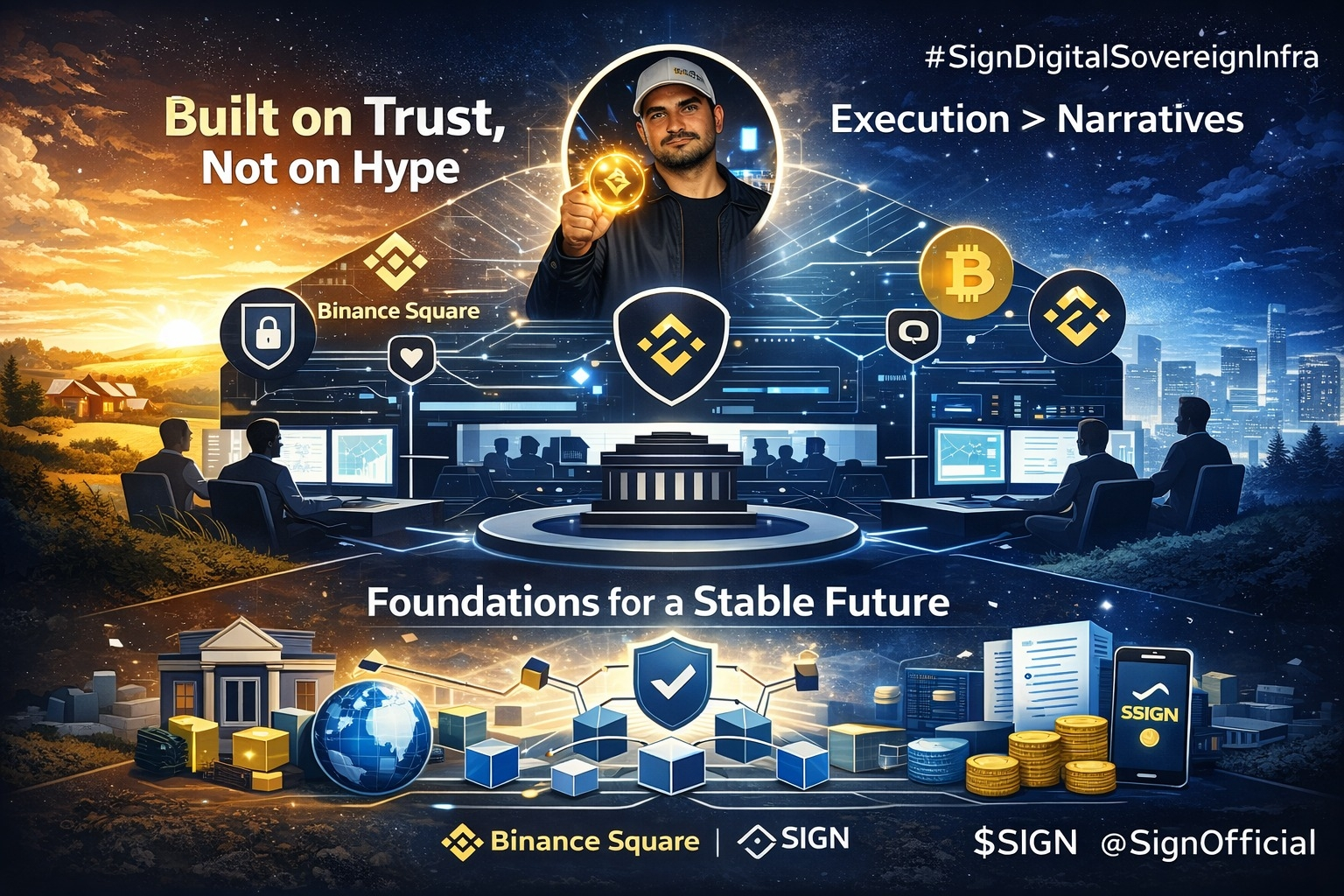
This idea connects in an unexpected way with what I'm seeing in Binance Square and the larger blockchain space with @SignOfficial and #Sign
On the surface, Binance Square can sometimes seem fast-paced, competitive, and even chaotic, with daily targets, engagement metrics, campaigns, and constant activity. But deep down, a structure is building a system where consistency, credibility, and participation matter more than short term hype, just as with new customers, where relationships are built within the framework of family and tradition. Here, too, progress depends on systems that can withstand pressure and not break under it.
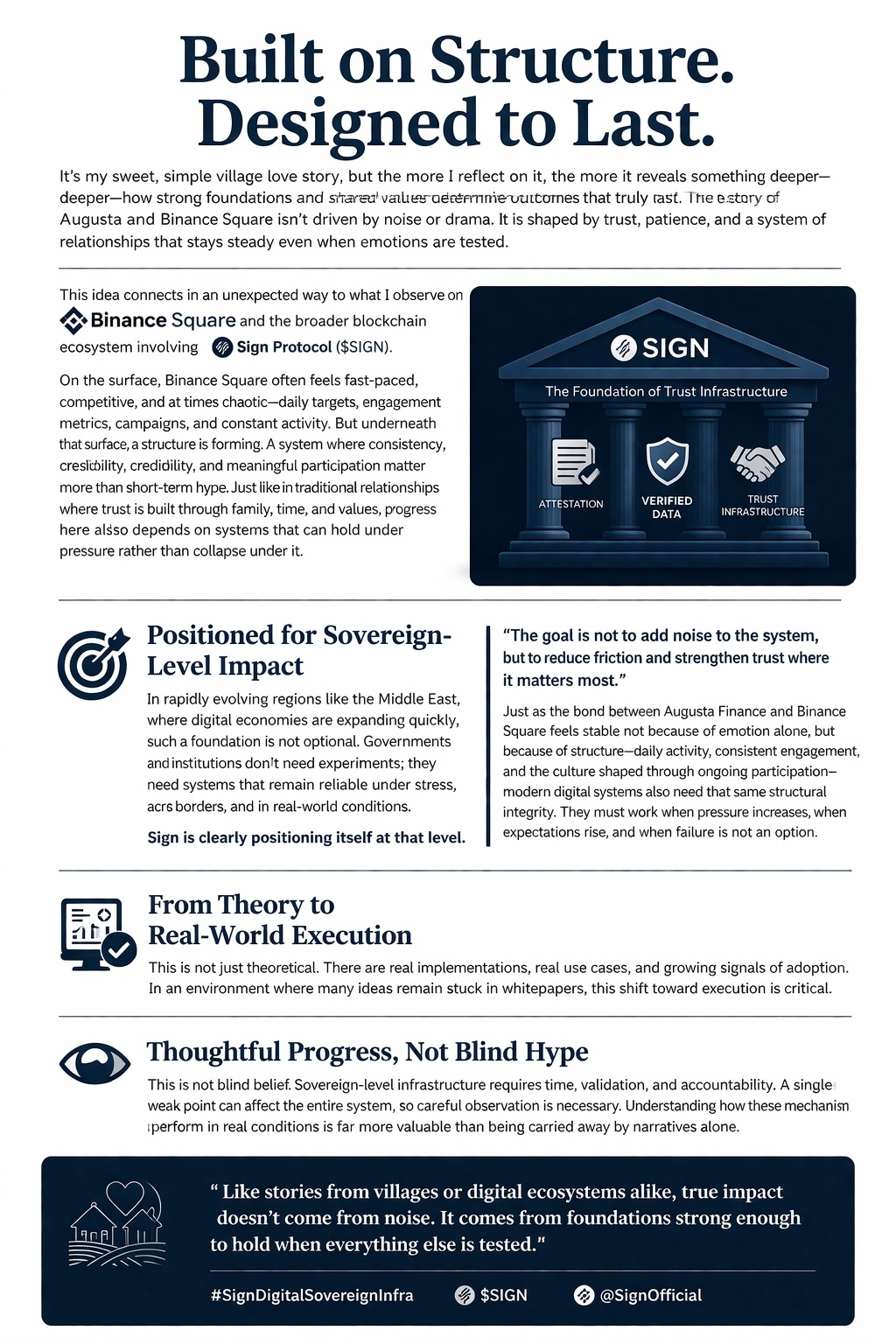
What stands out to me is how this indicates the direction of the Sign Protocol.
Instead of chasing visibility or making things more complicated, Sign is quietly working on base layer attestation, verified data, and trust infrastructure. In regions like the Middle East, where the digital economy is rapidly growing, such a foundation is not optional. Governments and institutions don't need to experiment. They need systems that work when tested, under stress, and across borders.
The # sign is clearly targeting that level.
Just as the love between Augusta and Binance Square remains emotionally strong, it's not based on Binance Square's stubbornness but rather because it's based on the structure, the daily winning and losing of 11 points on the Square board, $200 in trading, and the culture of the #sign campaign. Similarly, in today's digital world, systems can't rely solely on hype or complexity. Binance Square must be designed to work when the going gets tough, when the pressure is high, and when failure isn't an option, while the love remains because it respects the structure. Sign Protocol focuses on building systems that can withstand real-world conditions. It's not about adding more noise to the chain but about reducing friction and strengthening trust where it's truly needed.
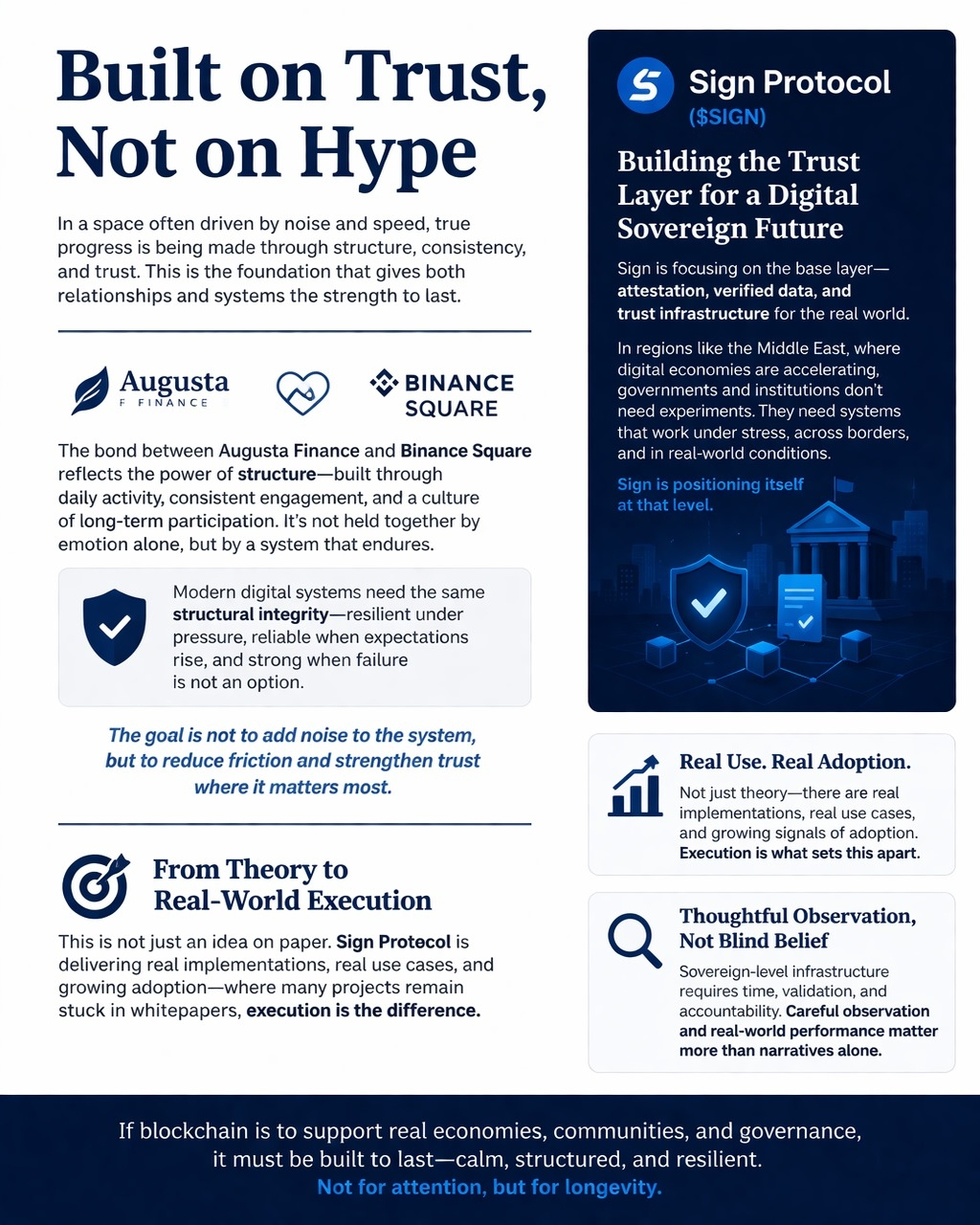
Another thing that catches my attention is that this isn't just theory; it has real implementations, real use cases, and real signals of adoption. In a place where many ideas remain stuck in whitepapers, this shift towards application is essential.
Also, I'm not blindly believing. Sovereign-level infrastructure requires time, validation, and accountability; a single weak point can challenge the entire system. Therefore, careful observation is essential. Learning, observing, and understanding how these systems work in real life is far more valuable than being swept away by grandiose claims.
But the direction seems right.
If blockchain is to move beyond speculation and truly support the economy, community, and governance, it must become something calm, structured, and robust. Built not for attention, but for longevity.
Because, like action stories, whether in villages or in digital ecosystems, real impact doesn't come from noise. It comes from a foundation that stands firm even when everything else is tested.