

@SignOfficial #SignDigitalSovereignInfra $SIGN

I didn't immediately understand why Sign generates such interest specifically in the Middle East. At first, it seemed like just another infrastructure project - promising but abstract. Until I accidentally attended a closed meeting in Dubai, where representatives from several countries in the region discussed digital sovereignty. And that's when everything fell into place.
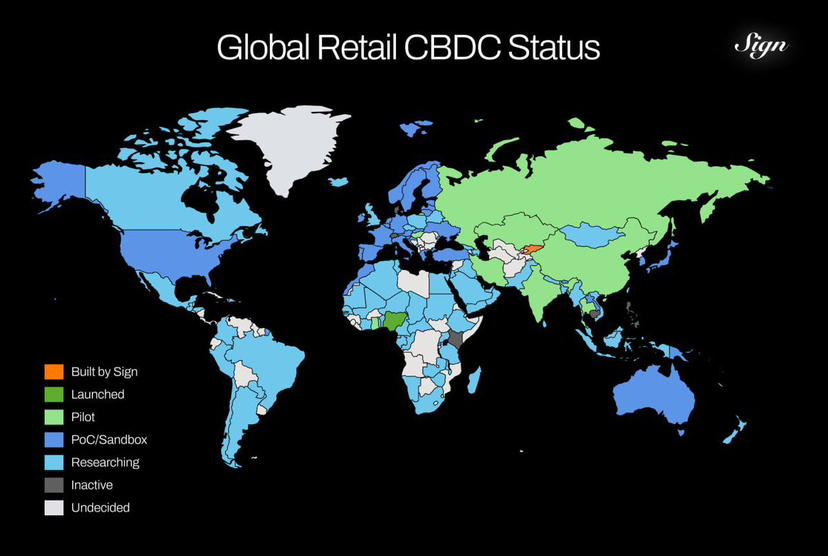
It turns out that for many Middle Eastern states, the question of 'who owns the data' is not a technical detail but a strategic priority. They are building digital economies, attracting investments, launching smart cities. But existing cloud platforms and blockchain solutions are often tied to external infrastructure. Data leaves the jurisdiction, becomes vulnerable to sanctions, political pressure, or simply commercial restrictions. In a region where political stability is directly linked to economic growth, this is unacceptable.
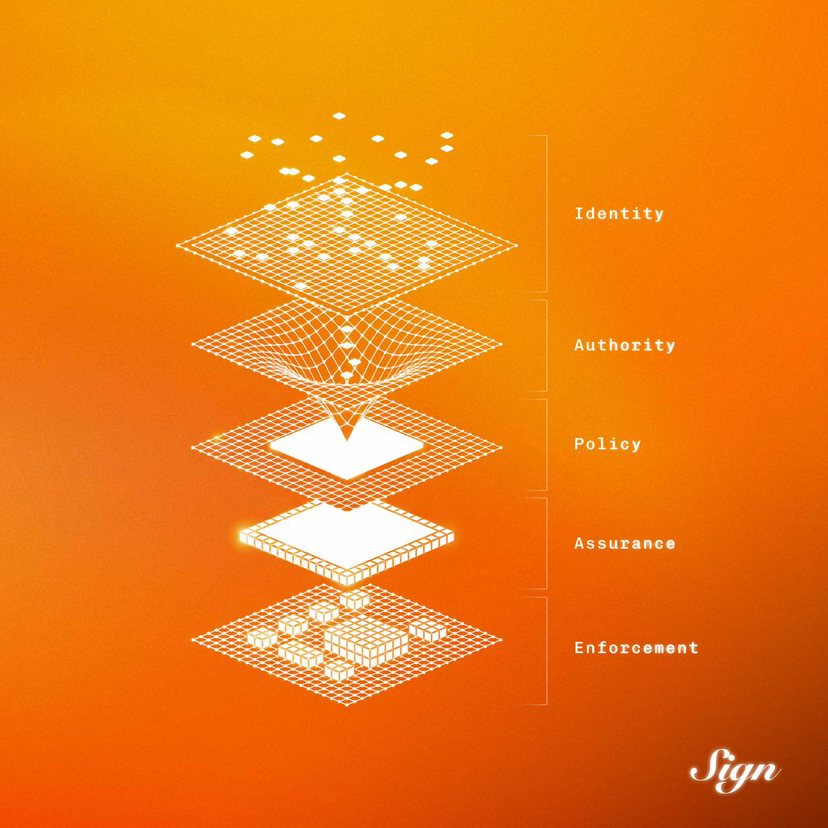
And here Sign offers not just 'another blockchain,' but a truly digital sovereign infrastructure. That is, a set of tools that allows the state, business, or community to deploy its own trusted environment. Where data management remains within their perimeter, but compatibility with global networks is preserved. It's like if a country had its own secure digital circuit, but could safely exchange assets and information with the rest of the world.
I couldn't understand for a long time how this differs from regular private blockchains. But one of the participants in that meeting explained simply: 'We don't need an isolated network. We need a network where we decide who sees the data, who verifies transactions, and at the same time our users can freely interact with global applications.' Sign is precisely about this balance: sovereignty without isolation.
Especially illustrative was the example with cross-border payments and identification. The region has huge volumes of money transfers, a complex KYC system, and many migrants. If each emirate or country builds its own digital identification from scratch, it is expensive and inefficient. But if Sign is used as a common layer of sovereign infrastructure, unified standards can be created, under which data remains under the control of each jurisdiction, but identity verification, reputation, and payment routes work frictionlessly. This directly accelerates economic growth.
And you know what finally convinced me? Not the presentations, but the behavior of investors. Over the past six months, venture funds from the UAE and Saudi Arabia have noticeably intensified in the field of DePIN and infrastructure blockchain projects. But they are not choosing the most high-profile names, but those that can offer hybrid models - privacy where needed, and compatibility where advantageous. Sign is appearing in this list more and more often, and not as an 'interesting startup,' but as a potential element of state digital strategies.
Of course, globally this story may seem distant from everyday crypto trading. But in reality, it directly affects which infrastructure projects will receive long-term funding and real implementation. If Sign becomes the basis for digital sovereignty in countries with rapidly growing economies, its value will be determined not by speculative demand, but by necessity.
I don't know how quickly this regional trend will become global. But I clearly understood one thing: when large economies start to embed blockchain infrastructure into their sovereignty strategy, it is a signal much more powerful than any listing on an exchange. And Sign is now one of those projects that find themselves at the center of this process.
Are you following how blockchain projects are integrated into real state and economic strategies? Or is only market dynamics more important to you?