
I used to think Web3’s biggest barrier was obvious—gas fees, slow transactions, fragmented chains. But the more I explored, the more I realized something deeper: even if we fix the tech, who coordinates trust?
That’s where @SignOfficial quietly stands out. Instead of competing on speed or cost, Sign focuses on something most projects ignore—verifiable coordination at scale.
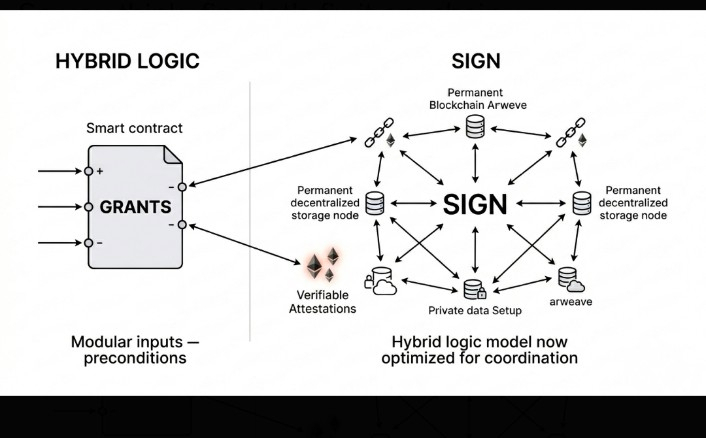
At its core, $SIGN powers an infrastructure layer built around attestations—structured, verifiable claims that can represent identity, ownership, compliance, or agreements across multiple chains.
This isn’t just another protocol; it’s closer to a “trust engine” for digital economies.
Compare this to typical Web3 projects. Most optimize execution (faster chains, cheaper gas), but they still rely on fragmented identity and unverifiable interactions. Sign flips this model. With its omni-chain attestation system, it creates a shared layer where data can be verified, reused, and audited across ecosystems.
This becomes even more powerful in the context of the Middle East. Governments there aren’t just experimenting—they’re building full digital economies. But scaling identity, payments, and capital distribution requires infrastructure that is auditable, policy-compliant, and privacy-aware at the same time. That’s exactly the problem Sign is designed to solve, positioning itself as sovereign-grade infrastructure for national systems.
I find this shift fascinating. Instead of asking, “How do we make transactions cheaper?” Sign asks, “How do we make systems trustworthy enough to scale?”
And that opens up real-world integrations—CBDCs, smart city governance, cross-border compliance, even programmable public services. With TokenTable handling large-scale token distribution and Sign Protocol anchoring verifiable data, the ecosystem already hints at how digital economies could operate end-to-end.
So here’s the real question:
If coordination is the missing layer in Web3, could $SIGN become the foundation that finally connects everything?