

@SignOfficial | #SignDigitalSovereignInfra | $SIGN
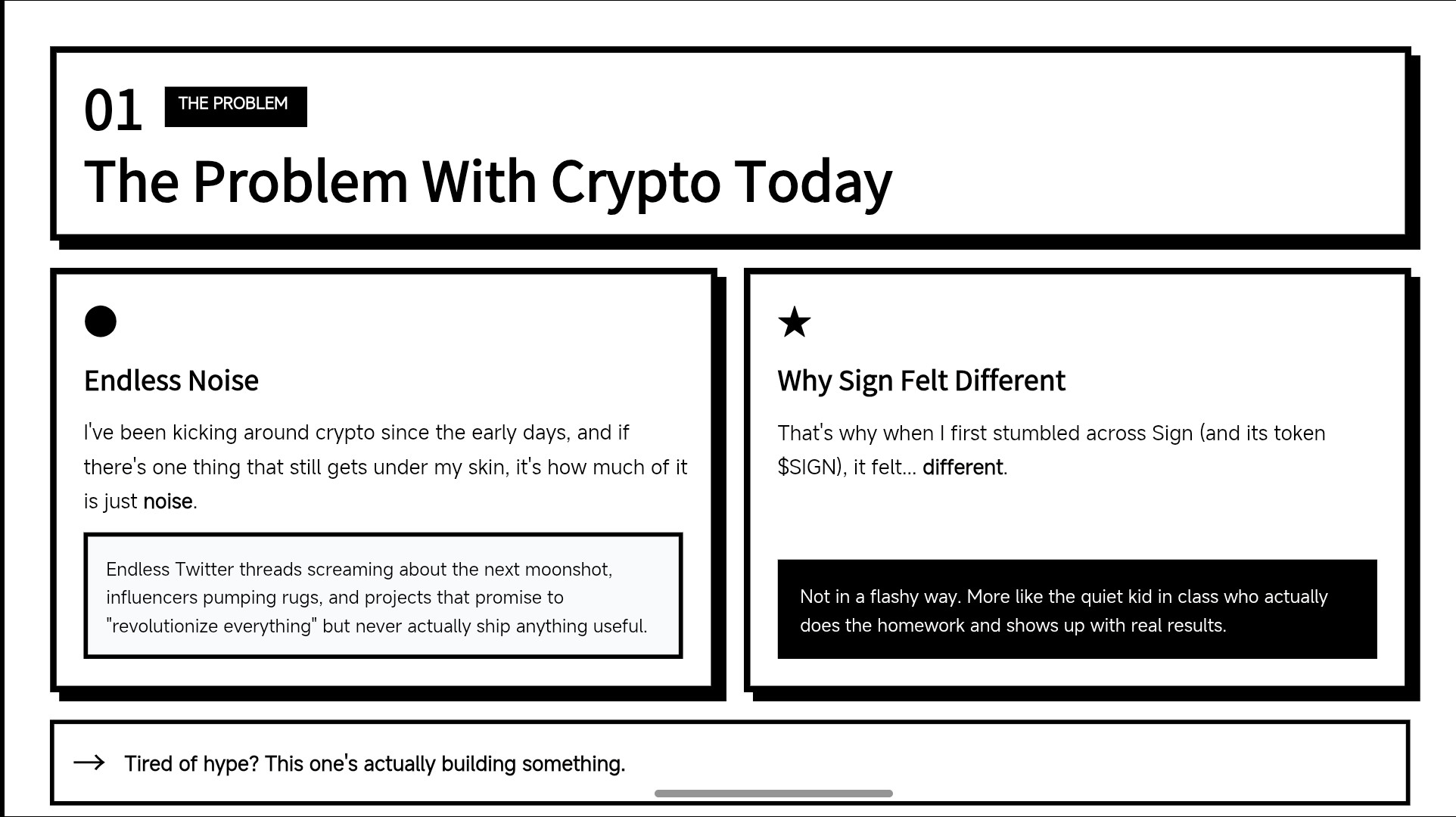
Look, I’ve been kicking around crypto since the early days, and if there’s one thing that still gets under my skin, it’s how much of it is just noise. Endless Twitter threads screaming about the next moonshot, influencers pumping rugs, and projects that promise to “revolutionize everything” but never actually ship anything useful. That’s why when I first stumbled across Sign (and its token $SIGN), it felt... different. Not in a flashy way. More like the quiet kid in class who actually does the homework and shows up with real results.
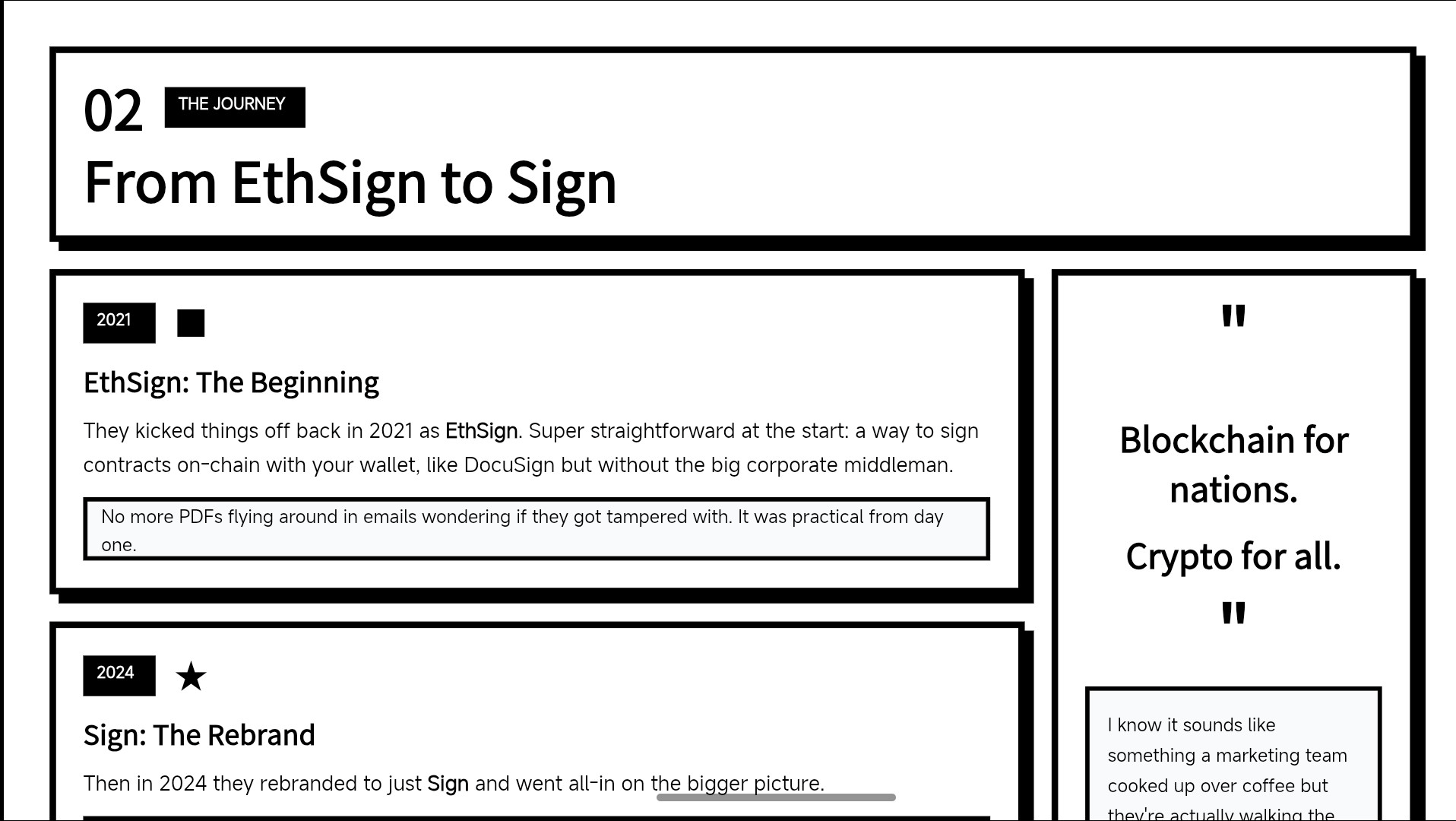
They kicked things off back in 2021 as EthSign. Super straightforward at the start: a way to sign contracts on-chain with your wallet, like DocuSign but without the big corporate middleman. No more PDFs flying around in emails wondering if they got tampered with. It was practical from day one. Then in 2024 they rebranded to just Sign and went all-in on the bigger picture. Now they call it S.I.G.N. — Sovereign Infrastructure for Global Nations. Their motto? “Blockchain for nations. Crypto for all.” I know, it sounds like something a marketing team cooked up over coffee, but they’re actually walking the talk.
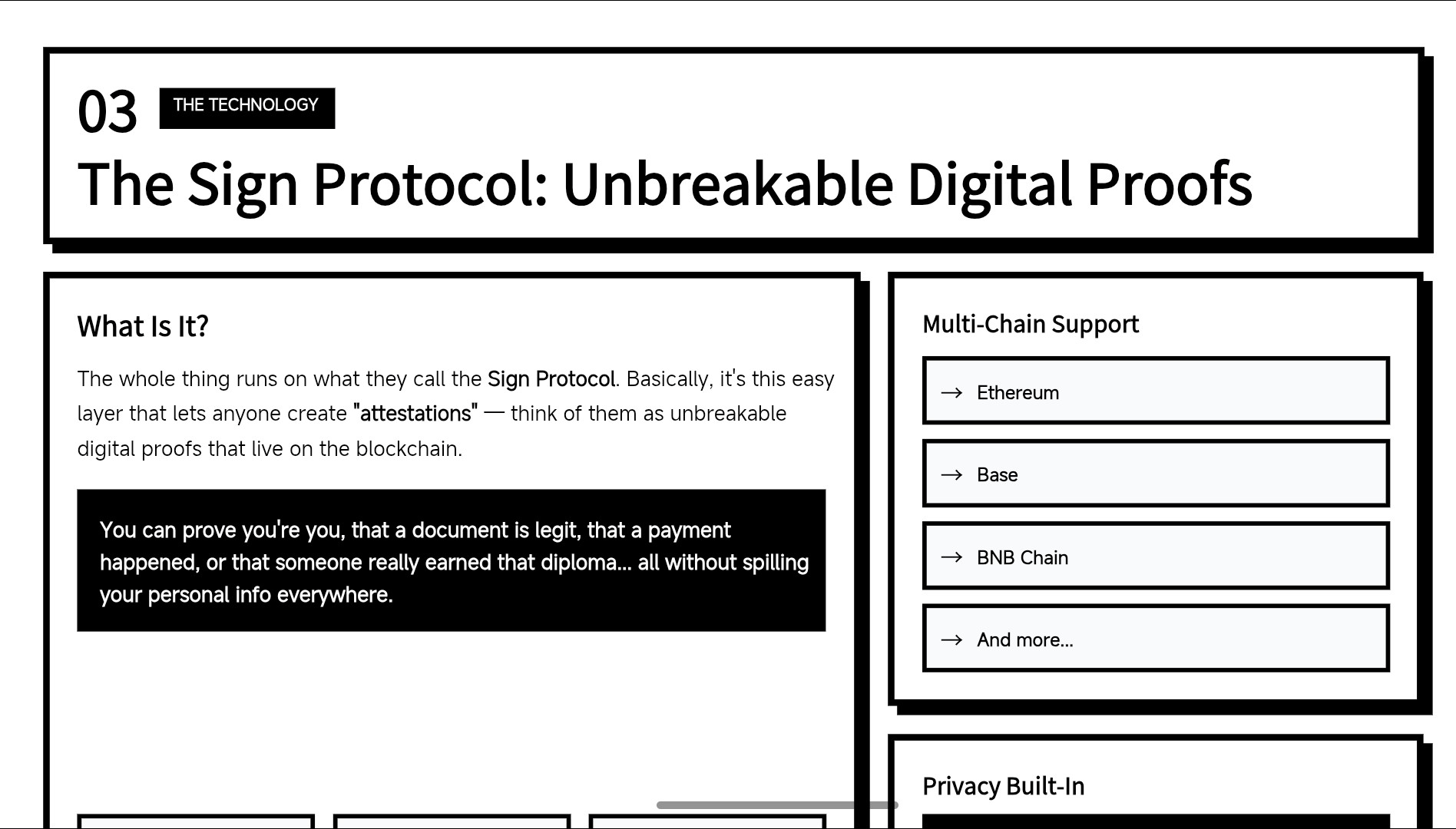
The whole thing runs on what they call the Sign Protocol. Basically, it’s this easy layer that lets anyone create “attestations” — think of them as unbreakable digital proofs that live on the blockchain. You can prove you’re you, that a document is legit, that a payment happened, or that someone really earned that diploma... all without spilling your personal info everywhere. It works on Ethereum, Base, BNB Chain, you name it, and they’ve baked in privacy stuff like zero-knowledge proofs so it doesn’t feel creepy.
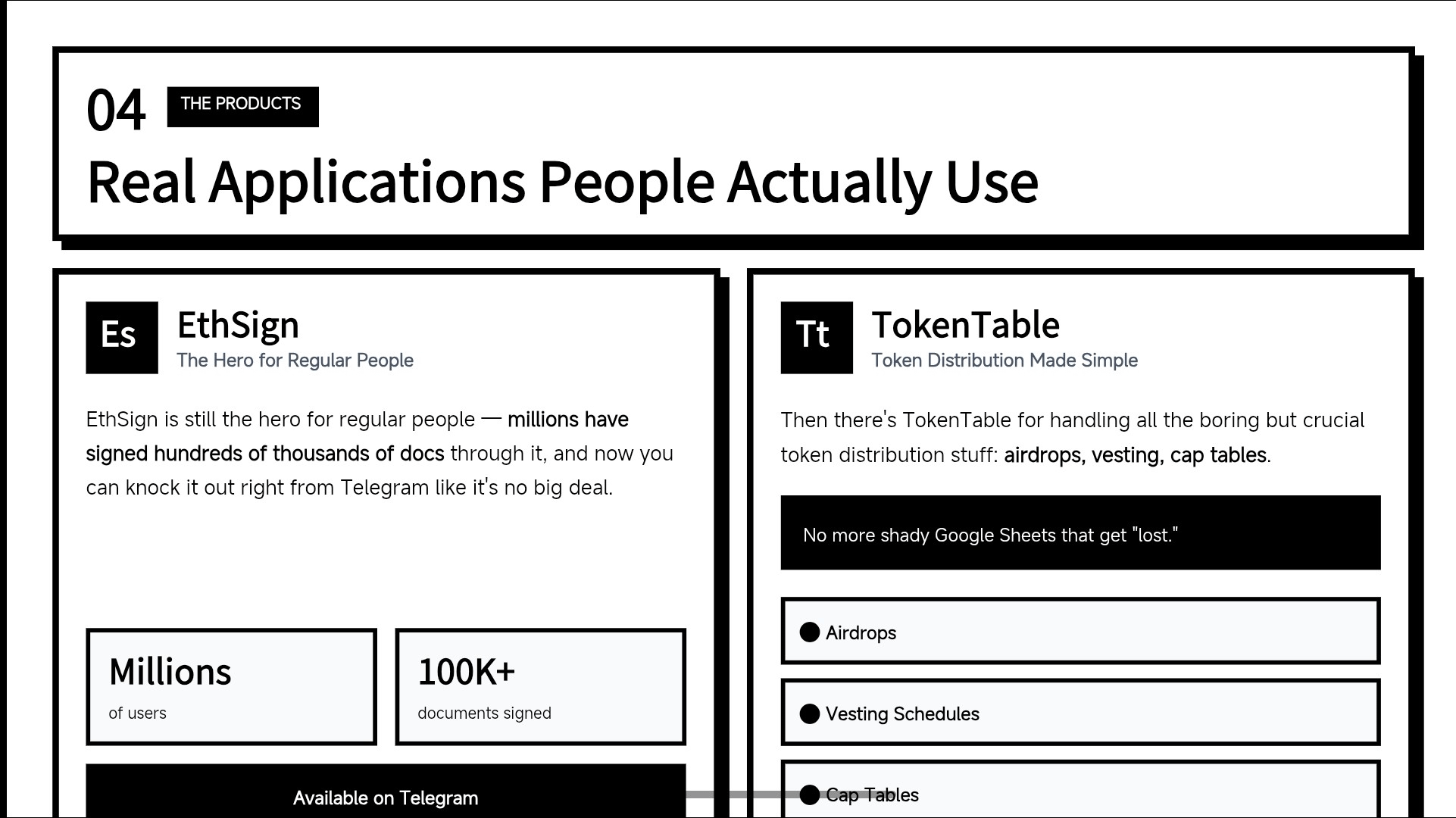
The apps they’ve built are the part I actually use (or at least have played around with). EthSign is still the hero for regular people — millions have signed hundreds of thousands of docs through it, and now you can knock it out right from Telegram like it’s no big deal. Then there’s TokenTable for handling all the boring but crucial token distribution stuff: airdrops, vesting, cap tables. No more shady Google Sheets that get “lost.”
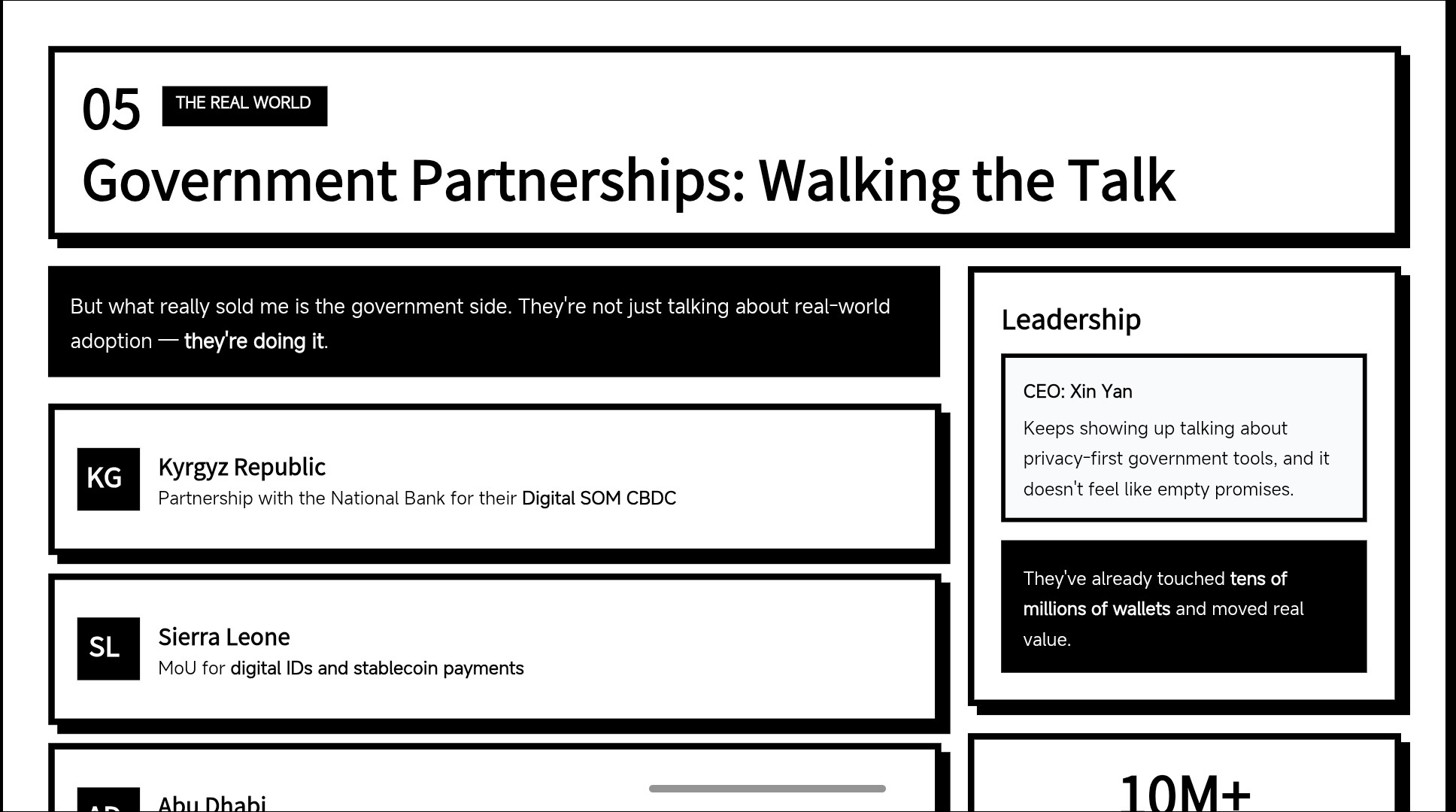
But what really sold me is the government side. They’re not just talking about real-world adoption — they’re doing it. Partnerships with places like the National Bank of Kyrgyz Republic for their Digital SOM CBDC, an MoU with Sierra Leone for digital IDs and stablecoin payments, and work with the Blockchain Centre Abu Dhabi on public records. Their CEO, Xin Yan, keeps showing up talking about privacy-first government tools, and it doesn’t feel like empty promises. They’ve already touched tens of millions of wallets and moved real value.
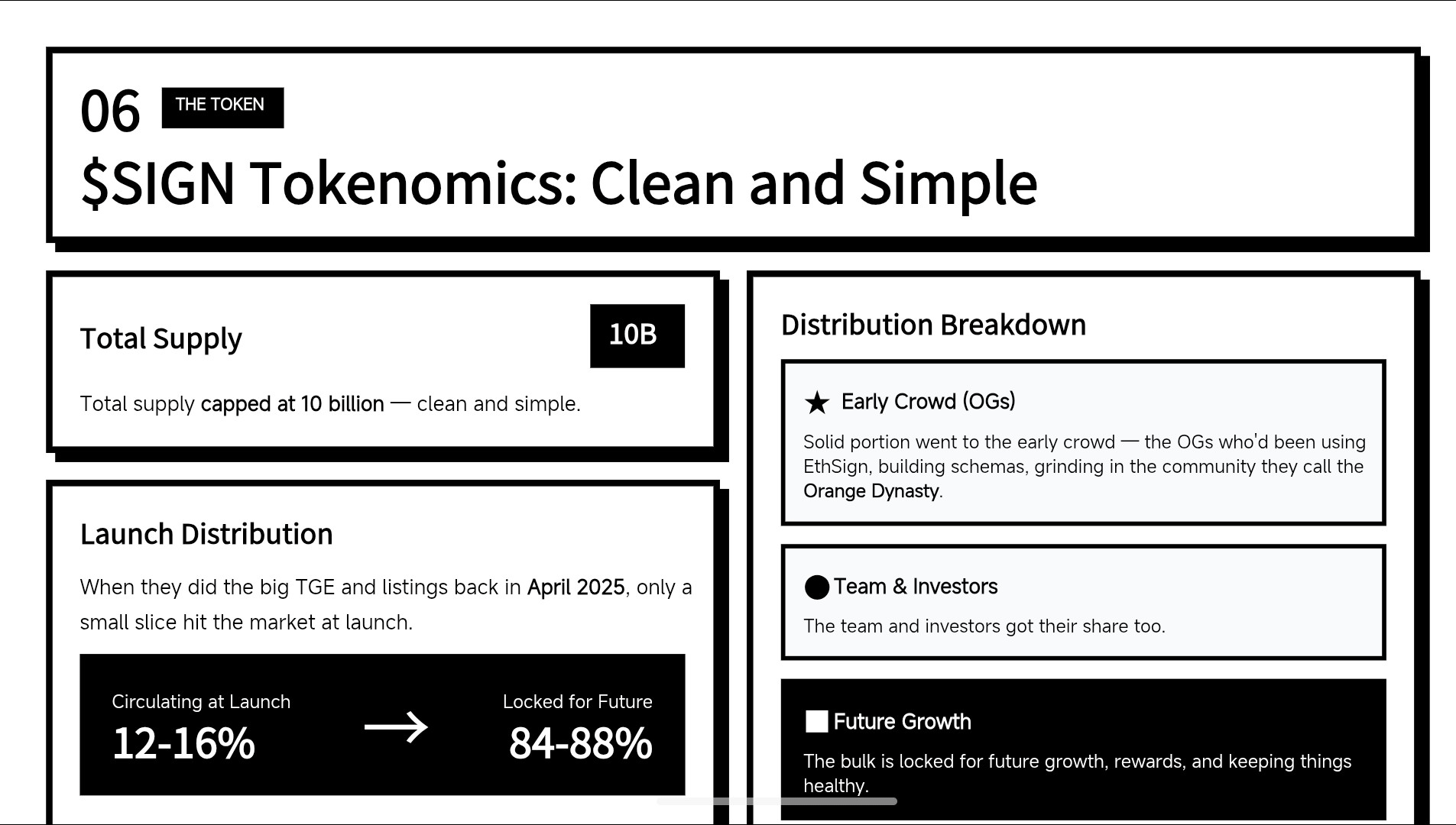
Now the $SIGN token. Total supply capped at 10 billion — clean and simple. When they did the big TGE and listings back in April 2025, only a small slice (around 12-16%) hit the market at launch. The rest was split in a way that actually felt fair: a solid portion went to the early crowd — the OGs who’d been using EthSign, building schemas, grinding in the community they call the Orange Dynasty. The team and investors got their share too, but the bulk is locked for future growth, rewards, and keeping things healthy. You spend $SIGN on attestations, stake it for governance, unlock premium features... it’s literally the fuel. They call it the “community currency,” and it shows — you earn it by actually participating, not just buying the dip.
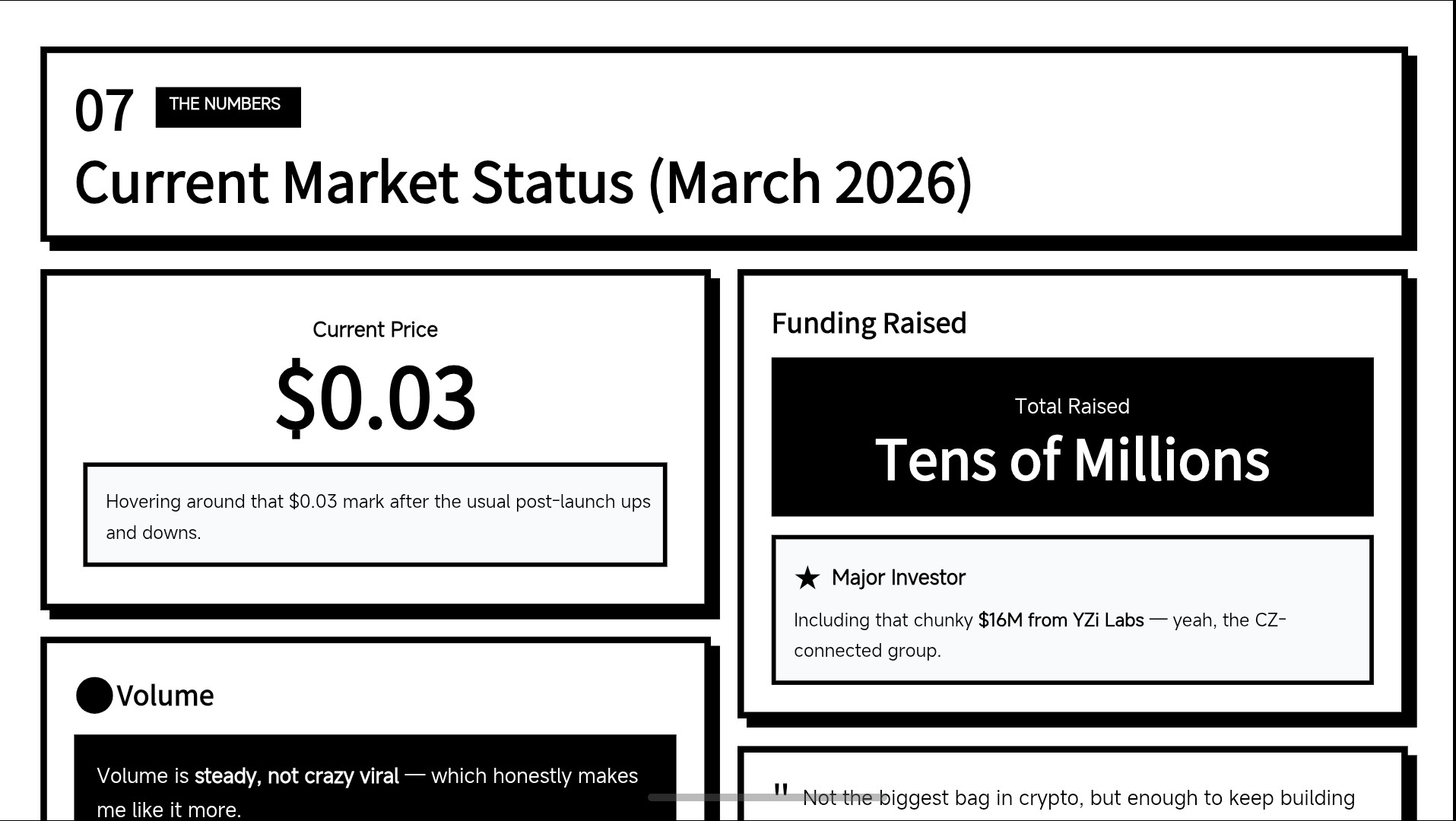
Right now, end of March 2026, it’s hovering around that $0.03 mark after the usual post-launch ups and downs. Volume is steady, not crazy viral, which honestly makes me like it more. They’ve raised real money along the way (tens of millions, including that chunky $16M from YZi Labs — yeah, the CZ-connected group). Not the biggest bag in crypto, but enough to keep building without the constant hype-chasing.
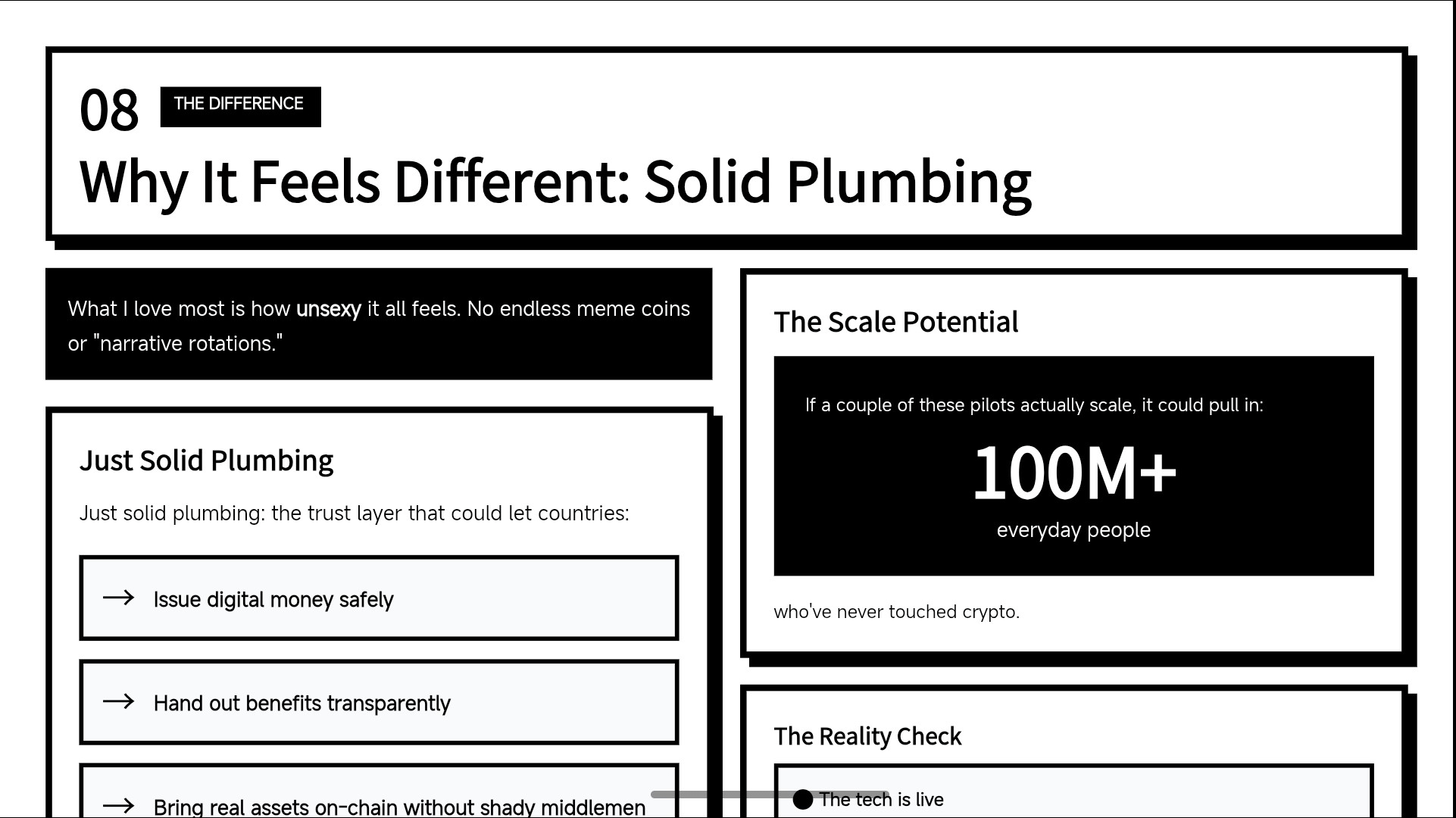
What I love most is how unsexy it all feels. No endless meme coins or “narrative rotations.” Just solid plumbing: the trust layer that could let countries issue digital money safely, hand out benefits transparently, and bring real assets on-chain without the usual shady middlemen. If a couple of these pilots actually scale, it could pull in hundreds of millions of everyday people who’ve never touched crypto. The tech is live, the users are there, and governments are treating them like a serious partner instead of some fly-by-night startup.
I’m not here to tell you to ape in or anything — this isn’t financial advice, and I’m just some guy who’s been burned enough times to be cautious. But I’ve got a small bag myself because, man, after years of watching the casino side of crypto, it’s refreshing to see something that might actually matter in the long run. Tired of the speculation merry go round? This is the kind of project that makes me remember why I got into this space in the first place.
So yeah... what’s your take? Have you tried EthSign or messed with any of their attestation tools? Holding a bit of $SIGN or still sitting on the fence? Hit me in the comments — I’d genuinely love to hear from folks who are actually using this stuff instead of just scrolling hype. Always better when it’s a real conversation.