I’ve been thinking about this for a while now, and the more I sit with it, the more uncomfortable it gets to admit crypto didn’t fail people because it was too advanced… it failed because it feels unnatural.
Not broken. Just… unnatural.
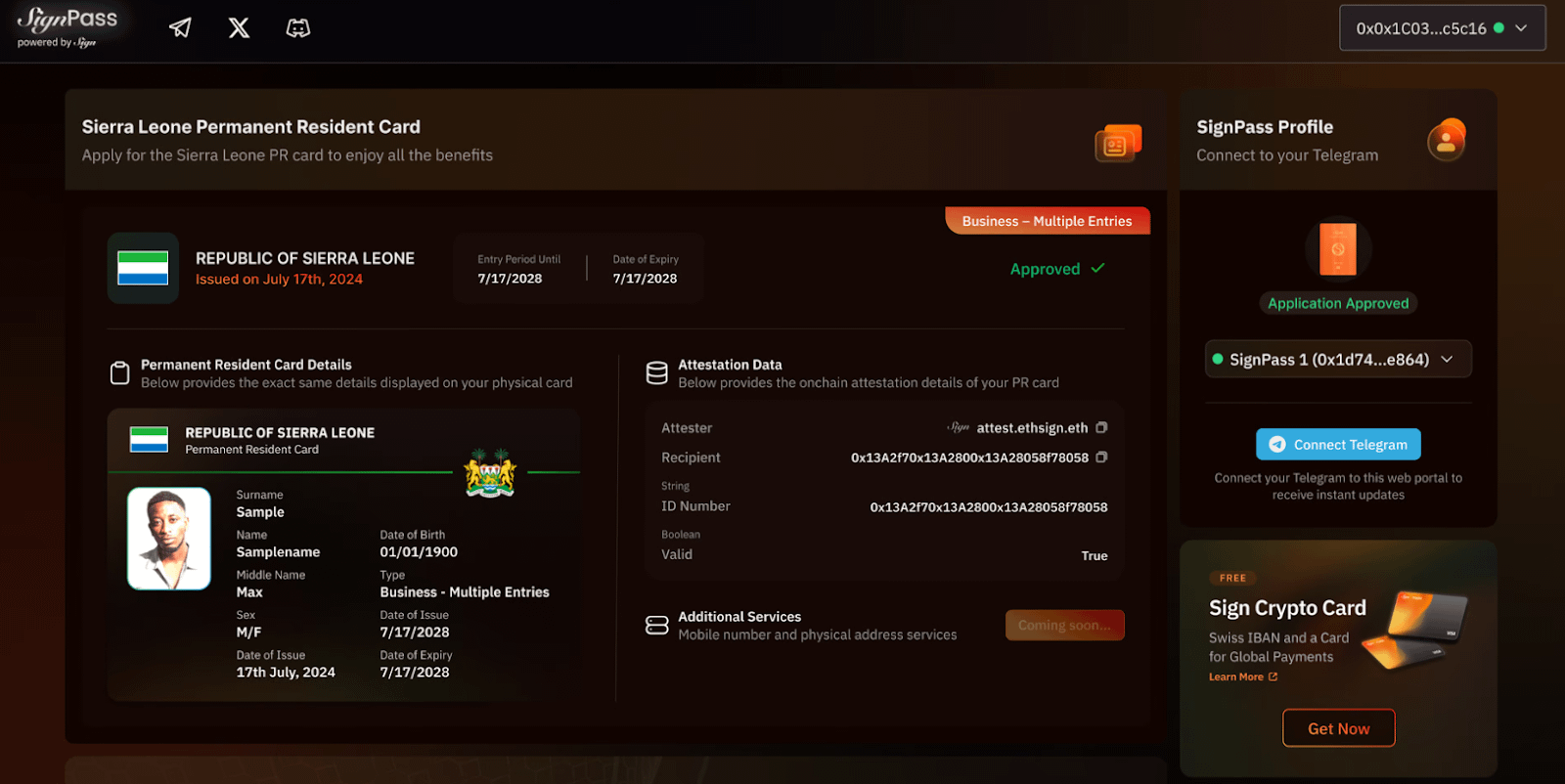
Every time I try to use a blockchain product, I feel like I’m being asked to remember things I shouldn’t have to remember. Wallet connections, signatures, chains, permissions it’s like every app resets my identity and asks me to prove myself again from scratch. Nothing carries forward. Nothing feels continuous. And after a point, you stop blaming yourself and start realizing maybe the system itself isn’t designed for humans.
That’s where something like Sign quietly caught my attention.
Not because it’s loud or revolutionary on the surface, but because it’s trying to fix something deeper the part of crypto that most people don’t even realize is broken. The experience layer.
I don’t think most people outside this space understand how fragmented everything is under the hood. There’s no shared memory. No consistent way to trust what already happened. One app doesn’t really “know” what you did in another unless someone rebuilds that logic again and again. So every developer ends up reinventing the same verification systems, the same indexing, the same checks and users end up repeating the same actions without even noticing why it feels exhausting.
Sign, at least from how I understand it, is trying to step into that invisible gap.
Instead of building another app people have to learn, it’s trying to build something underneath apps a layer where information, once verified, doesn’t just disappear into isolated systems. It stays. It becomes reusable. Almost like turning moments into proof that can travel with you.
I find that idea strangely human.
Because in real life, we don’t constantly re-prove who we are. If someone verifies your identity once, that trust carries forward in some form. Your documents, your reputation, your history they don’t reset every time you walk into a new room. But in crypto, they do. And maybe that’s the quiet reason why it never feels natural.
Sign’s approach feels less like “look at this new feature” and more like “what if we stopped making users start over every time.”
The way it structures things schemas, attestations, different storage options, even privacy layers it’s basically trying to turn facts into something stable. Something that doesn’t break when you move between systems. And I think the important part here is not the technical design itself, but the intention behind it: reducing repetition.
Because repetition is friction.
And friction is what kills adoption.
Then there’s the distribution side which, honestly, is another place where things feel unnecessarily complicated. Token distribution in crypto has always felt messy to me. Not just technically, but conceptually. Who gets what, why they get it, whether they deserve it it often feels unclear or manually enforced in ways that don’t scale well.
TokenTable, as part of this whole system, seems to be trying to clean that up by making distribution logic more structured and verifiable. Not just sending tokens, but attaching meaning to those distributions eligibility, conditions, timelines. Almost like turning something chaotic into something predictable.
And I think predictability is underrated here.
Because users don’t trust systems they can’t predict.
But even as I say all this, I don’t feel fully convinced and I think that’s important to admit.
Because building infrastructure sounds good in theory, but it’s also the hardest thing to get right. You’re not just solving one problem, you’re trying to become something others depend on. And that means everything has to work quietly, consistently, and at scale without users even noticing.
That’s a high bar.
There’s also the complexity underneath. Cross-chain verification, different storage models, privacy layers, integrations with existing systems each of these solves a problem, but also introduces new points of failure. And if those parts don’t align perfectly, the experience can still break… just in more subtle ways.
And then there’s the real world.
Because at some point, this kind of system has to interact with institutions, regulators, and existing identity frameworks. And those worlds don’t move at the same pace as crypto. They don’t experiment freely. They require stability, compliance, predictability over long periods of time.
So while the vision feels grounded, the execution still lives in a space full of uncertainty.
But even with that skepticism, I keep coming back to the same thought maybe this is the direction that actually makes sense.
Not more apps.
Not more tokens.
Just better foundations.
Something that makes blockchain fade into the background instead of constantly demanding attention.
Sign, in that sense, doesn’t feel like it’s trying to impress users. It feels like it’s trying to stop bothering them. And that might be the most important shift.
Because real adoption doesn’t happen when people understand the technology.
It happens when they stop noticing it.
@SignOfficial #SignDigitalSovereignInfra $SIGN