


The four most common food-related health issues
1. The dual risk of a high-oil diet and excessive drinking
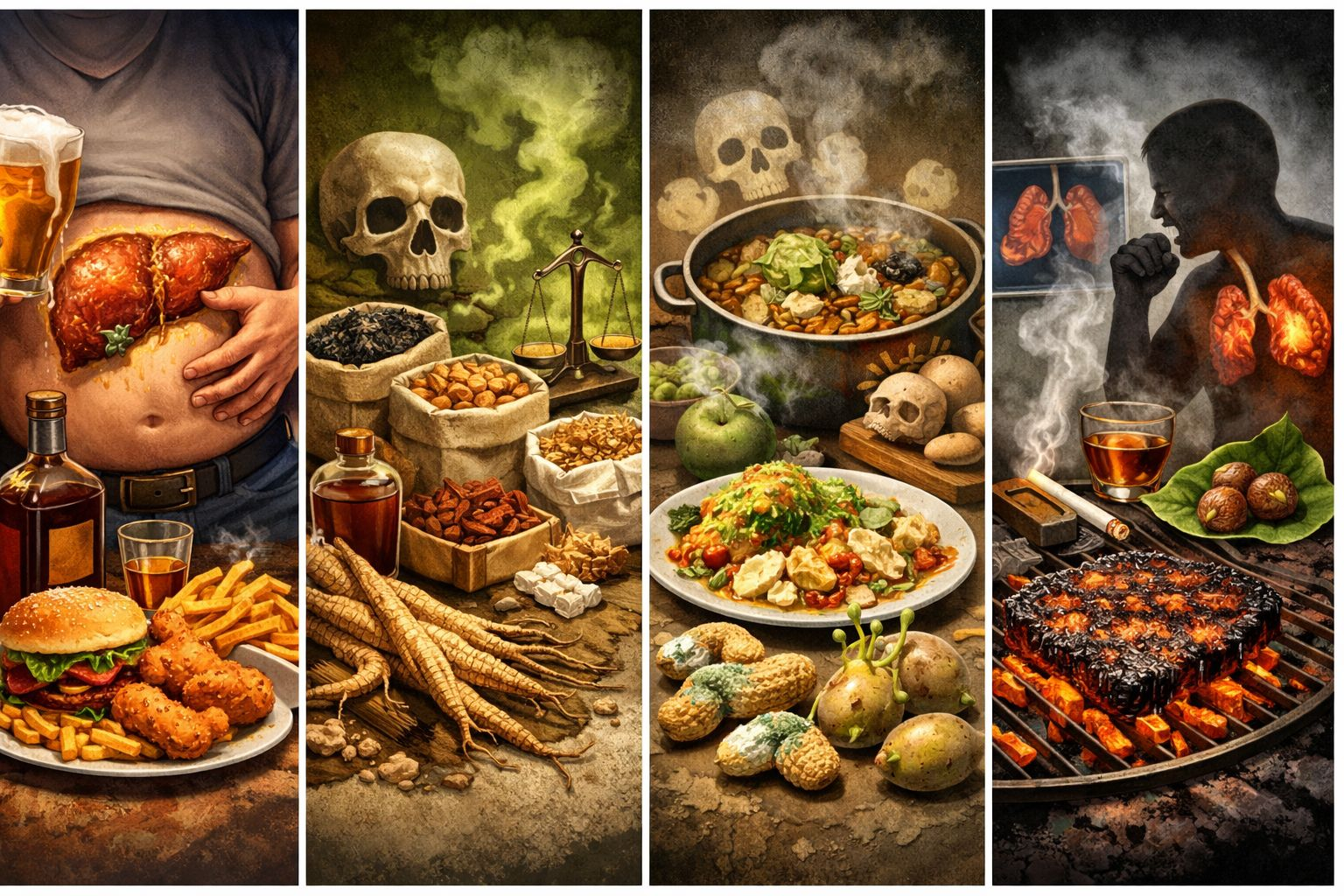
Long-term consumption of high-oil and high-fat foods (such as fried foods and heavily salted dishes) can easily lead to obesity, abnormal blood lipids, and fatty liver; if combined with frequent drinking or consuming large amounts of alcohol in a short period, it significantly increases the burden on the liver. This situation may not only lead to alcohol poisoning but can also potentially cause fatty liver, hepatitis, and even cirrhosis in the long run.
2. Improper use of traditional Chinese medicine and dry goods of unknown origin
Taking traditional Chinese medicine without professional guidance, or drying and purchasing dry goods of unknown origin by the roadside, may contain heavy metals or pollutants. Long-term consumption may burden the liver and kidneys, and even lead to liver damage or renal failure.
3. Continuing to eat spoiled ingredients
Reluctantly consuming food that is already spoiled or poses a risk, such as:
Moldy peanuts may contain aflatoxins
Leftover food that has been stored too long may produce nitrites
Sprouted potatoes contain solanine
Improperly fermented or preserved foods may breed harmful substances
Such behaviors are equivalent to long-term intake of toxins, posing great health risks.
 4. Long-term consumption of carcinogenic risk foods and habits
Regular consumption of processed meats (such as ham, cured fish), charred food, very hot food, along with habits like drinking alcohol, smoking, or chewing betel nut, significantly increases cancer risk. These factors are mostly cumulative, with long-term effects particularly noticeable.