The world of crypto is buzzing with new tokens, NFTs, and trading opportunities. But behind the hype lies a critical problem: trust.
Most users focus on short-term gains, but Web3 cannot thrive without a reliable foundation. Fake data, hidden risks, and blind reliance on platforms continue to slow adoption. This is where Sign Protocol is stepping in — creating the digital trust layer the crypto ecosystem desperately needs.
🔐 What Sign Protocol Brings to the Table
Sign Protocol isn’t just another Web3 project — it’s a trust infrastructure. Here’s how it works:
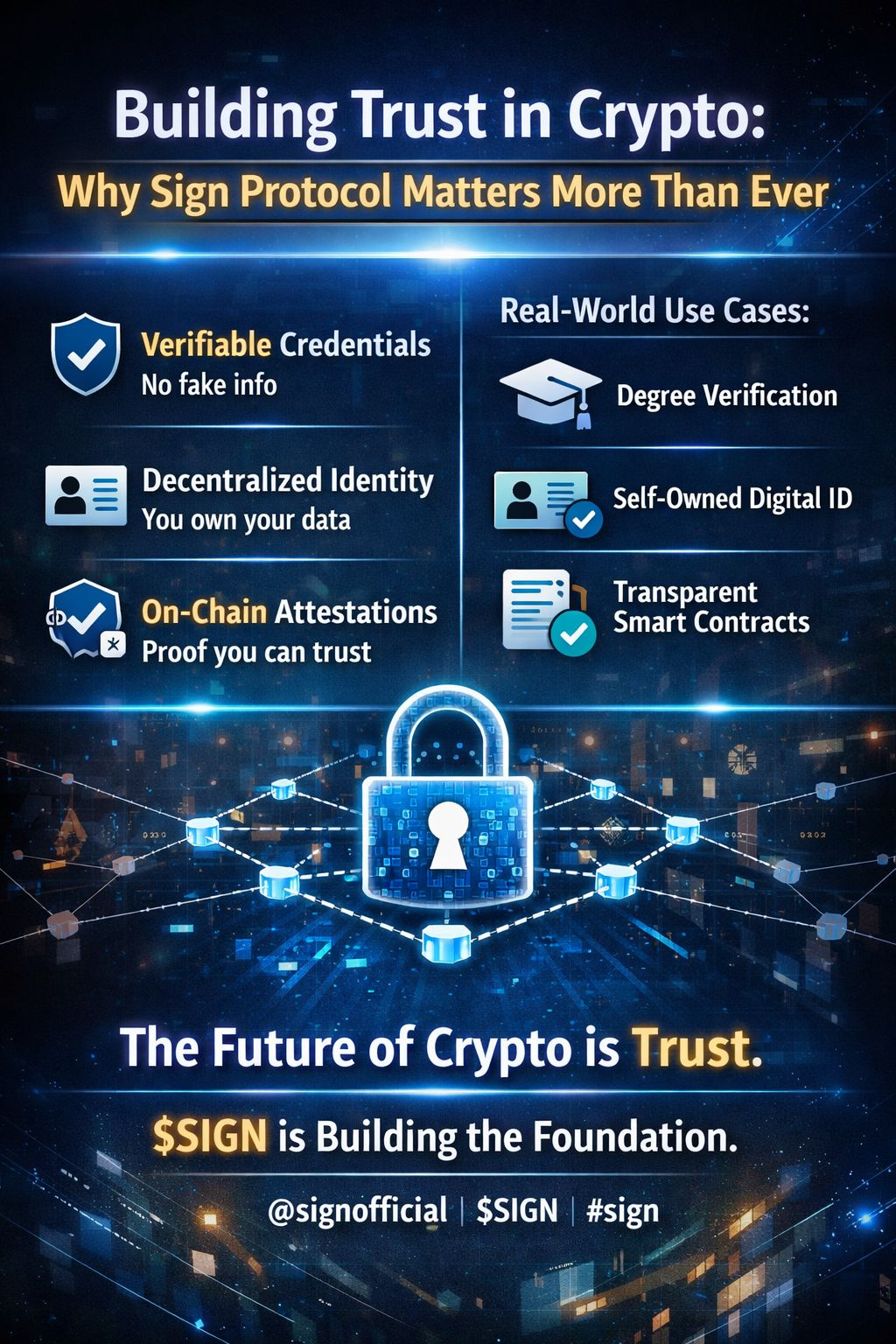
Verifiable Credentials – Ensures no fake information, so identities and claims can be trusted.
Decentralized Identity (DID) – You own your data; platforms no longer control your personal information.
On-Chain Attestations – Proof of trust that’s recorded on blockchain, eliminating guesswork and middlemen.
This combination means users and platforms can finally interact with confidence, paving the way for mass adoption.
🌍 Real-World Use Cases Already on the Horizon
Sign Protocol isn’t just theory — practical applications are coming fast:
🎓 Degree Verification – Employers and institutions can instantly validate credentials.
🪪 Self-Owned Digital ID – Users can control their identity across Web3.
📄 Transparent Smart Contracts – Agreements are verifiable, reducing disputes and fraud.
By solving trust issues at the foundation, Sign Protocol accelerates adoption in finance, education, governance, and more.
💡 Why This Matters for Crypto Users
Hype alone doesn’t drive long-term growth. Trust is the missing link for mainstream adoption of crypto and Web3 applications. Projects that focus on building infrastructure, like Sign Protocol, will lead the next wave of innovation.
⚡ $SIGN is creating that foundation today, so the ecosystem is ready when mainstream users arrive.
🔗 Get Involved
Follow Sign Protocol for updates and insights: