

I remember the point where my perception of $SIGN Protocol started to shift. At first, I looked at it the same way I look at most projects in this space. Another protocol, another use case, another attempt to fit into the broader Web3 narrative.
It felt like part of the ecosystem.
But the more I paid attention to Sign, the less it fit that category.
And that’s where it started to get interesting.
From a trader’s perspective, that’s usually where I start paying more attention.
There’s a certain pattern in crypto that becomes easy to recognize over time. Most projects position themselves around users, liquidity, or narratives. They try to grow through adoption that’s visible—transactions, activity, engagement.
That’s what makes them feel like products.
Sign didn’t quite behave like that.
It wasn’t trying to attract attention in the same way. It wasn’t built around obvious user interaction or immediate feedback loops. At first, that made it harder to understand.
Because if something isn’t clearly a product, what is it?
That’s where the shift started for me.
Instead of looking at it as something people use directly, it started to look more like something systems rely on. Less like an app, more like a layer underneath.
And once I saw it that way, the design made more sense.
Because at that point, it stops being about features and starts being about positioning.
What Sign is really doing is structuring how claims are made and verified. Not just storing data, but giving it a form that can be trusted across different environments.
That might not sound like much at first, but it changes how systems can operate.
If a protocol can rely on verified claims instead of interpreting raw data, it reduces a lot of uncertainty. It doesn’t have to guess what something means. It can reference something that has already been structured and attested.
That’s not a feature. That’s infrastructure.
It’s not something users interact with directly, but it’s something systems rely on to function properly.
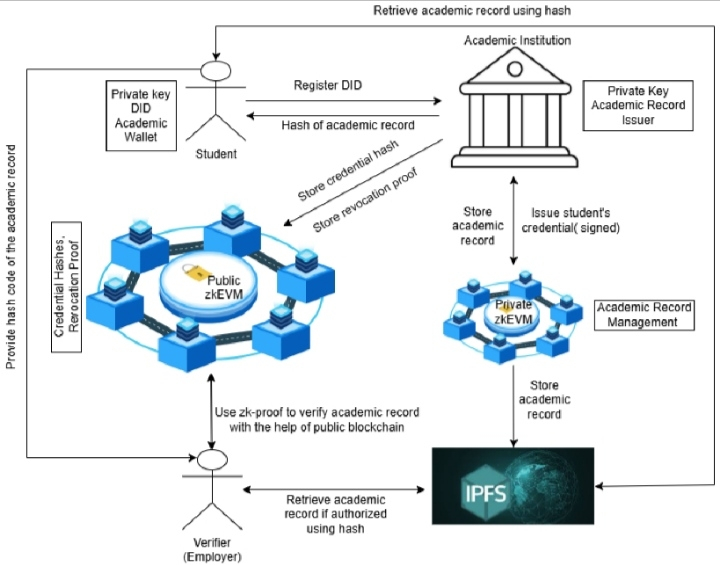
You don’t interact with it—but systems rely on it.
And infrastructure behaves differently.
It’s not always visible. It doesn’t always attract attention. But once it’s integrated, other systems start depending on it.
That’s the part most people overlook.
We tend to evaluate projects based on activity we can see. Volume, users, transactions. But infrastructure often grows in a different way. It spreads quietly, through integration rather than speculation.
That’s why it can feel like nothing is happening—until suddenly it’s everywhere.
Sign started to feel like that kind of system.
Not something you interact with directly, but something that shapes how other systems function.
And once that clicked, it changed how I looked at its role.
Instead of asking whether users will adopt it, the more relevant question becomes whether developers will build around it. Whether applications start relying on verified claims as part of their logic.
Because that’s where infrastructure gains its value.
From a token perspective, this is where things get more interesting for me. Because infrastructure doesn’t move the same way most narratives do.
The SIGN token isn’t tied to surface-level activity. Its relevance depends on whether this verification layer becomes part of how systems operate. If protocols start depending on attestations, schemas, and verifiable claims, then the token sits inside that flow.
If not, then the connection becomes weaker.
Looking at the current market, most of the attention is still focused on things that are easy to measure. Liquidity, performance, narratives that move quickly. Infrastructure doesn’t fit neatly into that.
It takes longer to understand. Longer to integrate. Longer to show up in metrics.
But that doesn’t mean it’s less important.
If anything, it tends to matter more over time.
The bull case for Sign depends on whether this shift actually happens. Whether systems move from interpreting data to relying on structured, verifiable claims. Whether builders see value in integrating that layer instead of recreating their own versions.
If that happens, it becomes part of the foundation.
And foundations are hard to replace.
But there are real risks.
Adoption is still the biggest one. Infrastructure only matters if it’s used. If developers don’t integrate it, or if it adds friction instead of removing it, then it doesn’t spread.
There’s also the question of standards. For something like this to work across systems, there needs to be alignment. Without that, it stays fragmented.
And then there’s visibility. Infrastructure often gets overlooked because it doesn’t produce immediate results. That can affect how it’s valued in the market, especially in the short term.
If I think about what would change my mind, it comes down to whether this layer actually becomes embedded. If applications continue operating without relying on verifiable claims, then maybe the demand isn’t as strong as it seems.
But if more systems start building around it, even gradually, it changes how Web3 handles trust at a structural level.
That’s usually the kind of shift I look for before something gets priced differently.
And that’s what made me look at @SignOfficial Sign differently.
At first, it felt like just another crypto project.
But the more I looked at it, the more it started to feel like something else entirely.
Something closer to infrastructure than anything we usually pay attention to. #SignDigitalSovereignInfra