


To be honest, when Circle dropped this time, many people's first reaction was too quick. As soon as they saw the stock price plummet, they began to think along the lines of 'Is USDC in trouble again?' But from what I've seen, this time it’s really not about the decoupling logic, nor is it the kind of traditional black swan. It feels more like the market suddenly woke up and started to reassess whether Circle is really worth that previous price.
A few days ago, I hoped it would drop, but recently I calmly examined it.
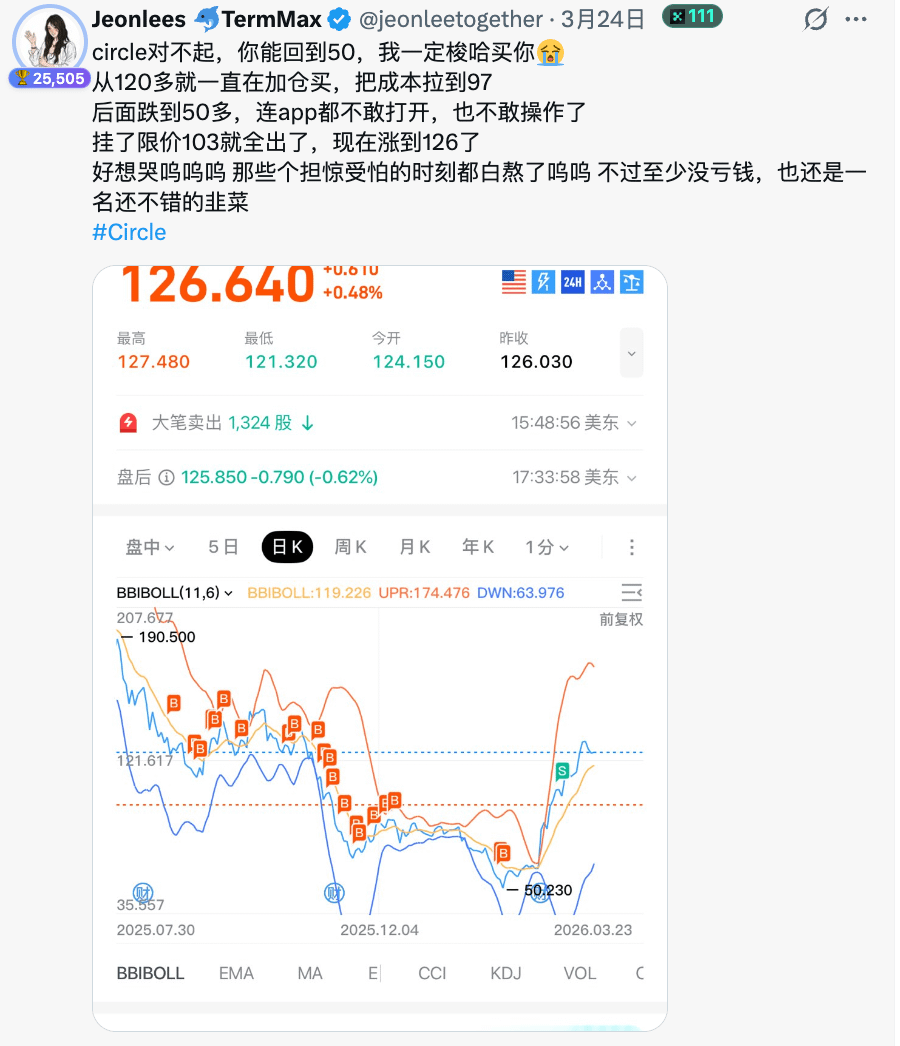
Because previously many funds were willing to give Circle a high valuation, it was not only about how much money it is making now, but also about how it can make money in the future. The most attractive story about it has never been 'It is an ordinary financial company', but rather 'It might become one of the most core compliant gateways in the stablecoin era.' Once this expectation is established, the imagination space is indeed quite large. But the problem lies right here; the market was previously pricing it according to a very smooth script, assuming that regulation was becoming clearer, USDC was getting bigger, and Circle could ride that line all the way to reap the benefits. Now, as the legislative direction changes, everyone suddenly realizes that things are not that simple.
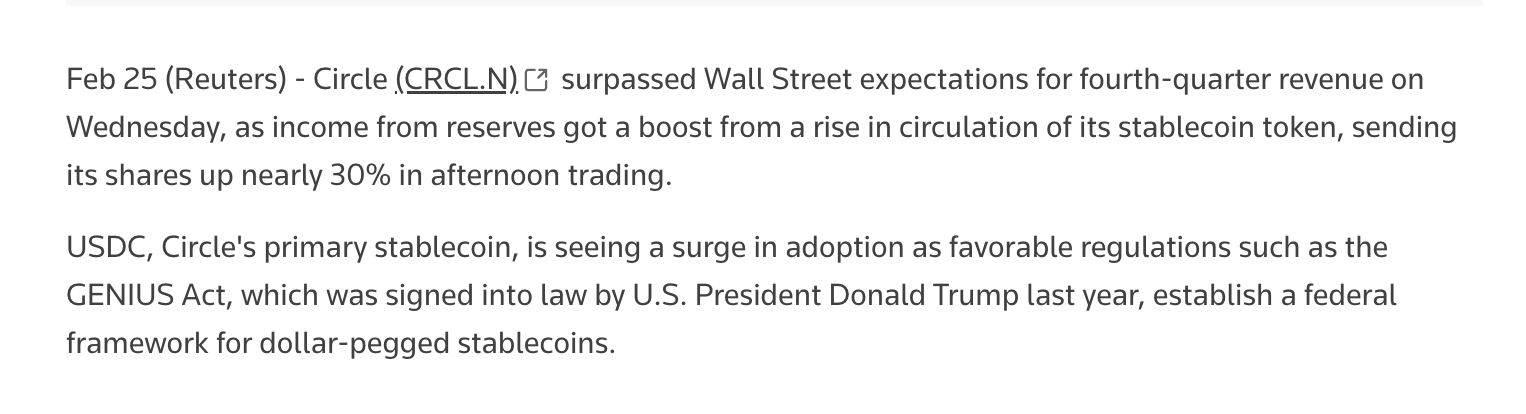
On the surface, Circle appears to be a tech company, but at its core, it is more like a machine that revolves around interest rates, reserves, and circulation scale. The more USDC is issued, the more reserve income it can earn; especially when market interest rates are high, this model looks particularly good. So when its financial report comes out, and the data looks great, the stock price can be quickly driven up because everyone feels this thing is not only stable but also very profitable. However, the problem is that this profit capability is not solid; it is too dependent on the external environment. You have to admit this, or it’s easy to view it as something godlike.
The reason for this sharp drop is not just a single piece of news, but rather that the market has begun to doubt: will Circle's core growth methods in the future be constrained in advance? If the regulatory framework for stablecoins in the U.S. restricts too many actions related to profit distribution, incentive subsidies, or similar 'earning a bit just for holding' actions, then the expansion pace of USDC may not be as smooth as previously thought. In simple terms, many things are not promoted by technology but driven by interests. If you give users, platforms, and applications more motivation to adopt USDC, it will certainly grow quickly; but if you tighten this space, it may not be unable to survive, but its explosive power will be significantly discounted.
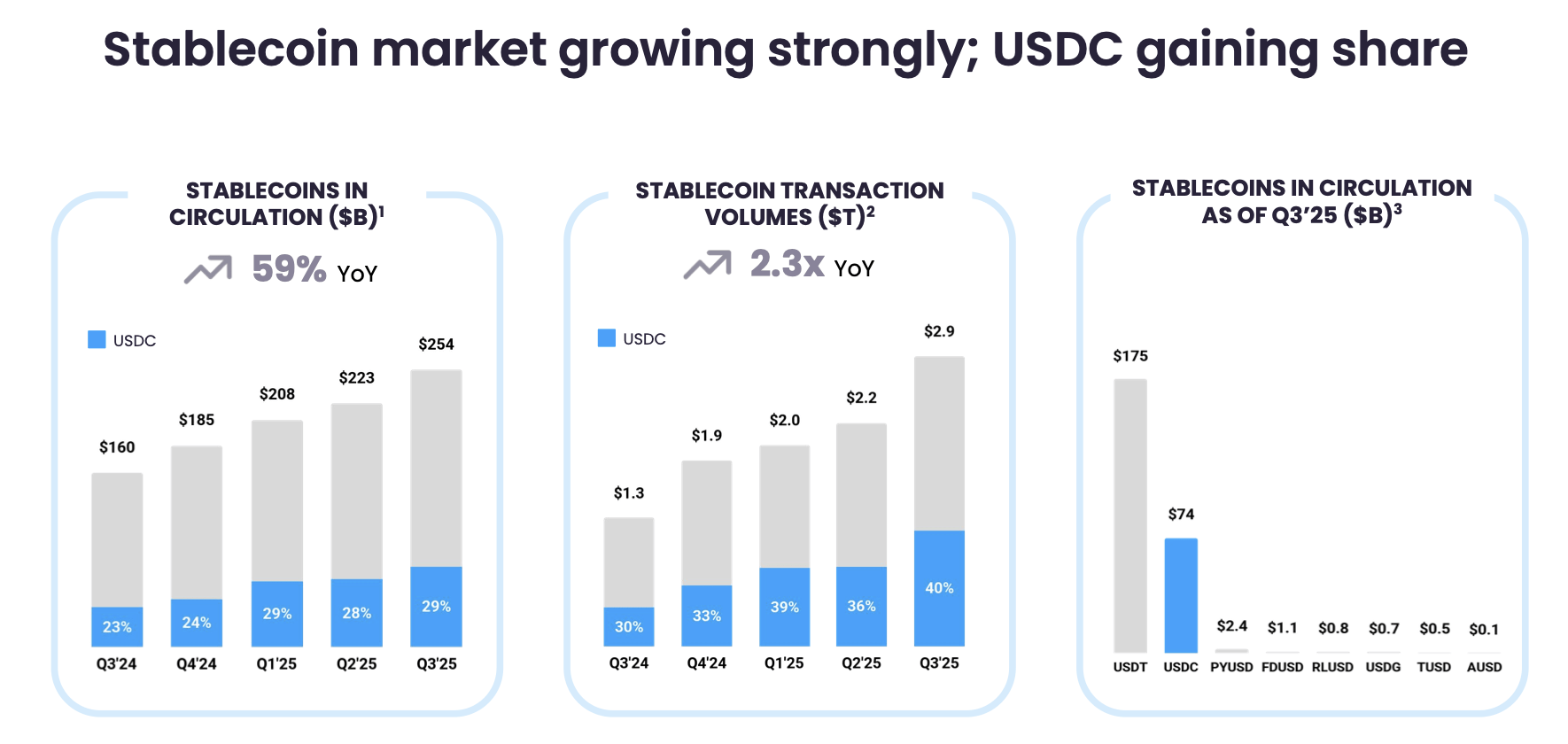
This is why I have always felt that many people's understanding of Circle is a bit too simplistic. Just because the four words 'clear regulation' come out, it doesn't mean Circle will benefit mindlessly. Clear regulation can indeed help it live longer and more correctly, but it doesn’t mean the capital market is still willing to value it as a top-growth stock. Often, the clearer the regulation, the easier it is to revert a company from 'imaginative assets' back to 'cash flow assets'. Everyone is willing to chase dreams for the former, while for the latter, everyone just wants to crunch the numbers. Recently, Circle has clearly seen the market shift from the dream-chasing mode to the accounting mode.
Moreover, the most subtle part of this situation is that Circle's fundamentals have not suddenly collapsed. USDC is still there, the business is still progressing, and its compliance image is not bad among peers. The problem is that the public market is not as willing to continue telling it a grand story. In the past, people would think of stablecoins, U.S. dollar overseas, payment settlement, on-chain financial entry when they saw it, all thoughts of expansion; now, when people see it, they think of interest rate sensitivity, regulatory constraints, slowing growth, and overvalued assessments. Once this switch happens, the drop will be particularly painful, because it’s not the current profit being cut, but the long-term expectations.
To put it more directly, Circle was previously seen by many as 'the most orthodox beneficiary of the stablecoin bull market', but now the market is starting to realize that the stablecoin space is large, and it does not mean all dividends will ultimately fall completely on Circle. It is compliant, but compliance sometimes also means being restricted. You can enter the mainstream system, but the cost is that many actions cannot be done recklessly. Those wild projects might be risky, but they run fast; Circle's approach is more correct, but maintaining a high valuation is not that easy.
So my understanding of this drop is quite simple: it’s not that USDC can’t make it, nor that Circle suddenly became bad, but that the market is starting to acknowledge a fact it didn’t want to admit before — Circle’s profit logic is not as invincible as imagined. It relies on policy, interest rates, and whether the market is willing to continue to believe in it. As long as any one of these three begins to loosen, its valuation can easily be sharply cut. Now the problem is that this time it’s not just one line loosening, but several lines starting to shake together, which is why the drop is so ugly.
Personally, I am now not focusing all my attention on 'how much it has dropped' because that is just the result. What really needs to be monitored are the three things behind it:
First, how the regulation of stablecoins will ultimately land in the U.S. is crucial. Don't just look at the headlines; examine the details.
Second, whether the circulation scale of USDC can continue to rise. If the growth rate starts to noticeably blunt, the market will be more pessimistic.
Third, whether Circle can gradually get rid of the single profit model of mainly relying on reserve income from interest rate spreads.
If these three issues do not improve, then even if this stock rebounds later, the market may not be willing to chase it at high prices as before.
Currently, looking at Circle, it feels particularly like something that was overly hyped by the market and then suddenly pulled back to reality. Previously, what everyone gave it was not an ordinary valuation, but a kind of reward that was almost 'you might be really impressive in the future'; now, with every little disturbance, that reward has been confiscated first. It’s a bit cruel, but that’s how the capital market works; the first to be killed is never the bad company, but those companies that were once thought to be too perfect.
