
Recently, as I browse international news, the more I read, the more uncertain I feel. I believe many friends share the same sentiment. The conflict between the United States and Iran is escalating, with ongoing exchanges of actions from both sides. The Middle East, which is already unstable, is becoming increasingly tense by the day. There are even many people whispering privately, wondering if it will unfold like Germany's blitzkrieg on Poland, gradually dragging us into a global upheaval?
To be honest, we ordinary people are really too insignificant in the face of such high-level geopolitical games. We have no way to influence the direction of the situation and cannot predict how it will ultimately develop. The only thing we can do is to prepare ourselves and our assets for all possible risks in advance.
Because of this, I recently specifically acquired a lot of gold and silver, and I believe many friends made the same choice as I did. The wisdom passed down by our ancestors, 'store gold in chaotic times,' is not just an empty phrase. When the situation becomes unstable, stocks, funds, and even fiat currencies in some places can depreciate or be frozen at any moment, but only gold and silver are recognized as hard currencies for thousands of years worldwide. No matter how the situation changes, its value remains constant.
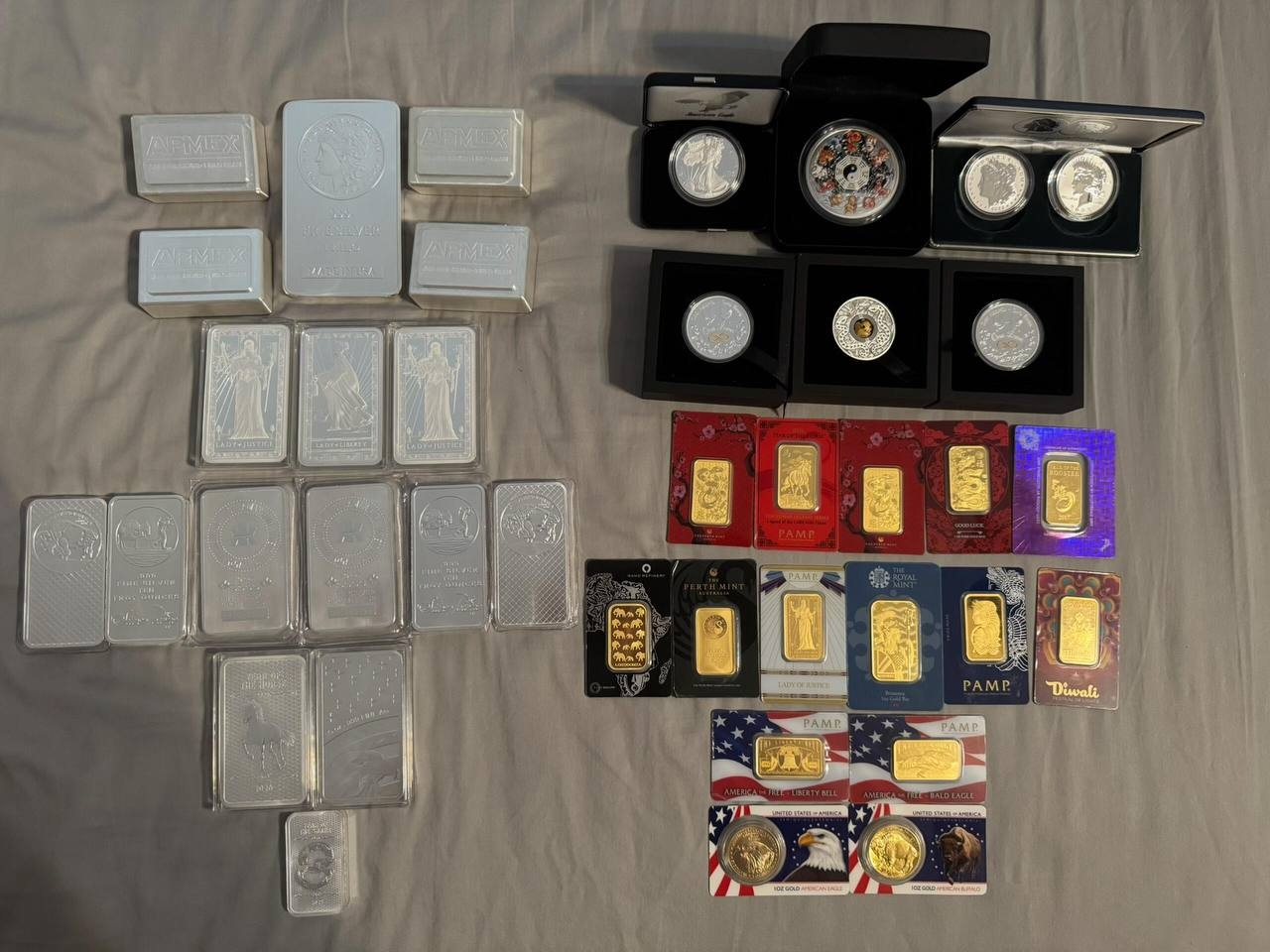
Not only physical gold, but BTC, known as 'digital gold,' has also been affected by the recent situation. After all, compared to physical gold, BTC's portability and ease of cross-border flow indeed have their advantages and have become a second choice for many people to hedge against risks.
But during this period, the more I pondered, the more I understood a principle: whether it is physical gold, silver, or BTC, what they can solve is just the issue of whether 'assets can retain value.' However, in chaotic times, the most critical pain point cannot be solved just by buying gold.
Just think, even if you have a pile of gold bars, when the situation becomes tense, borders are closed, and channels are cut off, can you casually take gold bars across borders? Large-scale gold transfers not only face strict regulations but also carry extremely high risks; if something goes wrong, they may not even make it out. Even if you store gold in a bank, if the banking system is affected by geopolitical policies and your account is restricted, you still cannot access or use your gold.
BTC is the same; although it is decentralized, the biggest issue is compliance. Many countries' regulations do not recognize it; let alone large funds at the level of sovereign states and energy giants, even ordinary cross-border institutions do not dare to use it for settlements on a large scale, fearing they will cross regulatory red lines. In short, no matter how valuable your assets are, without a safe, compliant, and unobstructed transfer channel, they become a pile of 'dead money' that cannot be utilized in critical moments.
It was only after realizing this that I found that the current crypto market is no longer the era of retail investors competing, speculating on dog coins, and chasing trends. Previously, everyone was competing to see which coin could double quickly and which narrative could attract more retail investors. Essentially, it was all a zero-sum game, and once the hype passed, it was all chaos. But now, the truly smart money and large funds have long ceased to engage in these minor skirmishes with retail investors; they are focused on the rigid demand at the national and institutional level, which is the current most scarce and certain track—geopolitical infrastructure.
Many friends may find this term a bit unfamiliar, so let me explain it in simple terms: geopolitical infrastructure, in short, is to build a high-speed road for global funds and assets that can flow safely, compliantly, and smoothly regardless of how chaotic the geopolitical situation becomes or who sanctions whom. Just like we mentioned earlier, no matter how much gold you have, if there’s no way to transport it out, it’s useless. Having assets without a secure transfer channel means they are mere decorations in critical moments. Geopolitical infrastructure aims to solve this core pain point.
Especially now, with the situation in the Middle East being so tense, the oil trade with a flow of trillions of dollars each year is constantly facing the risk of settlement channels being cut off. These oil-rich countries, energy giants, and even the sovereign nations behind them are not primarily interested in making more money; what they lack is a channel that is not choked by the SWIFT system, can meet regulatory compliance requirements, and ensures the safe flow of funds.
What @SignOfficial is doing is precisely this; it has accurately positioned itself in this sovereign-level rigid demand track.
There are many projects on the market that engage in cross-border payments, but the vast majority either rely on traditional banking systems (if the bank says it’s not needed, it’s useless) or only focus on small transfers from retail investors, completely missing out on sovereign-level and institutional-level core scenarios. But SIGN is different; it has directly entered the core area of geopolitical competition in the Middle East. With cross-chain certification and verifiable credential technology, it has transformed identity information, asset ownership, and compliance records into on-chain verifiable and auditable compliance data, creating a capital channel that is neither dependent on a single country or bank nor fails to meet global regulatory requirements.
The most crucial point is that it is not just empty talk; it has truly operationalized real landing scenarios and established cooperation with local regulatory agencies and official departments in the Middle East. In core scenarios such as oil trade settlements and cross-border capital hedging, it has already completed capital flows exceeding hundreds of millions. While other projects are still competing in communities, trading volume, and scrambling for retail investors, it has secured a national-level entry ticket and built barriers that others cannot replicate.
As SIGN is the core token of this channel, it is essentially the pass for this national-level capital expressway. In the future, when the country uses this channel to transfer oil payments, and institutions use this channel for cross-border settlements, they cannot do without SIGN. The more turbulent the geopolitical situation, the more valuable this channel becomes, and the growth potential of $SIGN is naturally unmatched by ordinary tokens that rely on speculation.
Ultimately, for us ordinary people to hedge against risks, it has never been as simple as just buying gold or BTC. True comprehensive preparation means not only holding hard currencies that retain value but also finding channels that ensure asset safety and liquidity. In this era of normalized geopolitical conflict, targets that can tap into sovereign-level rigid demand and build geopolitical infrastructure are the real core of hedging that can withstand cycles.