
The first time I looked at Sign Protocol, what struck me wasn’t the ambition. Crypto is full of ambitious ideas. It was the quiet confidence of what it was trying to replace. Not money, not assets, but trust itself. That’s a heavier lift.
If you strip it down, Sign Protocol is about attestations. That sounds abstract until you realize how often we rely on them. Every time a government issues an ID, a university grants a degree, or a contract gets notarized, someone is saying “this is true” and others are expected to believe it. What Sign is doing is taking that layer and moving it onto-chain, across multiple chains, and making it programmable.
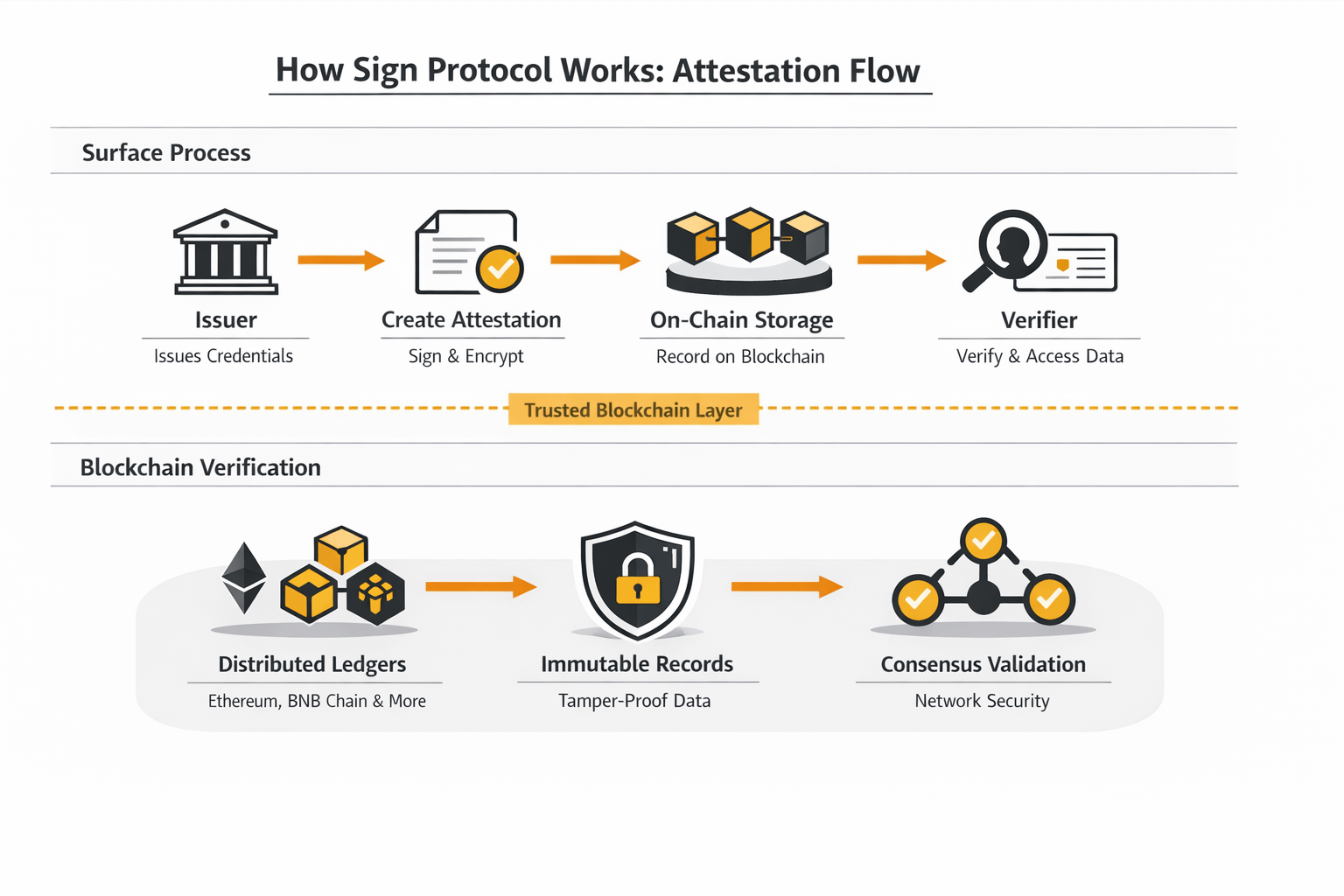
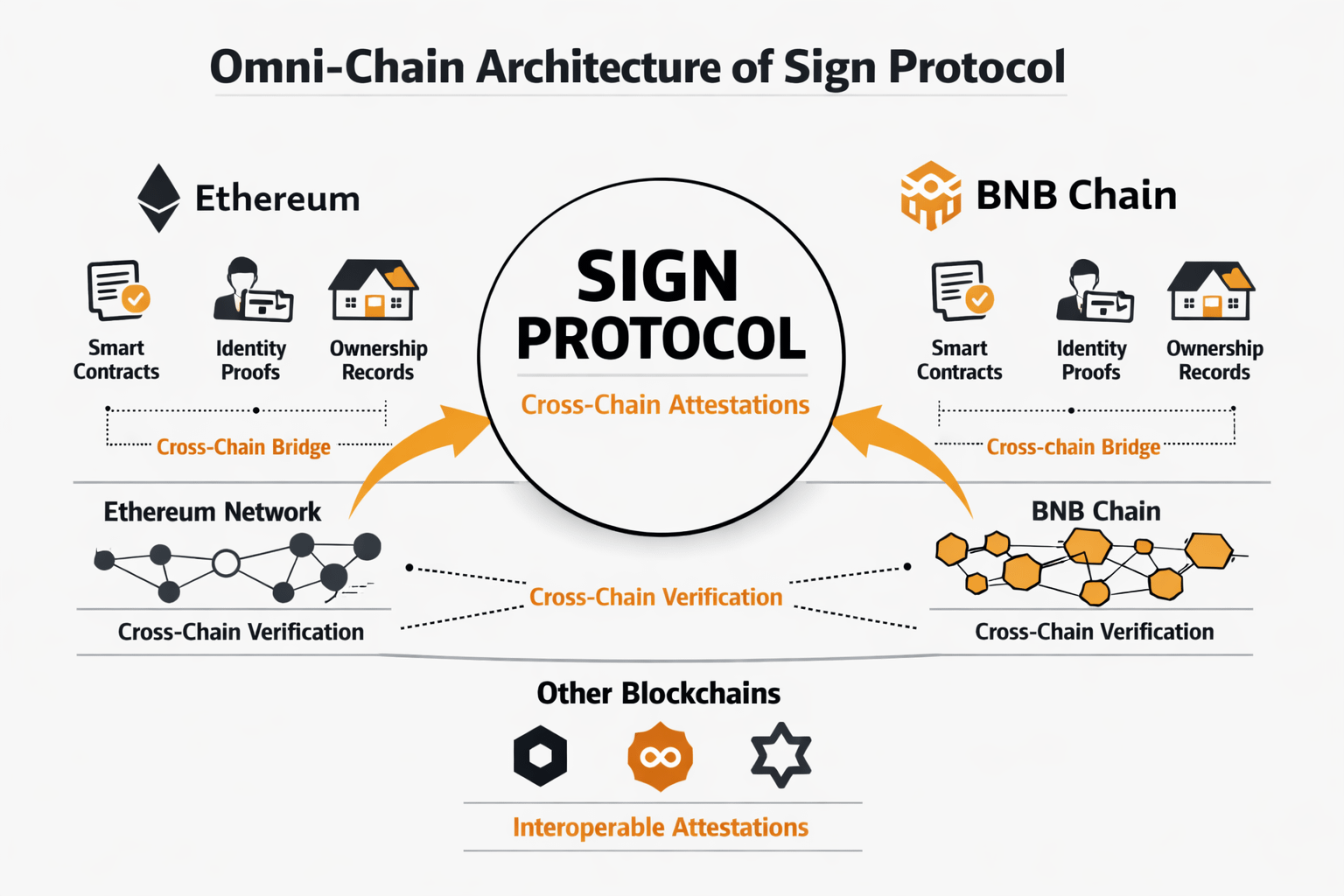
On the surface, it’s simple. You create a record, sign it cryptographically, and store it in a way that anyone can verify. But underneath, there’s more texture. Instead of a single authority holding the source of truth, the protocol distributes verification across networks like Ethereum, BNB Chain, and others. That omni-chain design matters. Right now, liquidity and users are fragmented across dozens of ecosystems, and any identity or proof system that lives on just one chain inherits that fragmentation.
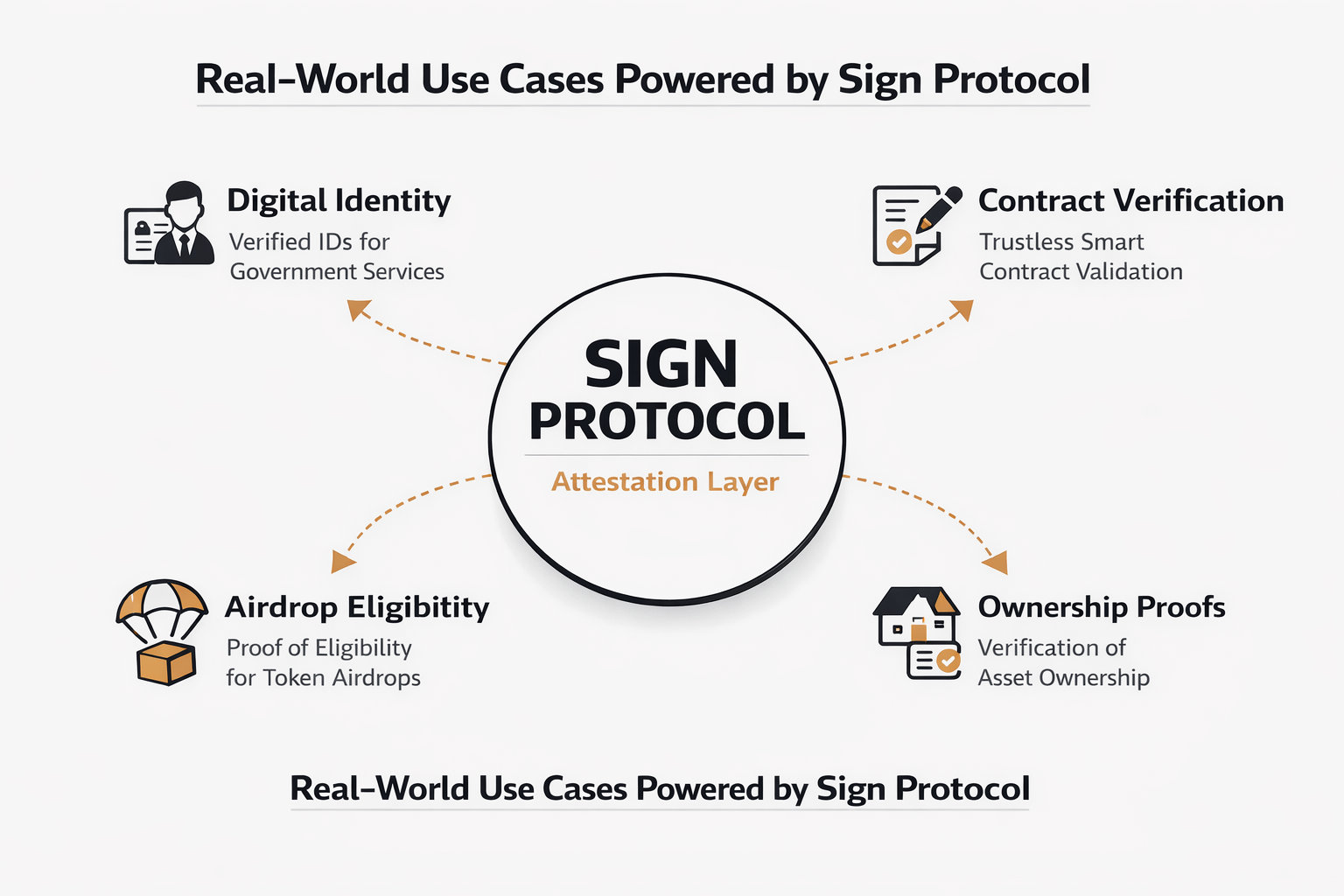
The data coming out of early adoption gives some context. According to Binance Research on Sign Protocol, the protocol has already processed millions of attestations, with use cases ranging from on-chain credentials to token distribution eligibility. That number alone doesn’t mean much until you realize each attestation replaces a manual verification step that would normally require an institution. Multiply that across applications, and you start to see the efficiency being tested in real time.
That momentum creates another effect. Once attestations become composable, they stop being static records and start acting like building blocks. A decentralized app can check whether a wallet holds a verified identity, a proof of ownership, or a signed agreement without needing to rebuild that logic from scratch. It’s similar to how APIs changed web development. You don’t recreate identity verification, you just call it.
But there’s a tension here. Moving trust on-chain doesn’t eliminate trust, it shifts it. You’re no longer trusting a government clerk or a centralized database. You’re trusting the correctness of the protocol, the security of the underlying chains, and the integrity of whoever issues the attestation. If a bad actor signs false data, the system will still verify it perfectly. That’s the part people tend to gloss over.
Understanding that helps explain why Sign is positioning itself as digital public infrastructure. Governments experimenting with blockchain don’t just need storage, they need credibility. If a city issues digital residency credentials or land records, the question isn’t just whether the data is available, it’s whether it’s accepted. Early pilots in regions exploring digital IDs suggest interest is real, but adoption depends on whether institutions are willing to anchor their authority to a shared protocol.
Meanwhile, the market context matters. In 2024 and into 2025, we’ve seen a steady shift toward real-world asset tokenization and identity-linked compliance. Billions of dollars are moving on-chain, but regulators are pushing for clearer accountability. Protocols like Sign sit right in that overlap. They offer a way to attach verifiable identity and agreements to otherwise permissionless systems. That’s not a small shift. It’s a structural one.
There are risks, of course. Interoperability sounds good until standards fragment. Privacy is another layer. Storing attestations publicly, even in hashed form, raises questions about how much should be visible versus selectively disclosed. Zero-knowledge proofs may solve part of that, but they add complexity that most users won’t fully understand.
Still, if this holds, the direction feels steady. We’re moving from a world where blockchains track assets to one where they also track meaning. Ownership, identity, agreements. The pieces that make systems function, not just the value that flows through them.
What Sign Protocol reveals is something subtle but important. The next phase of crypto isn’t about creating new assets. It’s about making existing truths portable, verifiable, and hard to dispute. And once that foundation is in place, everything built on top starts to feel a little more real.


