
I begin with a position of professional respect for what Sign is trying to build in the evolving landscape of digital infrastructure. I see a clear attempt to move beyond short term hype and instead focus on a deeper layer of utility that many projects overlook. The idea of creating a global infrastructure for credential verification and token distribution is not small and it directly addresses one of the most persistent gaps in Web3 which is trust. In a system where identity is fragmented and reputation is often temporary Sign is positioning itself as a bridge between verifiable data and real economic value.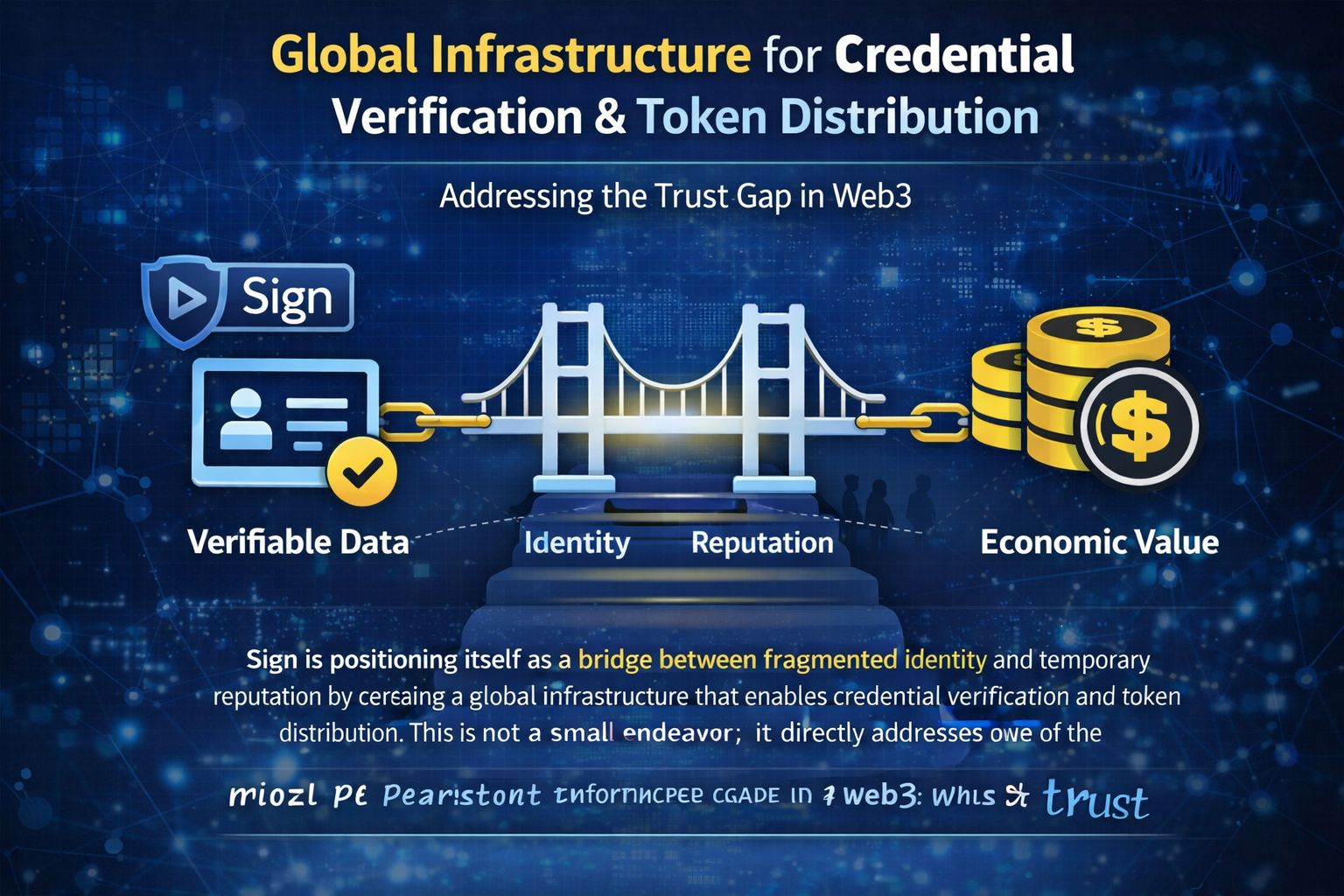
I observe that Sign is working toward a model where credentials can be issued verified and reused across different ecosystems. This is important because current systems are siloed and inefficient. Users often repeat the same verification processes across platforms which increases friction and reduces adoption. By enabling reusable attestations Sign creates a smoother experience and introduces a layer of efficiency that could scale across industries. This is not just a technical improvement but also a structural one because it reshapes how trust is transferred between systems.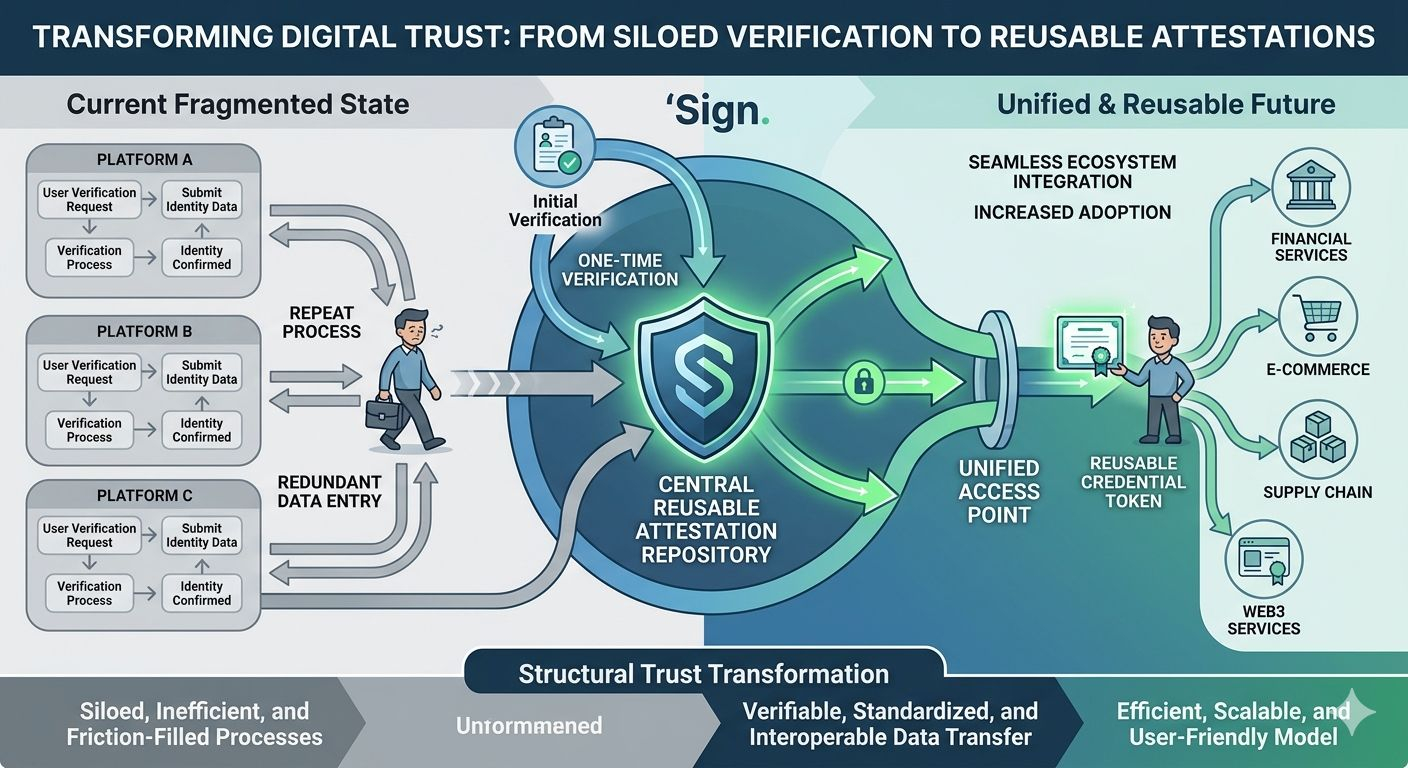
I also recognize the strategic importance of token distribution within this framework. Many projects struggle with fair and transparent distribution mechanisms. Sign attempts to solve this by linking token allocation to verified credentials and contributions. This approach aligns incentives more closely with actual user behavior rather than speculation alone. In theory this creates a more balanced ecosystem where value flows toward verified participation. The presence of $SIGN as a core component strengthens this model by acting as both a utility and coordination mechanism within the network.
I note that the association with @SignOfficial adds a layer of credibility and visibility especially within major platforms like Binance Square. This indicates that the project is not operating in isolation but is actively engaging with broader ecosystems. Visibility matters because infrastructure projects require adoption at scale and partnerships often determine whether a protocol remains theoretical or becomes widely used. The inclusion of #SignDigitalSovereignInfra further reflects a narrative that emphasizes independence and user controlled identity which is increasingly relevant in the current digital environment.
I now shift toward a more analytical perspective because every ambitious system carries internal tensions that deserve closer examination. I see a key paradox in the idea of decentralized credential verification. While the goal is to create trust without centralized authority the process of issuing and validating credentials may still rely on trusted entities at some level. This introduces a subtle dependency that could challenge the narrative of full decentralization. If certain issuers gain more influence the system may gradually replicate traditional power structures in a new form.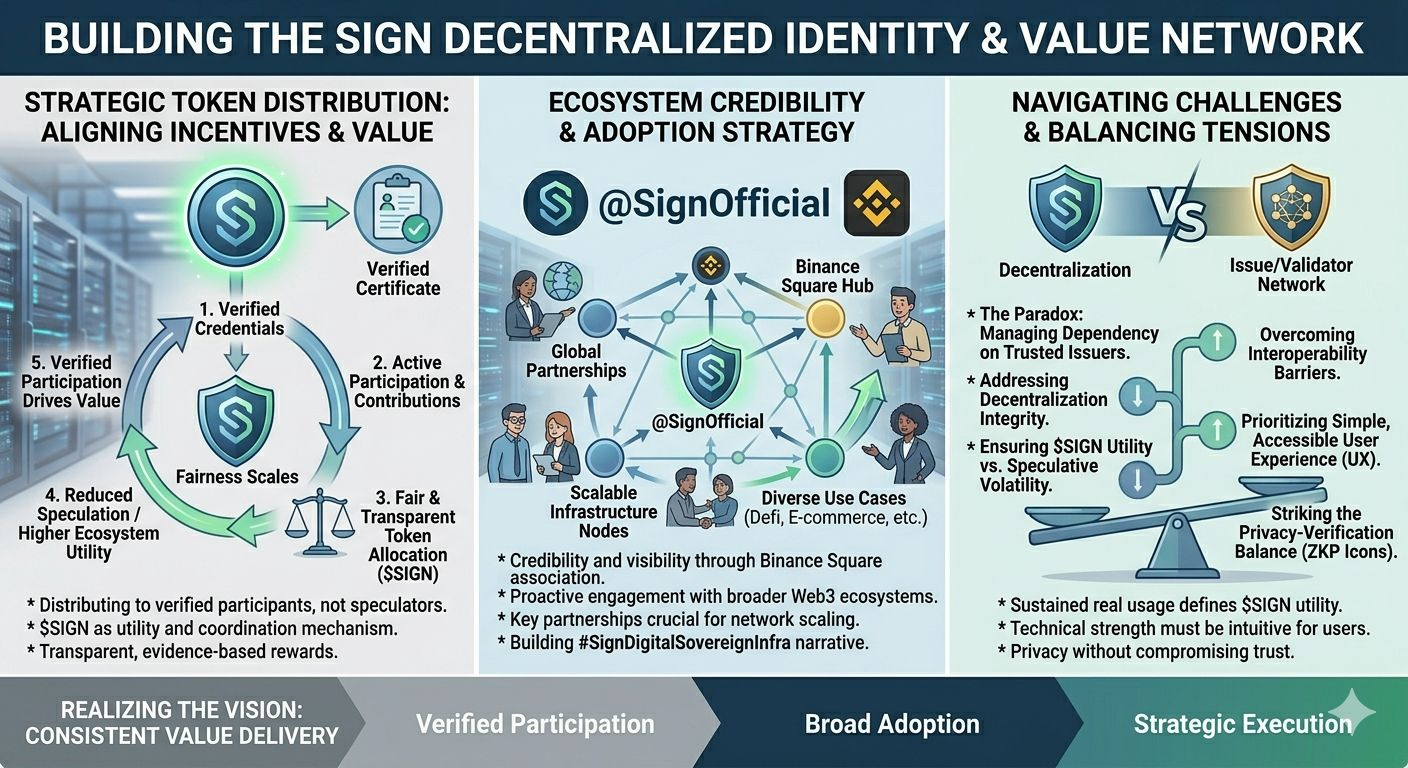
I also consider the economic layer surrounding $SIGN. Token based systems often depend heavily on sustained demand and active usage. If adoption grows slowly the token may struggle to maintain its utility beyond speculative trading. This creates a feedback loop where perceived value depends on future expectations rather than current usage. For Sign to succeed it must ensure that $SIGN is deeply integrated into real processes rather than remaining a symbolic asset. Utility must be continuously reinforced through actual use cases.
I reflect on the complexity of cross ecosystem integration which is another potential challenge. While the vision of portable credentials is compelling the reality of aligning multiple platforms standards and governance models is difficult. Each ecosystem has its own incentives and technical constraints. Achieving seamless interoperability requires not only strong technology but also strong coordination. This is often where many promising projects slow down because alignment is harder than innovation.
I also think about user behavior which plays a critical role in the success of any infrastructure. Even the most advanced system cannot succeed if users do not understand or trust it. Sign must invest in education and user experience to make its solutions accessible. Simplicity will be a key factor because complex systems tend to limit adoption to a small group of advanced users. If Sign can translate its technical strength into intuitive experiences it will significantly improve its chances of long term success.
I recognize another tension between privacy and verification. On one hand users want control over their data and on the other hand systems require transparency to establish trust. Balancing these two forces is not easy. If the system leans too much toward transparency it risks exposing sensitive information. If it leans too much toward privacy it may weaken the reliability of credentials. Finding the right balance will be essential for maintaining both trust and user confidence.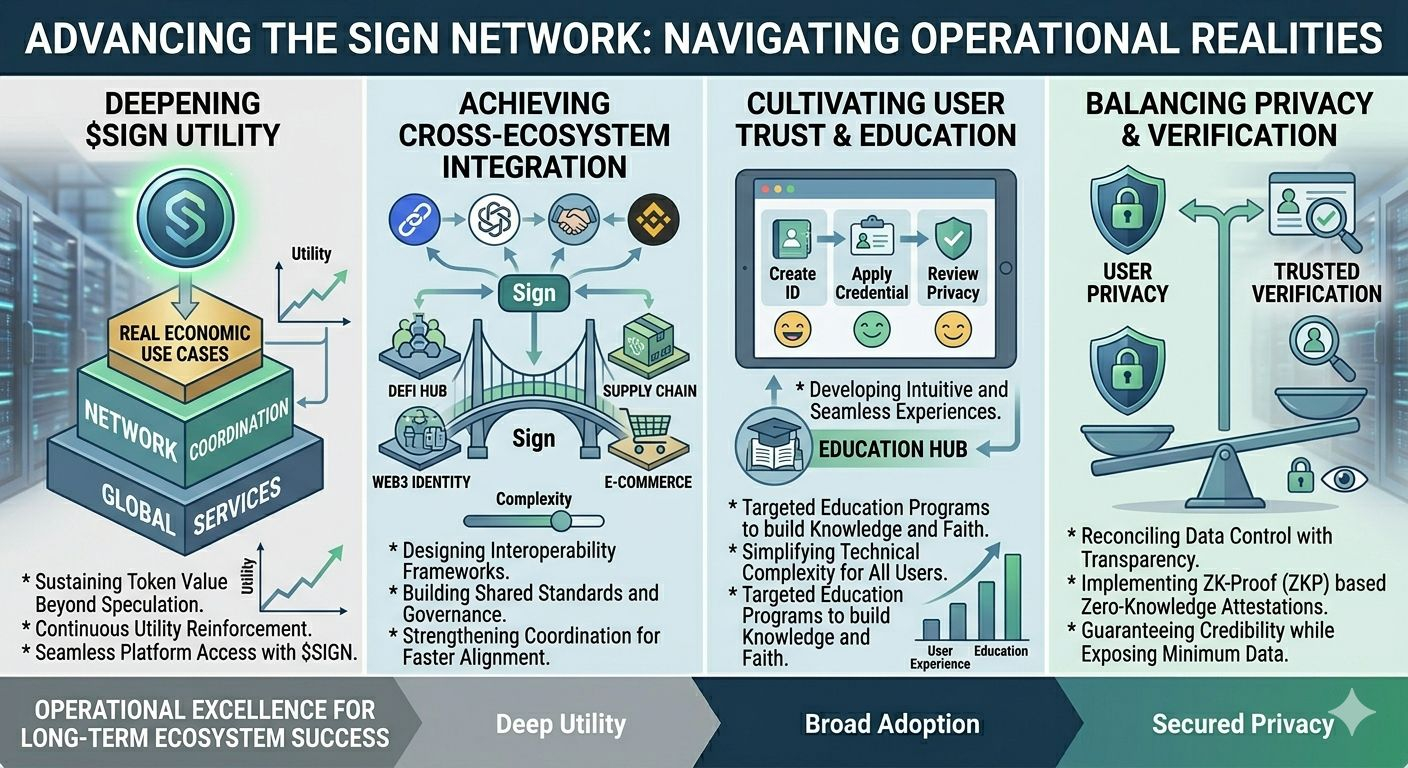
I conclude with a balanced view that Sign represents a meaningful step toward solving real problems in Web3 but its success will depend on execution rather than vision alone. The foundation is strong and the direction is relevant but the path forward includes challenges that require careful strategy and continuous adaptation. I see potential in the way Sign connects identity reputation and token distribution into a single framework but I also see the need for sustained effort to turn this framework into a widely adopted reality. The journey of $SIGN will ultimately be defined not by its promise but by its ability to deliver consistent value across a diverse and evolving digital ecosystem