
#SignDigitalSovereignInfra It’s kind of funny how often we trust things online without really thinking about it. A certificate, a badge, a claim in someone’s profile we see it, we nod, and we move on. Not because we’re fully convinced, but because checking it properly would take more time than it feels worth. So we accept it. Most of us do.
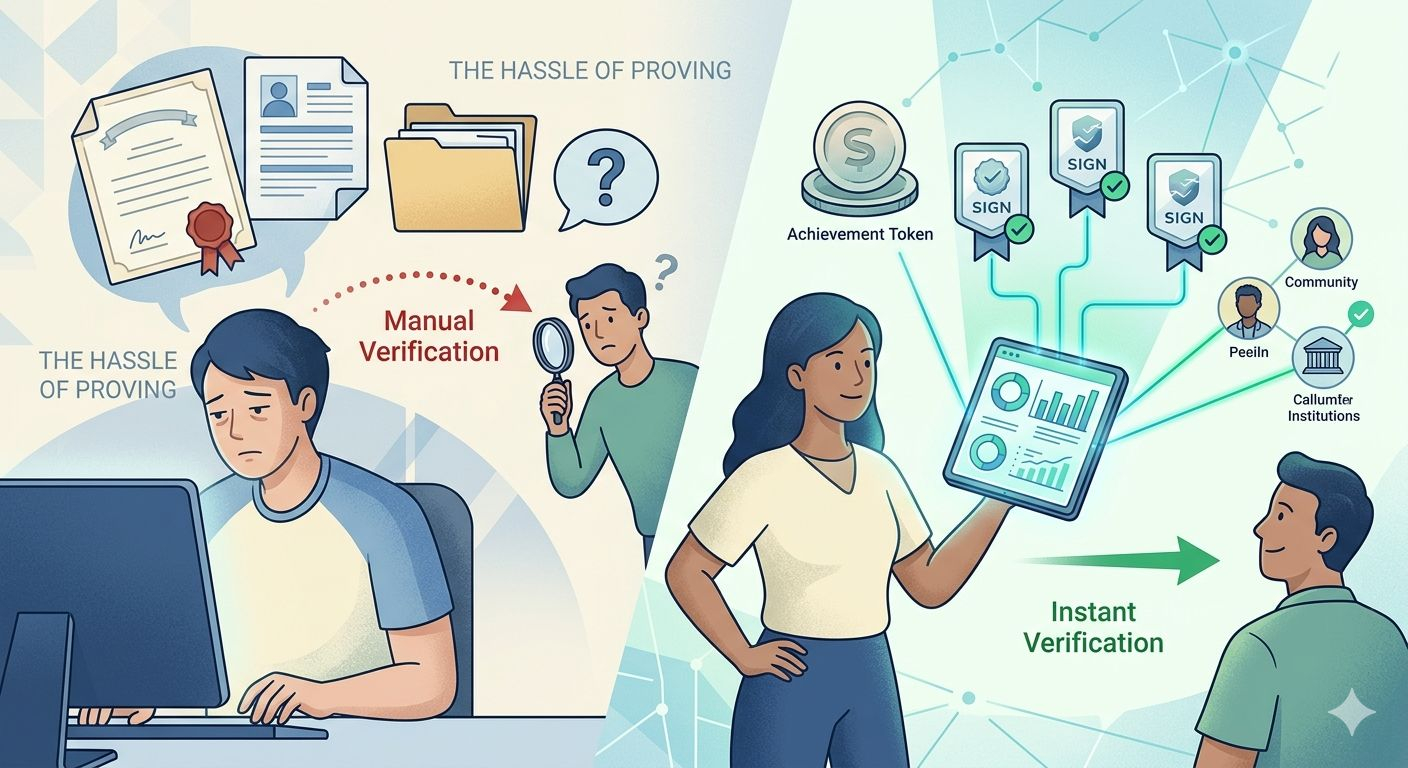
That’s where something like $SIGN starts to feel practical rather than complicated. At its core, it’s trying to answer a very simple question: how do you prove something online without making it a hassle for everyone involved? Instead of sending files back and forth or relying on someone to manually confirm things, the idea is that the proof should already be there, ready to be checked instantly.
What makes this approach different is how natural it tries to feel. A credential isn’t treated like a document you store somewhere and hope people believe. It becomes something that carries its own weight. You don’t need to explain it or defend it. It just exists in a form that others can verify without extra steps.
There’s also a layer of value attached to it, which is where tokens come in. But not in the usual sense people think about. It’s less about chasing price and more about connecting recognition to something tangible. If someone has contributed, learned, or achieved something, that can be reflected directly. It feels closer to acknowledgment than speculation, even though the financial side is still there in the background.
I was thinking about a really normal situation the other day. Someone finishes an online course and wants to show it. They download a certificate, maybe take a screenshot, maybe post it somewhere. There’s always that tiny moment of doubt will people take it seriously, or just scroll past it? It’s such a small thing, but it happens all the time. A system where that proof is instantly clear and verifiable removes that awkward gap.
Of course, once something like this starts getting attention, it naturally shows up in places where people watch trends closely. Platforms like Binance tend to become part of that process, where curiosity builds and more eyes start paying attention. It doesn’t automatically mean something is deeply understood, but it does mean people are starting to notice.
What I like about $SIGN is that it doesn’t feel like it’s trying too hard. It’s focused on one problem and sticking to it. Verification isn’t exciting, but it’s important. You only really notice it when something goes wrong when something fake slips through, or when something real gets questioned for no reason. Fixing that quietly can actually change a lot.
There’s also something interesting about how it gives space to smaller communities. Not everything valuable comes from big institutions anymore. Online groups, niche co#mmunities, even small collaborative projects create their own forms of recognition. The problem is that those signals don’t travel well outside their circles. SIGN gives them a way to exist in a form that others can trust, even if they weren’t there to see it happen.
Still, it’s not perfect, and it’s better to be honest about that. The biggest challenge is getting people to actually use it. A system like this only works if enough individuals and organizations decide it’s worth adopting. Otherwise, it risks becoming just another tool that works well but doesn’t connect widely. And then there’s the token side of things. Once money gets involved, attention can shift quickly. People might focus more on price than on what’s actually being verified. That tension is hard to avoid.
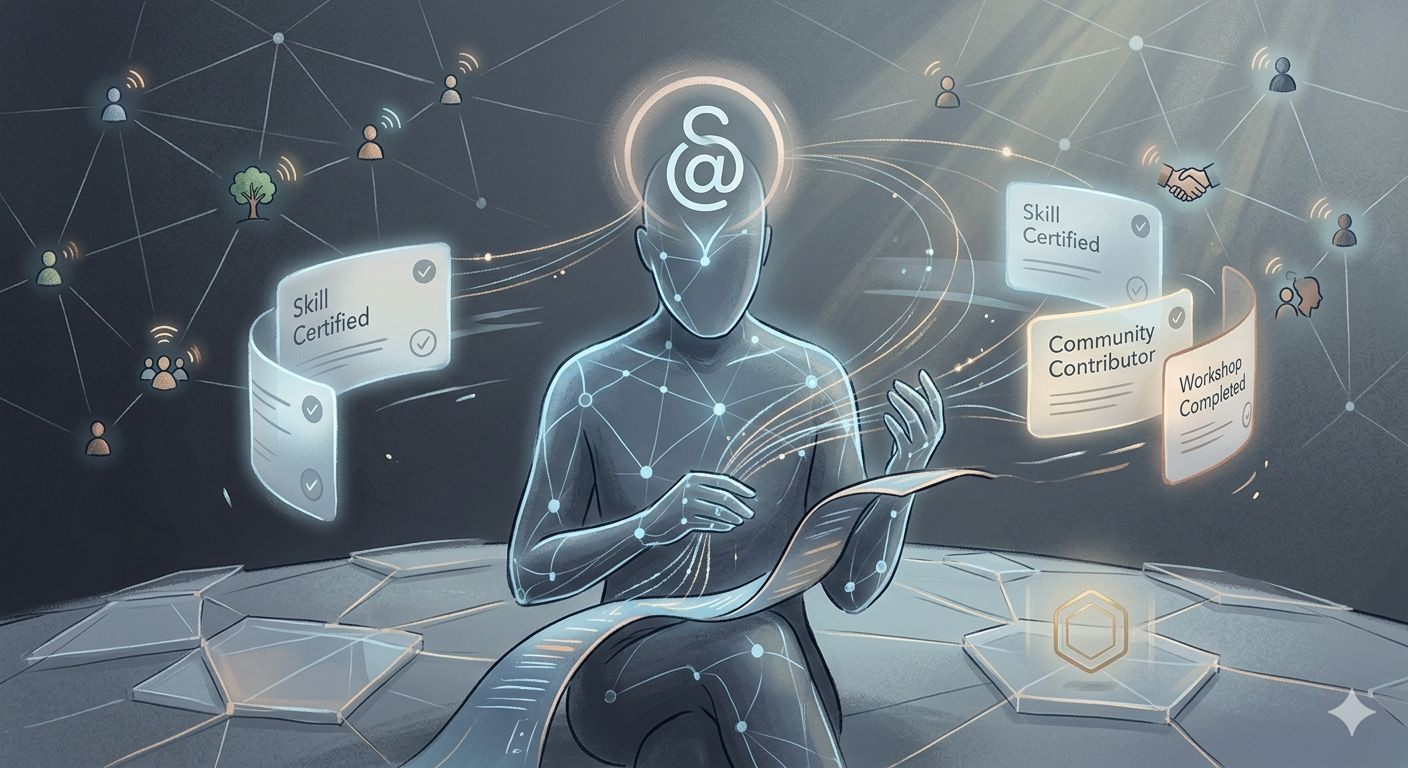
Even with that, the idea feels grounded. It’s not trying to change everything overnight. It’s just trying to make one part of the digital experience more reliable. And honestly, that’s refreshing.
I think most people don’t want something flashy. They just want things to work the way they expect. They want to trust what they see without second-guessing it. Systems like SIGN don’t need to be loud to matter. They just need to quietly do their job.
If it works, people won’t sit around talking about it all day. They’ll just notice that things feel a bit smoother, a bit clearer. Less doubt, less friction. And maybe that’s enough.