
These past few days scrolling through the plaza, the screen is full of discussions about $SIGN . The comments section below is incredibly real: some are drooling over CreatorPad's nearly 2 million pool, ready to grab it, others are drawing K lines thinking about how to catch the waves, and some, upon seeing this name, instinctively categorize it as 'just another electronic signature project' and move on.

But the more I look, the more I feel something is off; the easiest point to miss in the market right now is precisely underestimating it.
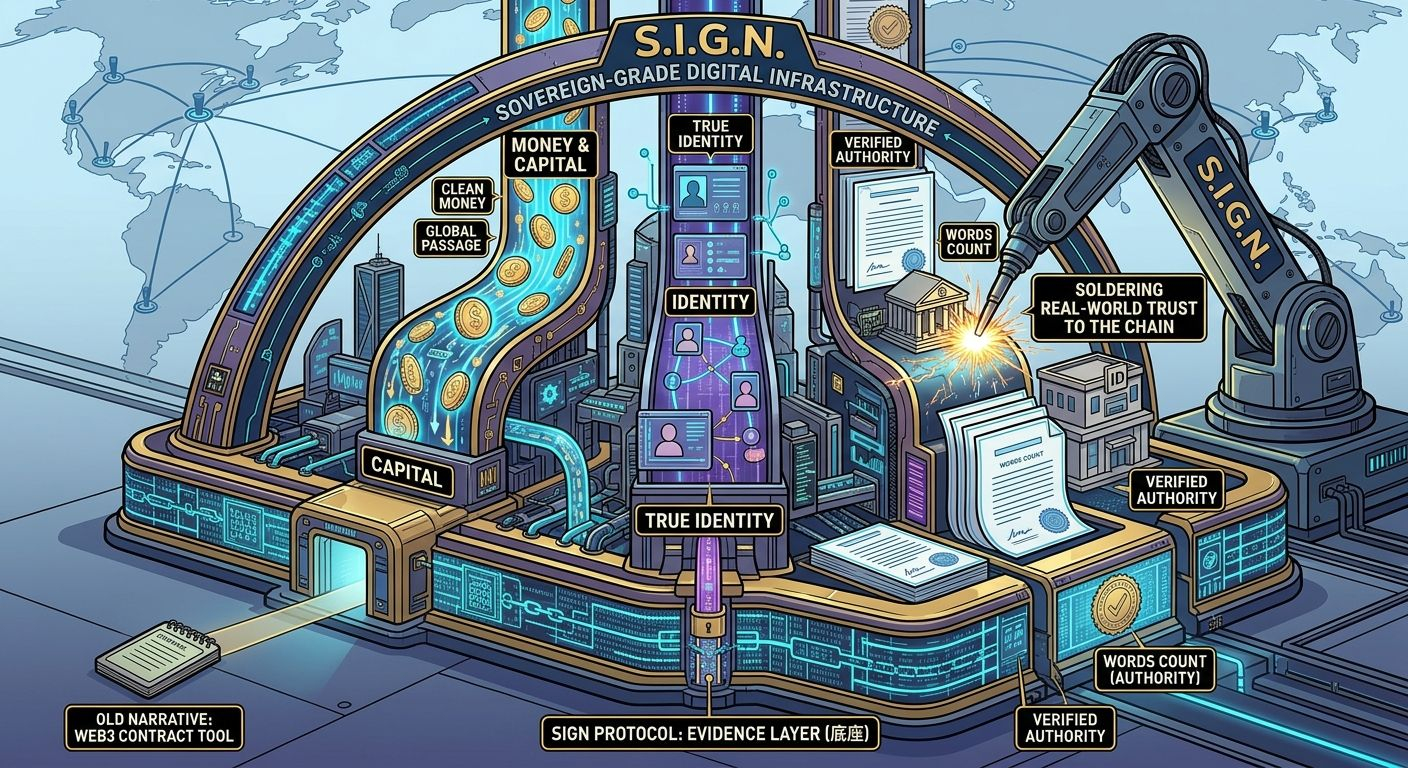
Brothers, the official now clearly states that it is no longer just a simple 'Web3 contract signing tool'; the narrative has been greatly expanded: S.I.G.N. is directly positioned as a sovereign-grade digital infrastructure aimed at money, identity, and capital, while the Sign Protocol serves as the base specifically for the 'evidence layer.' In simple terms, this big game isn't just to help you sign something, but to reforge the most complicated and expensive trust processes in the real world—'who's word counts, whose identity is verified, whose money is clean and can circulate'—onto the blockchain.
Even more astonishing is this Binance Square event. Pay attention; the official announcement is very straightforward: the CreatorPad reward pool is 1,968,000 tokens, running from March 19 to April 2, and to be distributed by April 22. This isn't just about simply distributing candy, is it? Clearly, it's leveraging a huge traffic window to forcibly push a very hardcore, B2B-oriented foundational infrastructure into the visibility of retail investors.
I really started to get into it, not because of the rewards, but because it hits a pain point too hard.
We often complain that the bottleneck of Crypto is chain congestion, high gas fees, and lackluster narratives. Stop right there; that's not the real issue. In the real world, the most expensive, slowest, and prone to disputes is never the transfer, but the verification. You need to prove compliance, show that the source of the money is legitimate, prove that the address belongs to a living person who is authorized, and even prove that an airdrop stands on solid ground... In traditional systems, all of this relies on a bunch of centralized giants repeatedly stamping and peeling layers off.
What does the Sign protocol want to achieve? It aims to turn Schema and Attestation into standard components on the blockchain. Extracting all the originally scattered PDFs, rubber stamps, emails, and legal letters, transforming them into structured evidence that machines can immediately understand, smart contracts can adjust, and audits can check at any time.
Check out the solid data in the official MiCA white paper: just in 2024, Sign processed over 6 million attestations and distributed over 4 billion dollars in tokens to more than 40 million wallets. The official documents clearly state their ambitions, aiming for top-tier sovereign ID, CBDC, and programmatic capital scenarios. You can criticize this vision for being too grand, but you can't deny that it's not just opening a new casino; it's seizing the dirty and exhausting roles of 'digital world verification, security checks, and certification agencies,' which can yield generations of rent as long as the position is secured.
But here's the key point!
The more it sounds like 'utilities like water, electricity, and gas,' the less likely I am to blindly invest in tokens as an old retail investor with over a decade of experience.
Why? Because an impressive protocol ≠ an impressive token price; these are two different matters.
I checked the public data: SIGN circulation is approximately 1.64 billion, with a total supply of 10 billion, and the current price is around $0.0415, with a 24-hour trading volume of about 70 million dollars. The interest is indeed there, but there's still a layer of separation from achieving a true 'value capture closed loop.' I recognize the evidence layer and sovereign stack in the official documents. But this thing is bought with retail investors' real money, not venture capital equity. No matter how impressive your business runs, if you don't nail down the core chains of charging, settlement, staking, burning, and buyback, the more successful the protocol, the more the token may just be a ticket for onlookers.
Let's get real: on March 28 at 18:00 (UTC+8), about 96,670,000 SIGN tokens will be unlocked, roughly equivalent to 4.39 million dollars at recent prices. Don't take this lightly. At this moment, which is already volatile, with the added traffic from snapshot activities, a large unlock is definitely not a minor event; it's a blatant stress test for the market!
So my strategy is very simple, primarily focused on clarity:
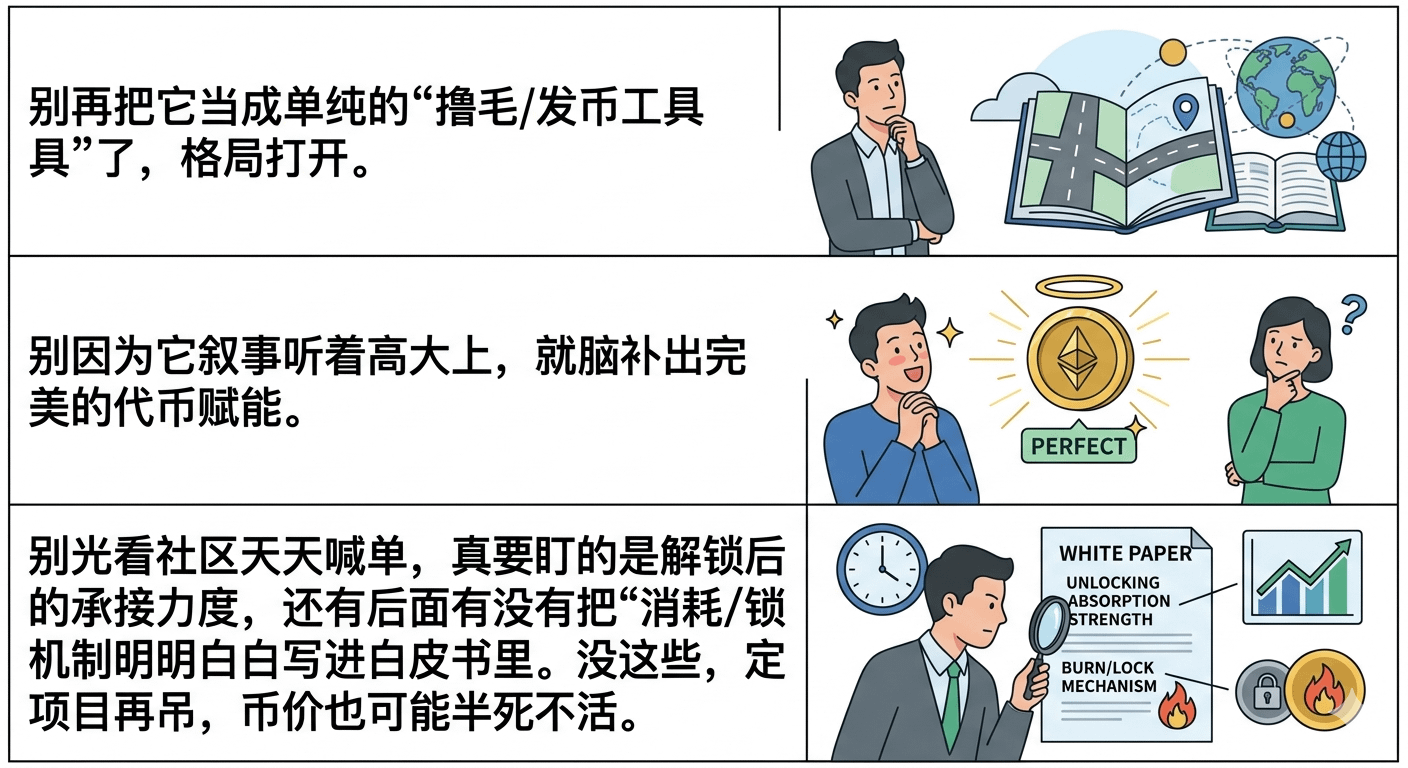
Don't treat it merely as a simple 'token farming/launch tool'; broaden your perspective.
Just because its narrative sounds grand, don't imagine a perfect token empowerment.
Don't just pay attention to the community shouting signals every day; what you really need to focus on is the strength of support after unlocking, and whether there are clear 'consumption/locking' mechanisms explicitly written in the white paper. Without these, no matter how great the project is, the token price might remain stagnant.
I won't treat SIGN as something I can impulsively go all in on after reading a couple of tweets, but I certainly won't throw it into the trash. Its most attractive gamble lies in whether there's a chance to fully standardize the concept of 'trust.' Whoever masters the verification templates of the digital world will be the one setting the rules. In the next cycle, who can collect rent from all RWA, digital identities, and compliance entry points? It might just have a position.
As usual: institutional narratives are very attractive, but whether tokens can actually capture the dividends needs to be calculated separately. This wave of CreatorPad rewards must be seized; the hype can be leveraged, but the market must be closely monitored. But if you really want to take a large position? First, honestly wait until we get past March 28, and see if it's just a task token cashing in on traffic or if it's truly a foundational giant weaving networks beneath the surface.