
I have been tracking Sign Network's Middle East footprint closely and I think the market is fundamentally underreading what Sign Protocol's presence in this region actually means right now.
The UAE Central Bank is targeting commercial launch of the Digital Dirham in 2026. Saudi Arabia's Vision 2030 has blockchain infrastructure written into its national economic diversification strategy. Bahrain has the GCC's most advanced stablecoin regulatory framework already live. Qatar is actively expanding its fintech sandbox. The entire Gulf Cooperation Council — six sovereign nations representing over $3 trillion in combined GDP — is simultaneously building digital monetary infrastructure, digital identity systems, and verifiable credential frameworks. Every single one of those six nations is building exactly what Sign Protocol, SignPass, and TokenTable were designed to serve. And Sign Network is not waiting to enter this market. Sign Network already has an active deployment in the UAE while every other blockchain infrastructure company is still writing whitepapers about Middle East expansion.
What makes Sign Protocol specifically right for the Middle East is something I have not seen discussed anywhere. The GCC's biggest digital economy challenge is not technology. It is jurisdiction fragmentation. The UAE alone runs three separate regulatory frameworks simultaneously — federal CBUAE law, DIFC under DFSA, and ADGM under FSRA — each with different identity verification requirements, different AML standards, and different rules about what data can cross jurisdictional lines. Saudi Arabia and the UAE are running cross-border CBDC experiments together through Project Aber while maintaining completely separate domestic monetary frameworks. Bahrain's Central Bank governs stablecoins under rules that differ from every neighboring state. A financial institution operating across three GCC jurisdictions is running three separate compliance stacks simultaneously — overcollecting data everywhere, managing legal exposure manually, because no single verification layer could bridge all three frameworks at once.
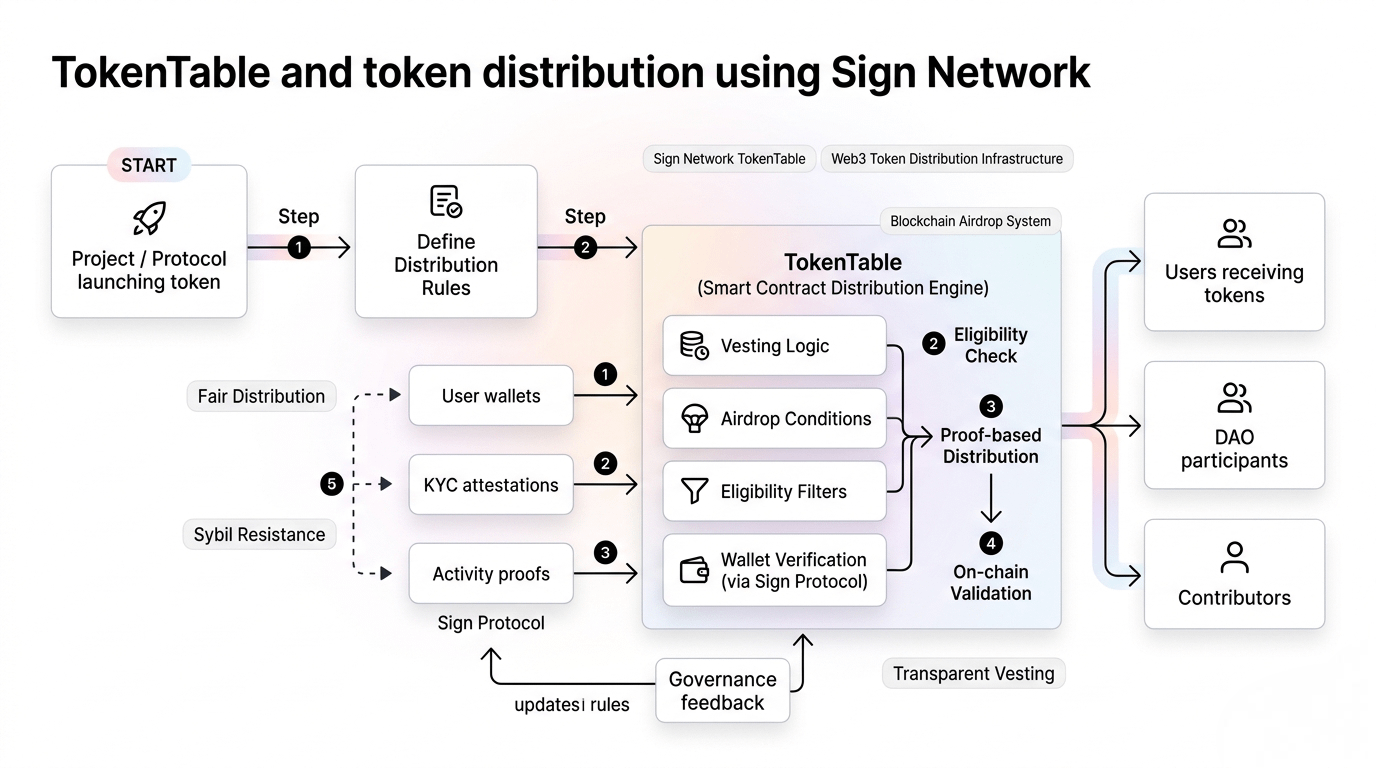
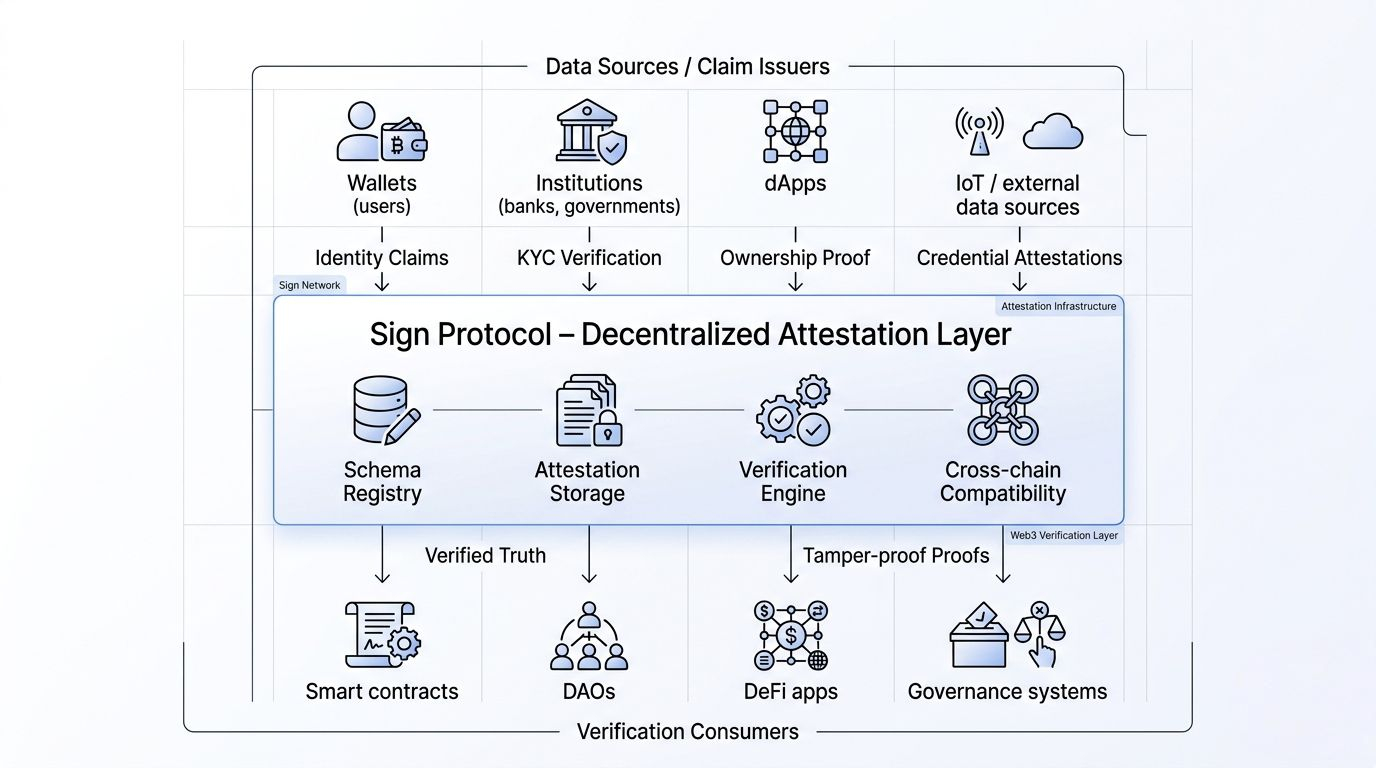
Sign Protocol's omni-chain attestation architecture solves this problem structurally. Sign Protocol creates a verified claim once — identity confirmed, credential valid, compliance satisfied — and that attestation is readable across every chain and every jurisdiction Sign Protocol supports simultaneously. A bank in DIFC using Sign Protocol does not rebuild its KYC stack for ADGM. A stablecoin issuer in Bahrain using Sign Protocol does not maintain a separate identity registry for UAE federal compliance. SignPass anchors each citizen's and institution's credentials to a single on-chain address that every system in Sign Network's architecture can query in real time. TokenTable executes the distribution — whether it is a Digital Dirham payment, a government benefit allocation, or a stablecoin settlement — against Sign Protocol's verified credential registry without requiring the underlying data to move across jurisdictional lines. That is not a feature the GCC's $3 trillion digital economy wants. It is infrastructure the GCC's regulators are actively demanding.
The February 2026 regulatory updates across the GCC confirmed exactly this direction. The UAE's Travel Rule became binding — every virtual asset transfer now requires verified identity information to travel with the transaction. The FSRA completed its stablecoin rulebook with a risk-tiered approach requiring institutional alignment. VARA was formally added to the UAE's competent authority framework for digital asset taxation. Every one of those updates creates a new mandatory compliance requirement that Sign Protocol's attestation layer, SignPass's identity registry, and Sign Network's Regulatory OS were built to satisfy. The Middle East did not become a Sign Network opportunity in 2026. The Middle East became a Sign Network necessity.
The price today is $0.04272, down 17.43% on the session. Volume came in at 217.48 million SIGN. RSI sits at 28.93 — deeply oversold, the same territory that marked Sign Protocol's confirmed bottom at $0.03906. The MACD has flipped negative. The chart looks difficult and I will not pretend otherwise. What the chart cannot tell you is that Sign Protocol's UAE deployment did not go offline today, that SignPass's sovereign identity registrations did not reverse, and that the GCC's $3 trillion digital economy did not stop demanding the compliance infrastructure Sign Network already built.
The risk I want to be direct about is competition. Sign Protocol is not the only infrastructure company that has noticed the Middle East opportunity. R3 Corda, ConsenSys, and regional fintech incumbents with existing government relationships are all positioning for GCC digital infrastructure contracts. Sign Network's advantage is that Sign Protocol is already deployed in the UAE — not pitching, not in procurement, but live. Every iteration Sign Protocol runs inside UAE financial infrastructure generates sovereign-grade operating knowledge that no competitor can acquire from the outside. But Sign Network needs to convert that first-mover position into named institutional partnerships with UAE banks, DIFC-regulated entities, or GCC central bank programs before the procurement window closes around better-funded competitors.
What I am watching specifically is whether Sign Network announces a named UAE or GCC institutional partner for Sign Protocol or TokenTable in 2026. The UAE Central Bank's Digital Dirham launch is targeted for this year. Saudi Arabia's Vision 2030 blockchain infrastructure budget is actively deploying. Bahrain's stablecoin framework is live and looking for compliant distribution infrastructure. Sign Protocol's omni-chain attestation layer, SignPass's portable credential registry, and TokenTable's sovereign-grade distribution engine are positioned for every one of those contracts simultaneously. Sign Network is already in the Middle East. The question is how much of the Middle East's $3 trillion digital economy ends up running on Sign Protocol before the market figures out that Sign Network got there first.