
I have been watching this space for years now. We all thought we were doing a job by moving from fax machines to buttons that say "Send". We called it DeFi and Web3.. If you really think about it we just did the same old thing with new tools. I send you ten Ethereum. Then I hope that you will not just take the money and run. You send me a report. I have to waste a lot of time trying to figure out if you really did the work or if you just used a computer to make it look that way.
I do not know what to think about the report.
You send me a report. I am not sure if you actually did the work or not.
We built systems that are supposed to be trustworthy. We built these systems to be trustworthy. Now I am not so sure, about that. Then we filled them with things that require trust. It is pretty embarrassing.
If you want to stop losing money and wasting time you have to stop thinking that smart contracts are magic. The magic is not in sending money from one place to another. The magic is in the schema. Specifically how you build it on Sign Protocol.
I stopped thinking about sending money a time ago. Now I think about how to verify the truth. A schema is not a form it is like a set of rules. It is the law that governs a transaction. If you write a set of rules you will have problems. If you write a set of rules you will have a system that works smoothly.
Here is how I design schemas that actually work.
1. Brutal Minimalism: The "One Question" Rule
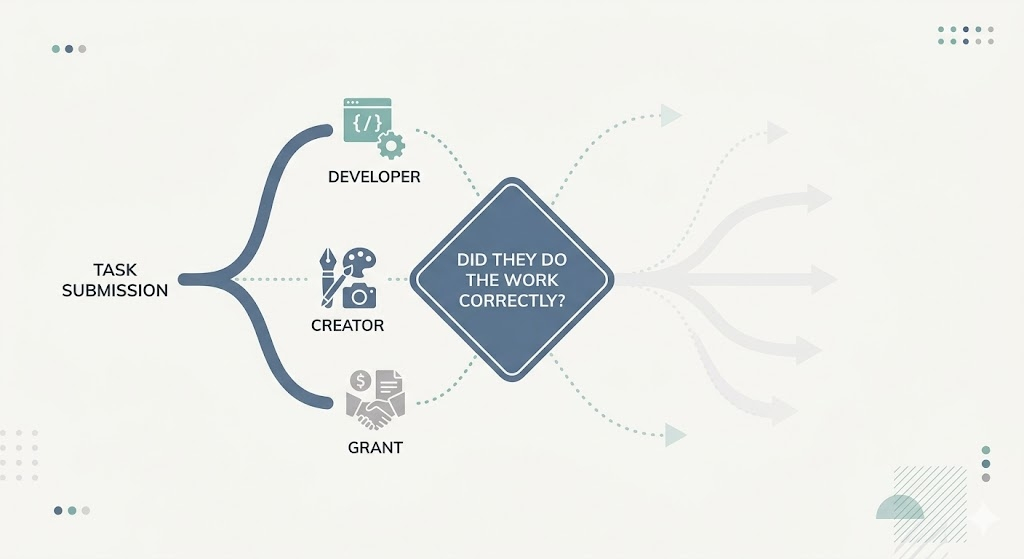
Most people start building a schema by asking what kind of data they can collect. That is the way to think about it. You should ask what is the one thing that could go wrong and require a human to make a decision.
If I am paying a developer I do not care about their color or how many things they have done on GitHub. I care about one thing: did they do the work correctly?
* If I am paying a creator I do not care about how many people follow them. I care about: is the content unique?
* If I am paying a grant I do not care about a report. I care about: did they meet their goals?
If you have than three fields in your schema you are not building a system to verify the truth. You are building a system that will be hard to use.
2. The Data Prison: On-Chain vs. Off-Chain
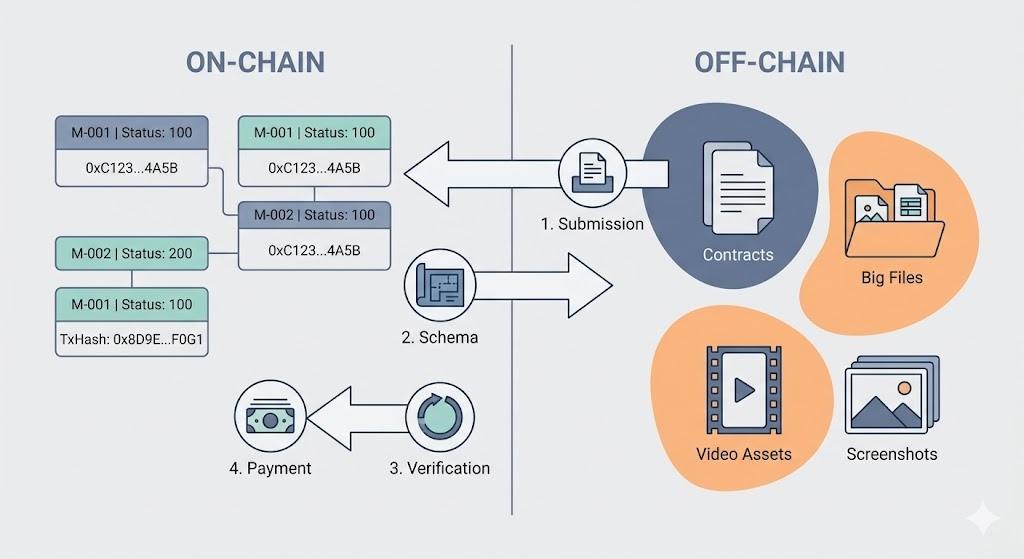
This is where people make mistakes and their system becomes slow and expensive. You have to be careful about where you store your data.
I use a rule: if a computer needs to read the data right away to send money it goes on the blockchain. If a human needs to read it for a lawsuit it goes else.
For example the schema only holds a code.
* On the blockchain: a special ID, a code for a milestone, a status code.
* Else: a big video file, a contract, a screenshot.
The schema acts like a key. If the status code changes and the code for the milestone matches the data else the money is sent. You are not storing everything on the blockchain you are just storing the parts.
3. The "Revoke or Die" Decision
People are afraid to cancel a deal because they think it looks like they are in control. I think it is stupid to leave a deal on the blockchain.
I ask myself: is this a record or an active deal?
* Permanent: if I am saying that someone graduated from a course or owns something. That is a fact that will always be true. Canceling it would be a lie.
* Mutable: if I am saying that someone is currently working or that a milestone is complete.
If I am sending money I usually allow the deal to be canceled until it is finished. Why? Because if someone says they are done with a milestone and I later find out it is not good I need to be able to cancel the deal before the next payment is sent. If I cannot cancel it I have just made a system that pays people for work.
4. Hooks: The Secret Sauce for Dumb Money
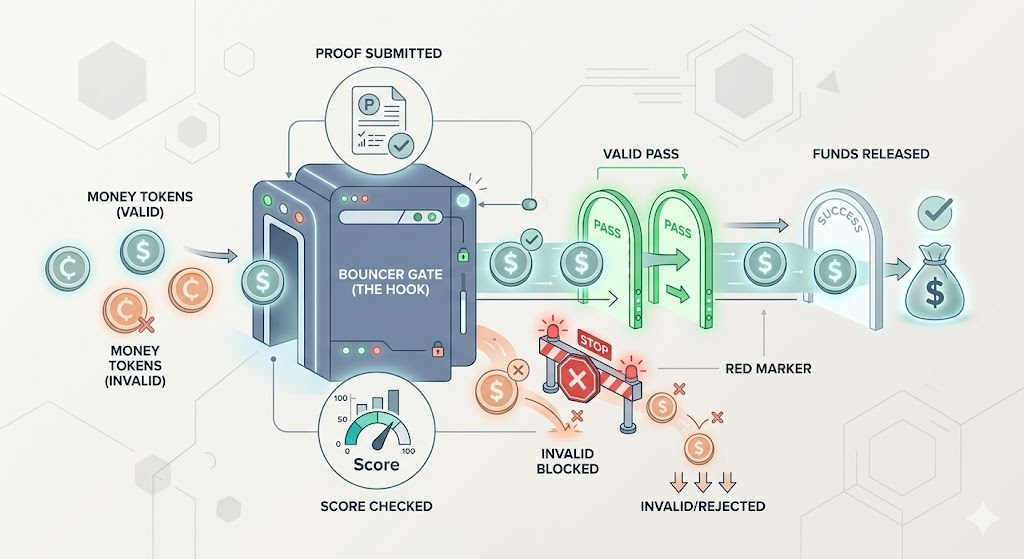
Hooks are like rules that run when someone submits something. Most people ignore contracts because contracts are hard to understand. I use contracts because contracts are the thing that stops someone from cheating me.
I add a rule that says: if the proof is empty reject it away. If the score is below a number, flag it for review and do not send the money.
Without hooks your schema is a mailbox. People can send you anything. You still have to look at it. With hooks your schema is like a bouncer. If you do not have the credentials you cannot even talk to the money.
5. Testing Like a Paranoid
Once the schema is live on Sign Protocol it gets an ID. That ID is very important. I do not just test it once I try to break it.
I try to fake a deal with a code. Does the payment system ignore it or crash?
I try to submit a string where a number should be. Does the hook catch it?
I try to use the deal twice. Does the system recognize it is already used?
If it is wrong I do not fix it. Fixing a schema is how you get problems. I start over with a version. Clean start. No problems.
Why This Flips the Script
With a schema on Sign Protocol, the way people think about the deal changes.
Before: I send money. I wait. I chase. I wonder if they will deliver. They wonder if I will pay. We are both stressed.
After: I set the schema. They see the rules upfront. They submit proof in my format. The system checks the code verifies the hook and releases the funds away.
There is no "Did you get my email?" There is no "The check is in the mail". There is just: the condition is met the payment is executed.
The Warning
Here is the scary part that keeps me up at night.
A bad schema is worse than no schema.
If I build a schema if I leave a field vague if I forget to include a cancel function if I do not set a hook I have not automated a process. I have automated a disaster. Rules in bad results out. Now I am not just losing money I am losing it fast with no oversight.
The real work is not writing the code. A computer can deploy a contract. The real work is defining what "done" actually looks like. You have to strip the noise. You have to think like a machine: yes or no. Is it true. Is it false? Is it. Is it not?
Get that right. The money does not need you anymore. It just moves.
Get it wrong. You just built a machine for losing money.
Do not be the person, with the infrastructure and the broken logic.
Educate yourself. Strip it down. Build clean.
