Now, you are a newcomer from out of town, looking to rent a house in an unfamiliar city.
The landlord looks at you with a face full of suspicion: are you a good person or a bad person? Do you have an income? Will you pay the rent on time?
You pull out your phone and say: "I have five-star reviews on Alipay, with a credit score of over 800."
The landlord shakes his head: "I don’t use Alipay, I only recognize WeChat."
You open WeChat: "I have records on WeChat as well…"
The landlord shook his head again: "I want a paper certificate."
You are at a loss—your credit is clearly there, but it's locked on isolated platforms, unable to be taken or used; every time you go to a new place, you have to start from scratch.
This is not just a dilemma for renting; it's a common issue of "trust" in the entire digital age.
Trust is an invisible cost.
You may have never thought about how much society spends every day to "prove you are you."
Banks need to conduct identity verification, companies need to conduct background checks, governments need to maintain the household registration system, schools need to issue paper diplomas... Just the compliance expenditure on identity verification by global enterprises each year amounts to hundreds of billions of dollars.
What's even more heartbreaking is that in developing countries, there are many capable people who can repay loans, but are forever locked out of the financial system simply because they cannot provide bank-recognized credit certificates.
Trust, in essence, is a severely wasted social cost.
@SignOfficial What the Sign protocol wants to do is cut this cost by more than half.
Engrave the "proof" on stone.
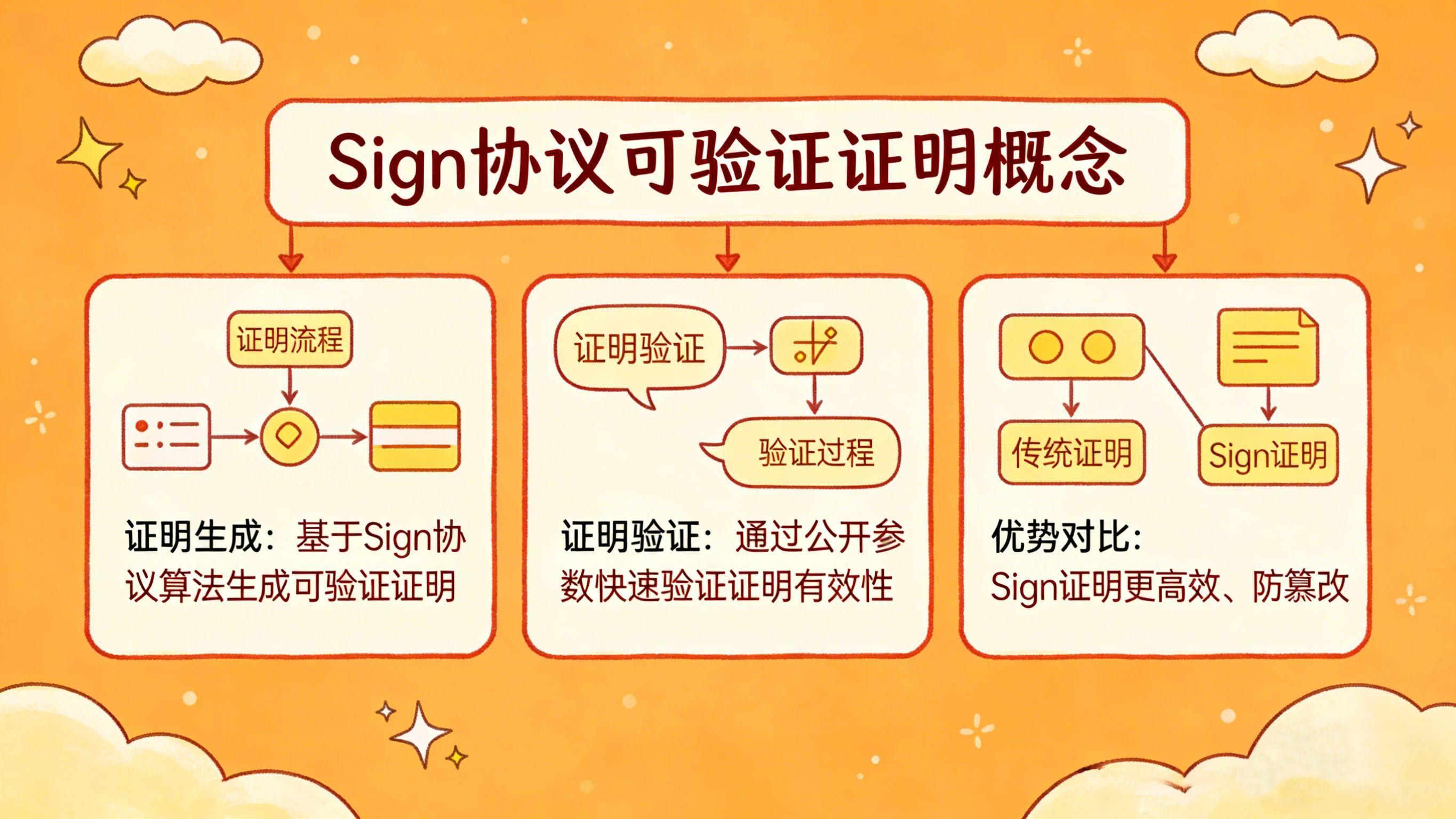
The core concept of the Sign protocol is called Attestation, which translates to "verifiable proof."
Continue to use the rental analogy to understand it.
Previously, your landlord's review was stored on the platform's server; if the platform collapsed, the review disappeared; switching platforms meant starting over.
But now, if a landlord's review is engraved on the blockchain—it's like being inscribed on a stone tablet that won't disappear or be tampered with. Anyone can take a magnifying glass and confirm: this evaluation is real, left by a trusted person at a certain time.
What the Sign protocol does is just this. An organization (such as a university) issues a proof on the chain: "This person obtained a Bachelor's degree in Computer Science in 2023."
This proof is permanently locked. Three years later, when you apply for a job overseas, the other party only needs to check the on-chain record, and verification is completed in seconds—no need to contact the university, no need for translation and notarization, no need to wait for emails.
What's even more impressive is that this "stone tablet" is placed on one blockchain, but can be read by dozens of other blockchains. Your identity verification on Ethereum is also valid on Solana and BNB Chain. This is what Sign refers to as "cross-chain"—your credit can truly travel across platforms for the first time.
Establish a universal grammar for trust.
Having proof is not enough. Imagine if all academic certificate formats around the world were different—some in Chinese, some in English; some say "Bachelor," others say "学士"; some have school stamps, others do not—then verification would still be a mess.
The Sign protocol uses Schema (templates) to solve this problem.
A Schema is like a standardized form that specifies "what fields a proof should contain and in what format." What a medical qualification proof looks like, what KYC identity verification looks like, what attendance records look like—all have standard templates that everyone can understand.
Currently, there are thousands of Schemas on Sign, covering everything from financial compliance to medical qualifications, from code contributions to meeting attendance. Moreover, anyone can create new templates, and the entire system is completely open.
Once trust can circulate, it gains value.
Back to the person renting at the beginning.
If one day, all his credit records—payment records, rental evaluations, work experiences—are unified and stored in this "on-chain stone tablet" system, then when he moves to any city and faces any landlord, he only needs to say one sentence: "Scan my on-chain record."
In five seconds, everything becomes clear.
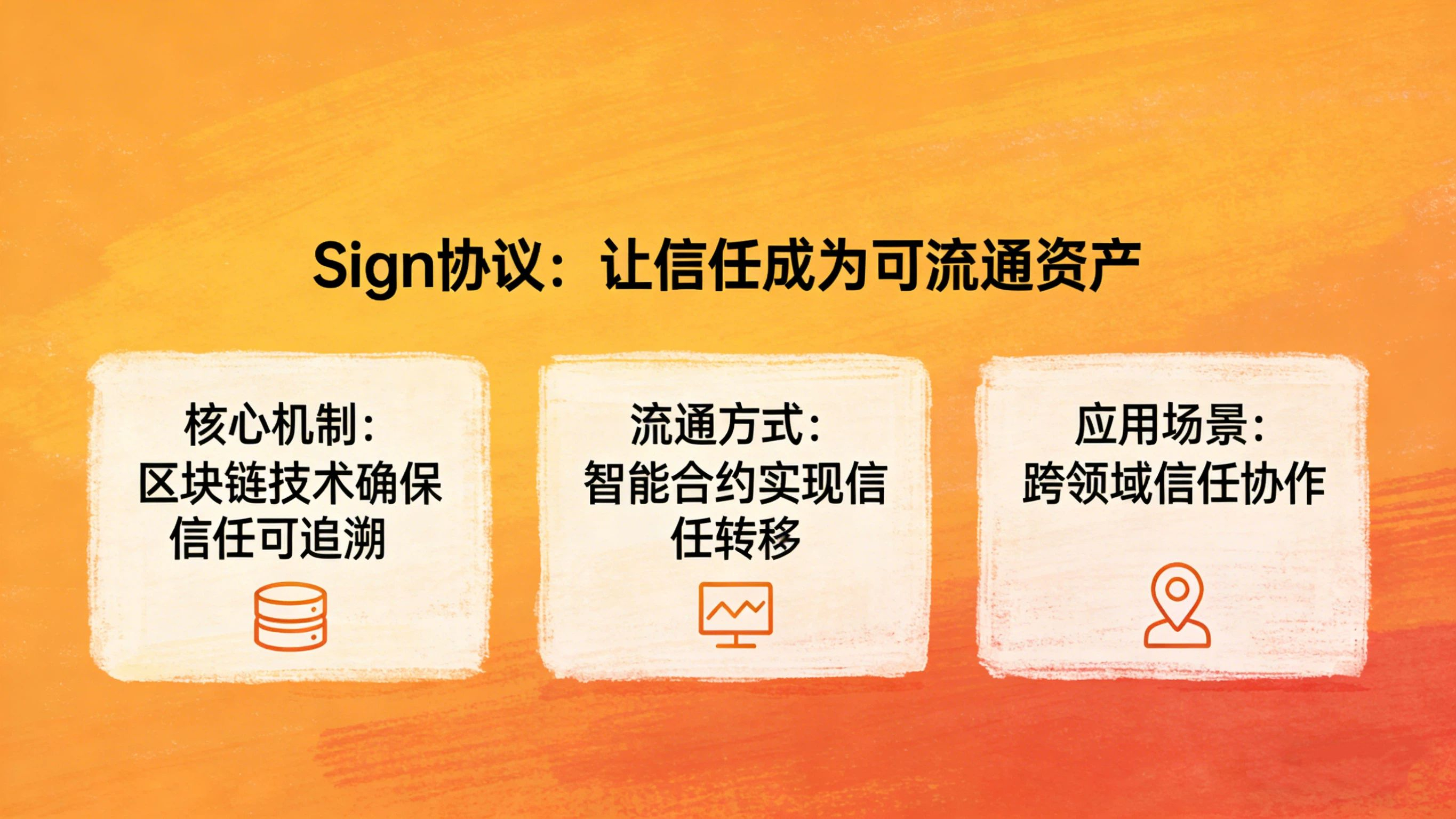
This is the deepest business logic of the Sign protocol: when trust can be standardized, recorded, and verified across platforms, it transforms from an implicit friction cost into a circulating asset.
For individuals, the on-chain reputation you accumulate is truly portable and will not evaporate with the collapse of a platform. For businesses, the time to verify partners is compressed from weeks to seconds. Each time a proof is created or queried, it consumes Sign's native token—the more the protocol is used, the greater this consumption.
Of course, no matter how good the logic is, it depends on how many real users and institutions are willing to use it. But at least, Sign has identified a real pain point and provided a technically feasible solution.
In an industry full of "telling stories but having no product," this is already quite rare.