


I never thought a simple question like “Where does all my identity data actually live?” would open such a rabbit hole. At first, I imagined some ultra-secure digital vault—clean, organized, and locked down like a high-tech fortress. Turns out, it’s nowhere near that $SIGN tidy.
Some pieces of your identity sit on the blockchain (on-chain), others are tucked away off-chain. A few are heavily encrypted, while some just float around in systems that even the experts don’t fully explain. It feels exactly like searching for an old file on my laptop and discovering folders called “final,” “final2,” and “final_really_last_v3.” Total chaos, just hidden behind fancy tech words. 😄
Encryption is absolutely necessaryy without it, the whole system would crumble in minutes. But here’s the catch: encryption brings @SignOfficial its own headache called key management. Lose your keys or forget your recovery phrase, and suddenly your “secure” identity is locked away from you forever. The system protects your data so well that it sometimes protects it from its rightful owner.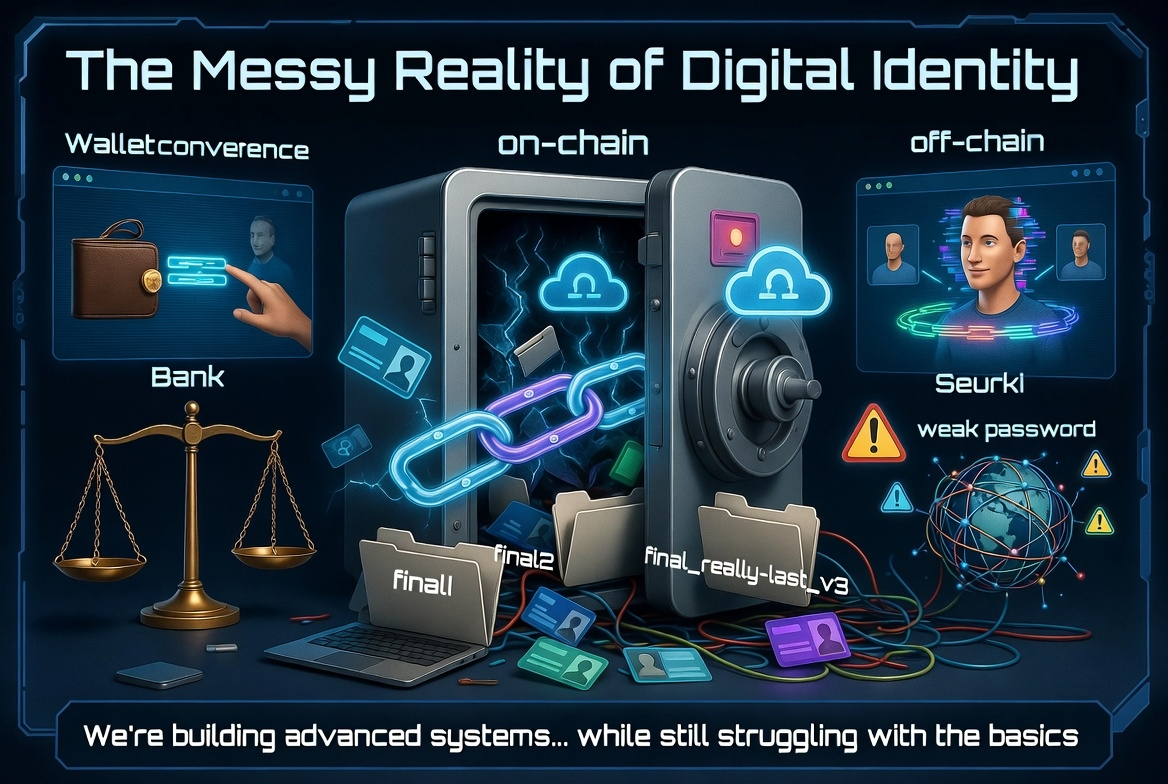
Then comes the eternal debate: where should we actually store these credentials? On-chain gives you transparency and permanence, but it’s expensive and slow. Off-chain is cheaper and more flexible, but you’re back to trusting someone else’s servers. It’s the same old dilemma—carry cash in your pocket for instant access, or keep it in the bank for safety. Both have#SignDigitalSovereignInfra trade-offs, and neither feels perfect.
What really stopped me in my tracks was thinking about identity theft. In today’s world, your digital self controls access, jobs, reputation, and opportunities. Attackers don’t always need to crack sophisticated systems—they just exploit human habits. Weak passwords, one careless click, or approving something too quickly. Technology keeps advancing, but our shortcuts stay stubbornly the same.
And then there’s the futuristic side: persistent identities across virtual worlds and metaverses. Sounds exciting until you remember we still can’t manage simple passwords properly. Now we want one trustworthy identity following us everywhere? That’s ambitious… maybe even a little reckless.
At the end of the day, building global digital identity isn’t just a tech challenge. It’s about trust, tough trade-offs, and human nature. No single company or country can do it alone—we need real collaboration. But getting everyone to agree on standards is like herding cats in different time zones with different agendas.
We’re creating incredibly advanced systems while still struggling with the basics. That mix of brilliance and irony is what makes this journey so fascinating—and a little humbling. 🌐